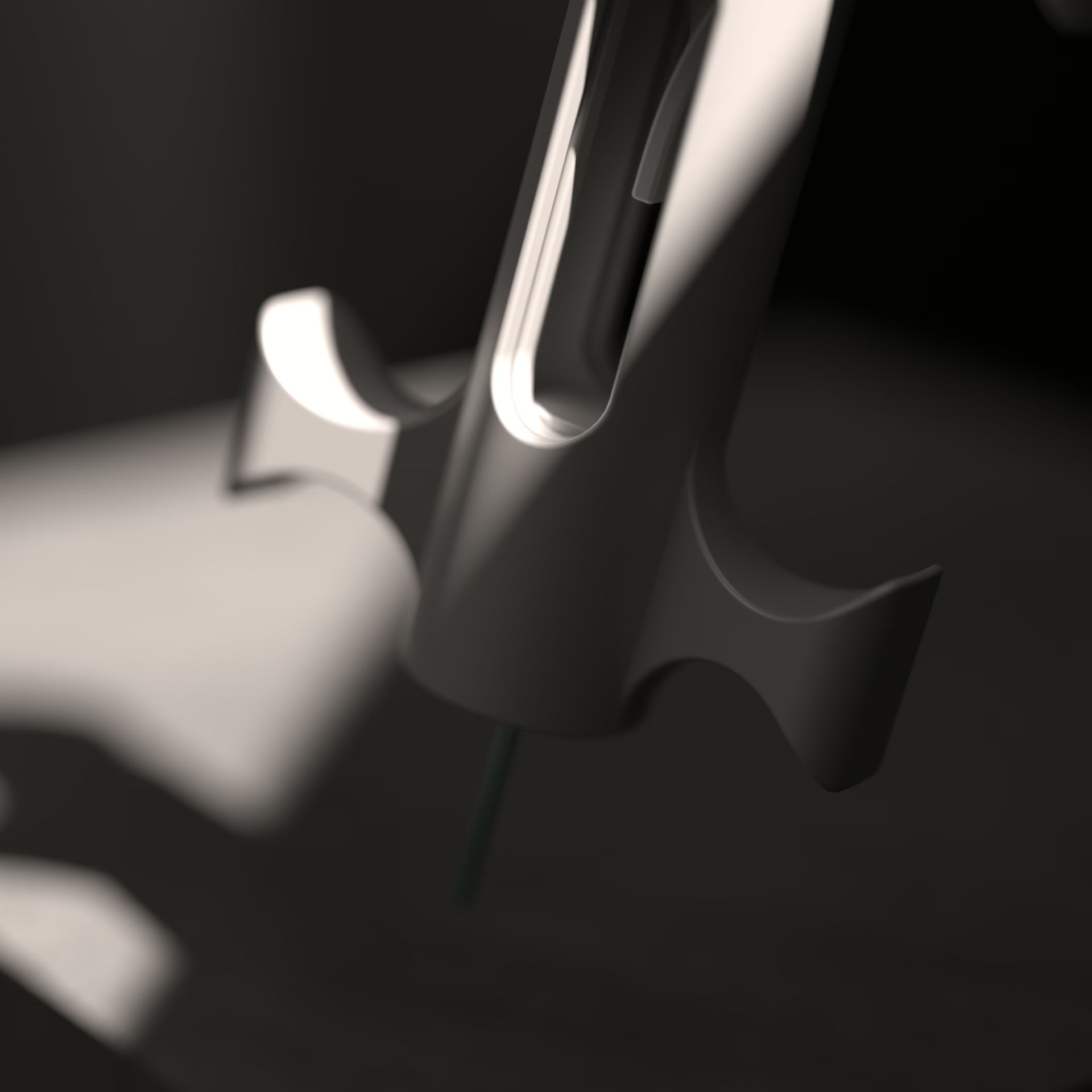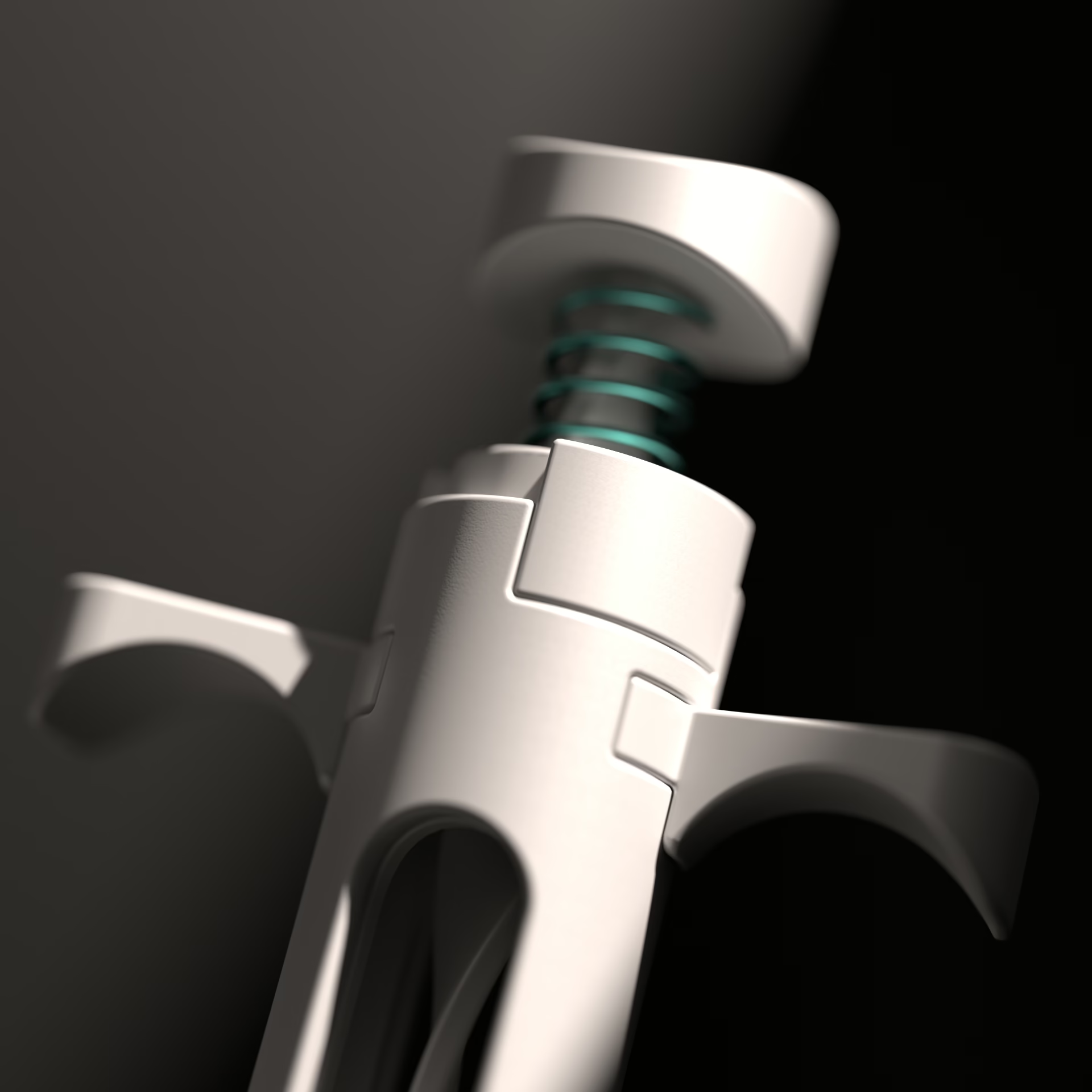
The button
The spring under the cap returns the needle after each sample.
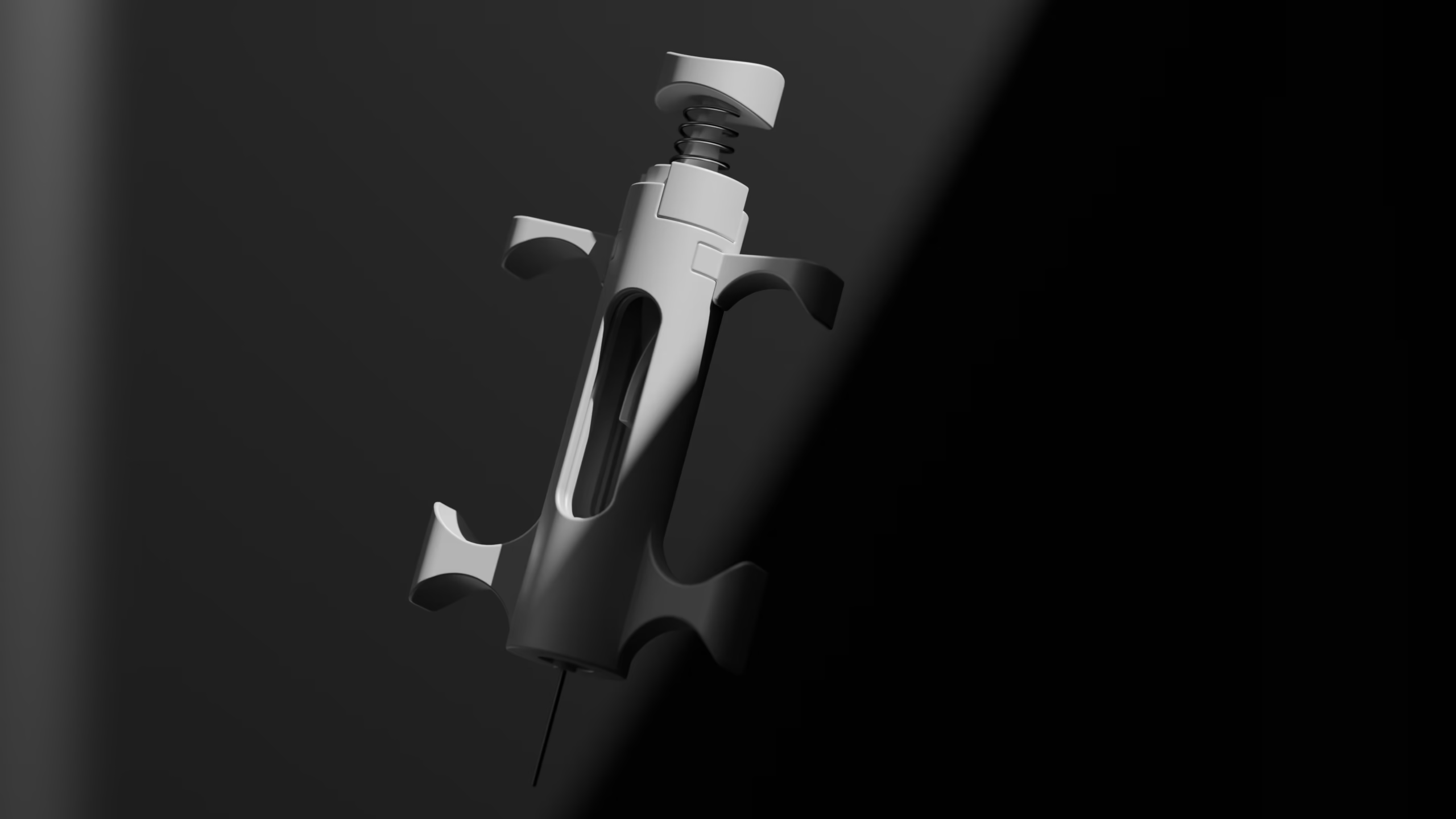
A hand tool that takes micro-samples from paintings for scientific analysis. Designed on my own for a course at the University of Bologna, and 3D printed as a working prototype.

The needle has to move forward and turn at the same time, then come back on its own. Palmo does it with a screw constraint: pressing the top button drives the needle along the thread, and a spring brings it back when you let go. The body is open at the side, so you can watch the mechanism work, and it is easier to service.
The spring under the cap returns the needle after each sample.
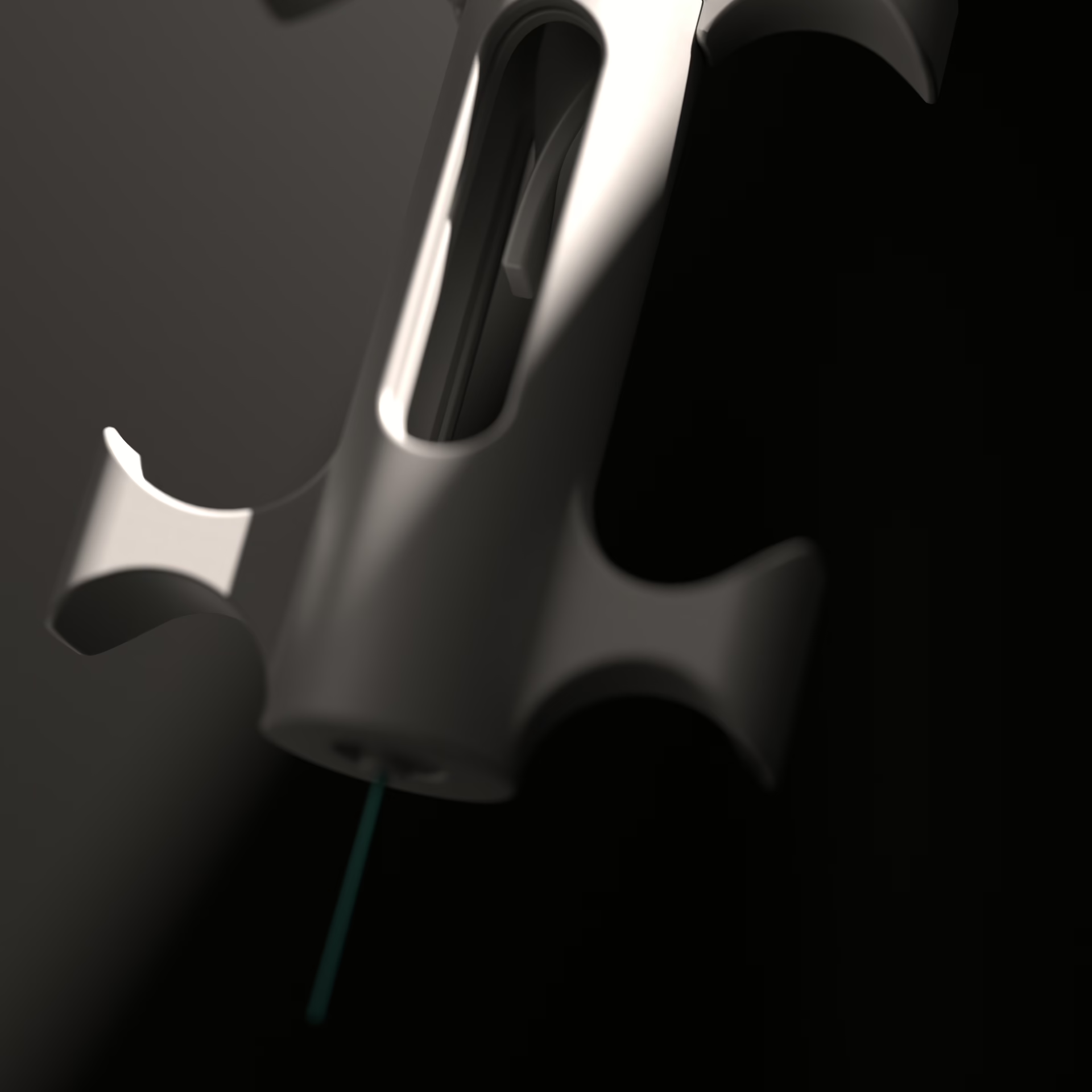
The slot shows the mechanism as it moves.
A restorer often works in tight spaces or awkward positions. The body takes three grips, so the hand stays steady wherever the painting is.
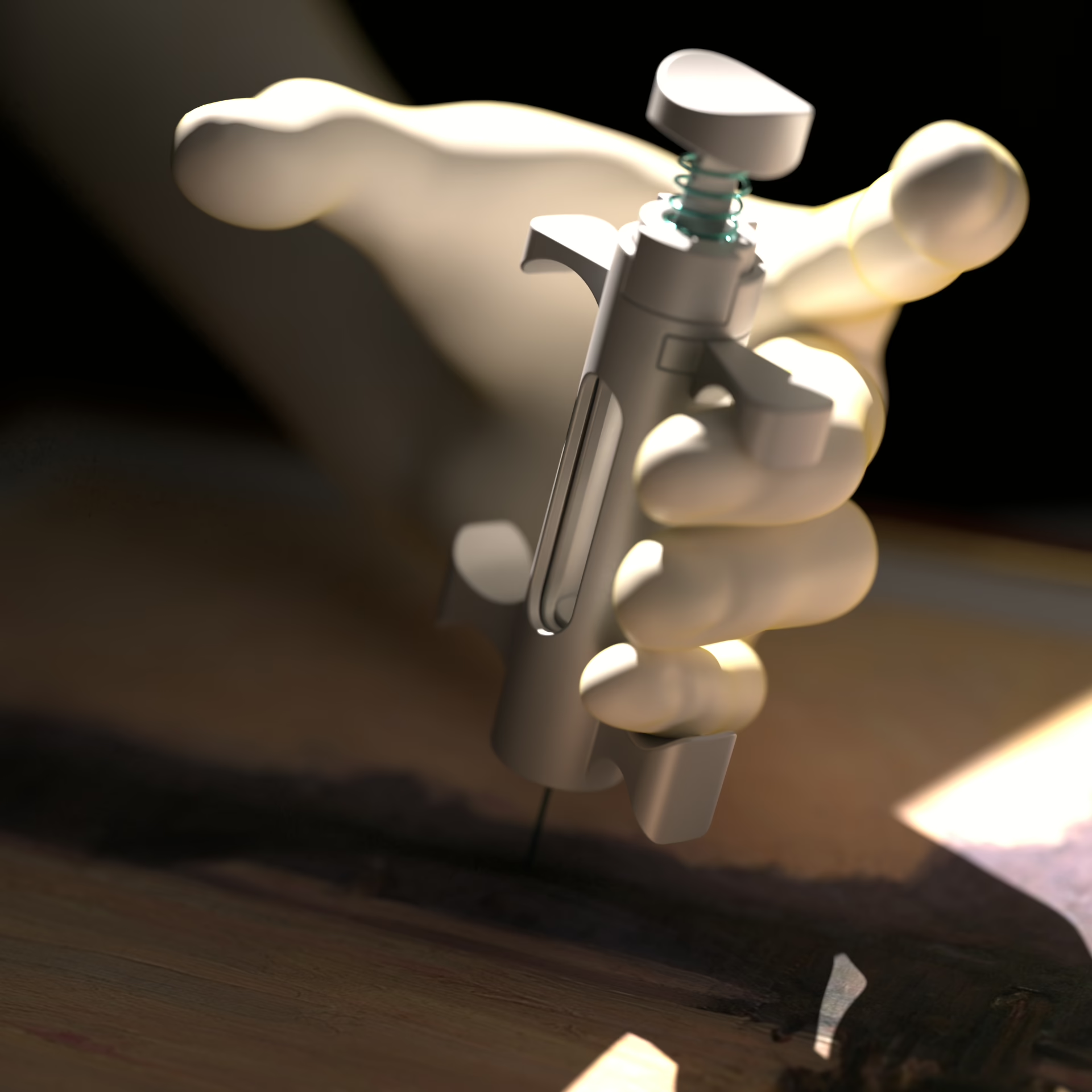
A continuous volume for positioning and holding, with the weight spread across the palm.
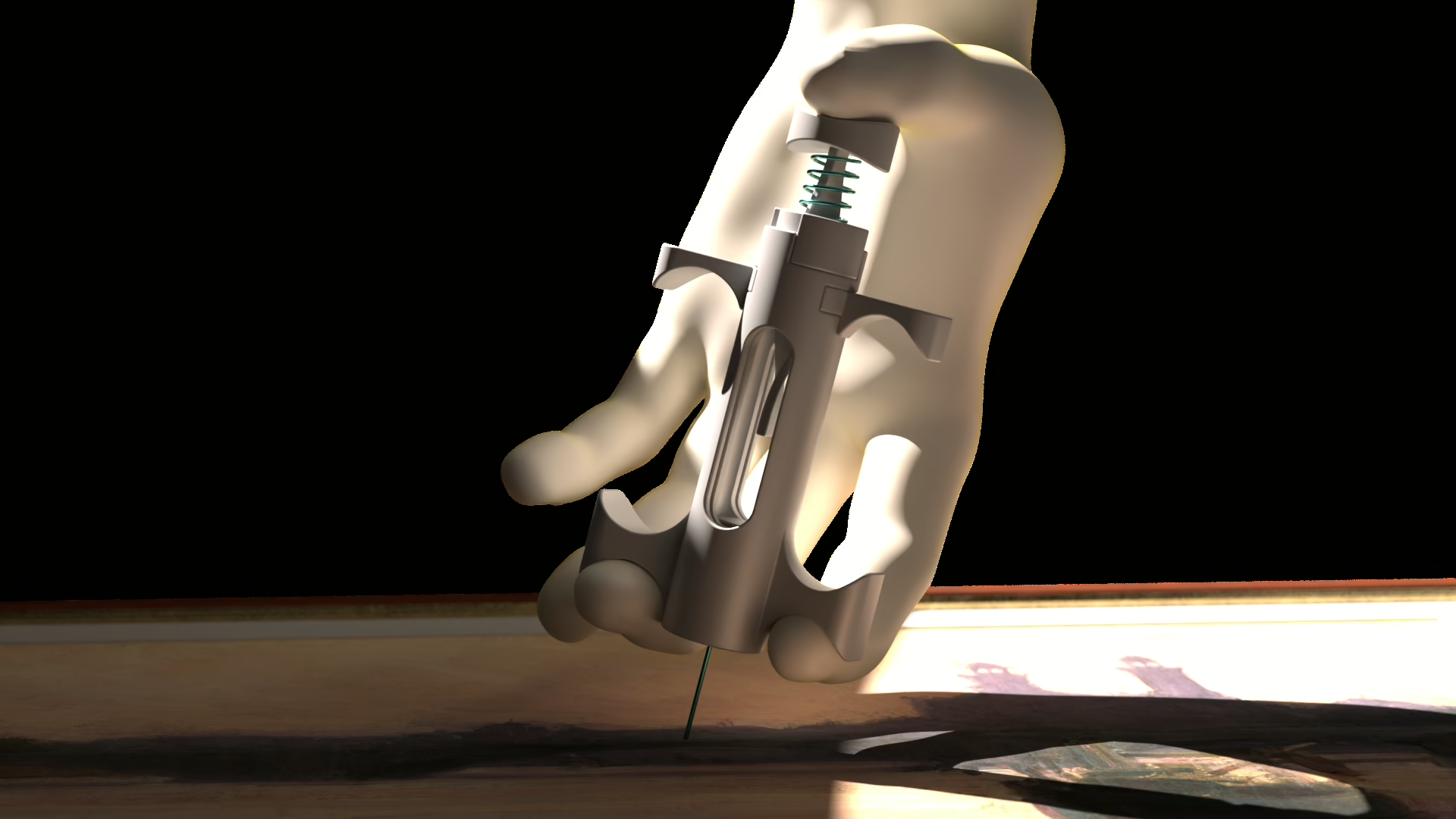
Close to the needle, for precision while it goes in.
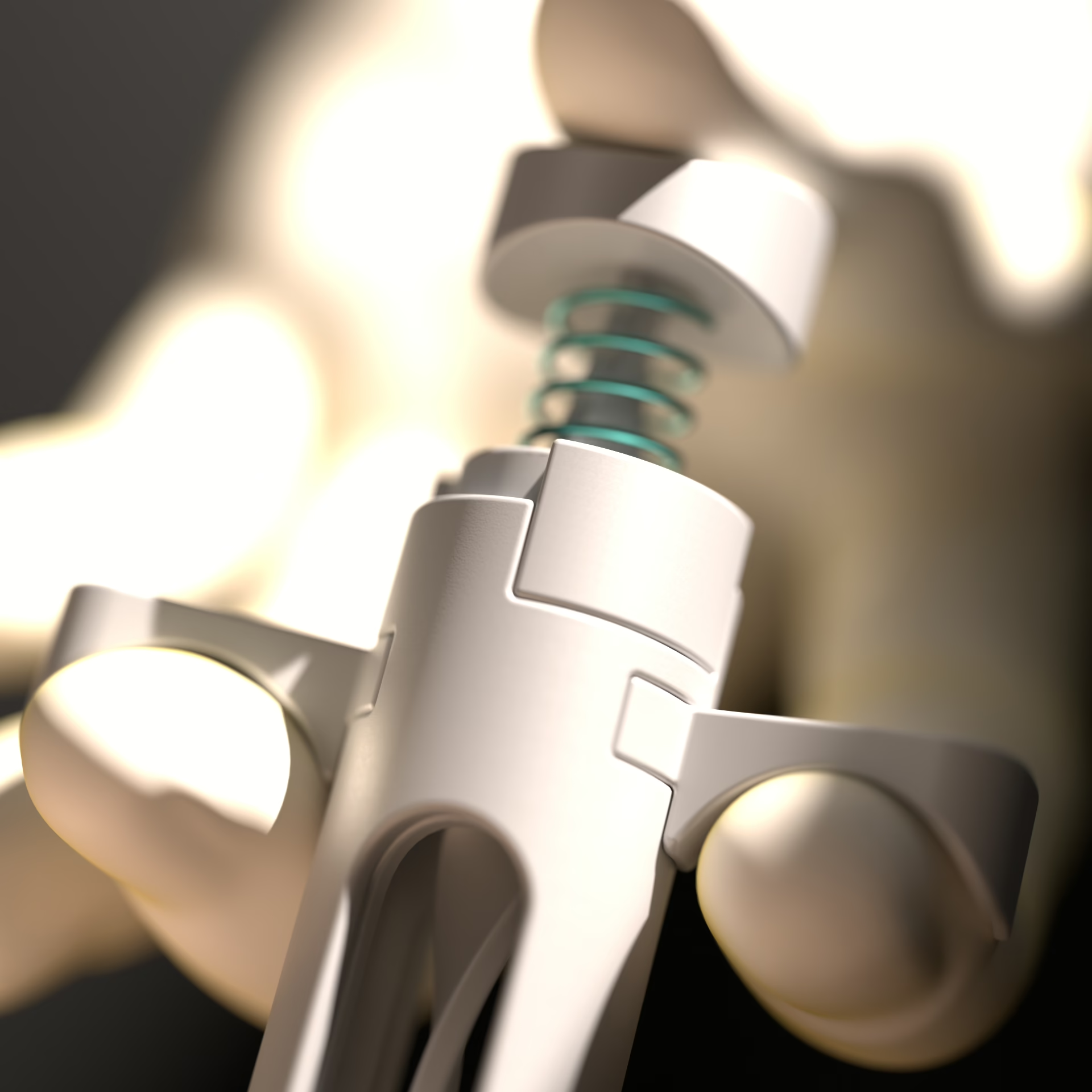
A second pair of wings near the button. It is a separate part: it snaps on when you need it and comes off for tight spaces.
The prototype is printed in FDM. Its geometry is drawn to need as few supports as possible, which saves printing time and material. The upper grip is printed on its own for the same reason, and that is also what makes it removable.