01
The abacus
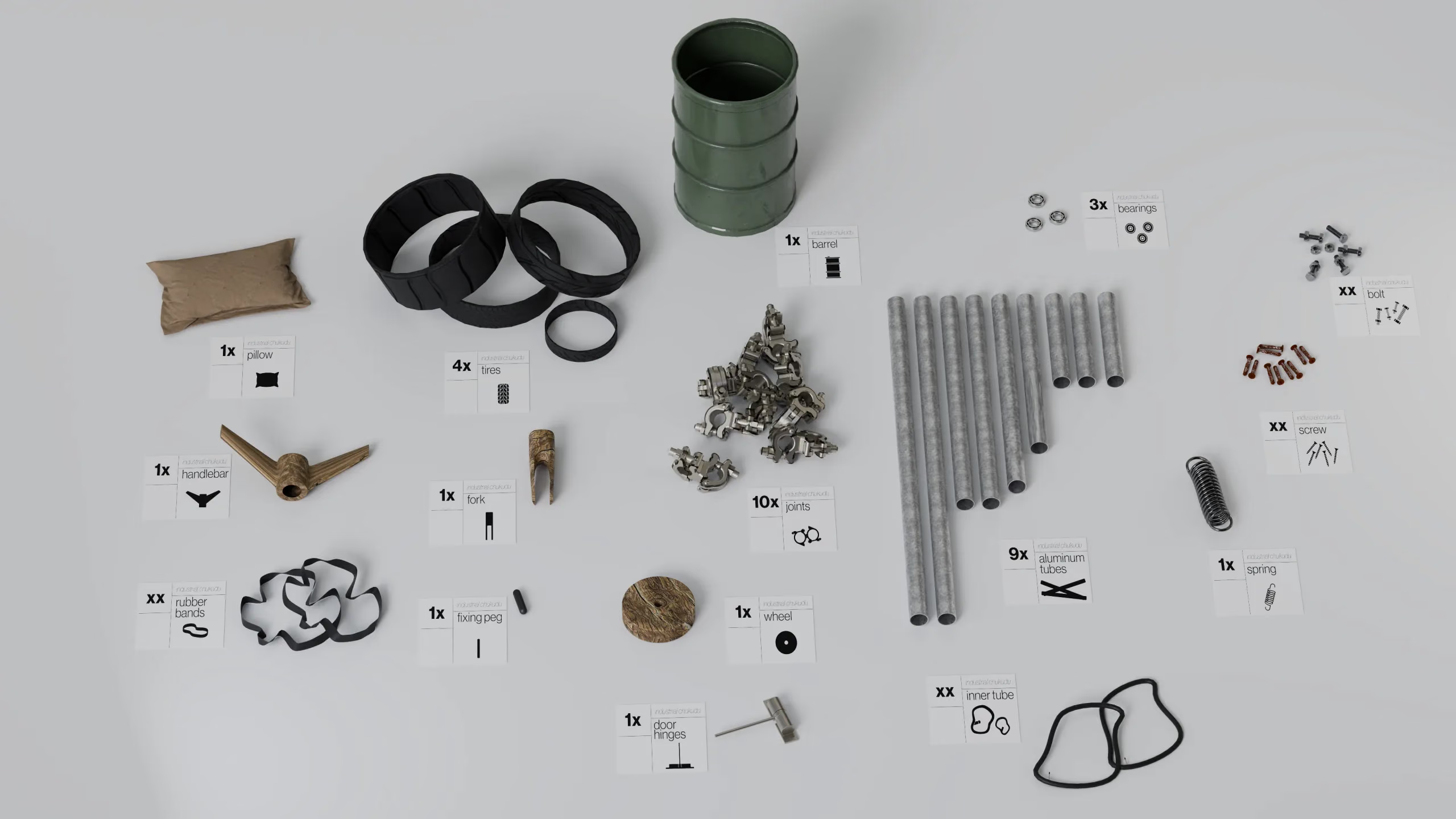
It maps the matter available, end-of-life components from Toyota Material Handling included, and grades each one on how easily it comes apart and how fast it can be replaced.
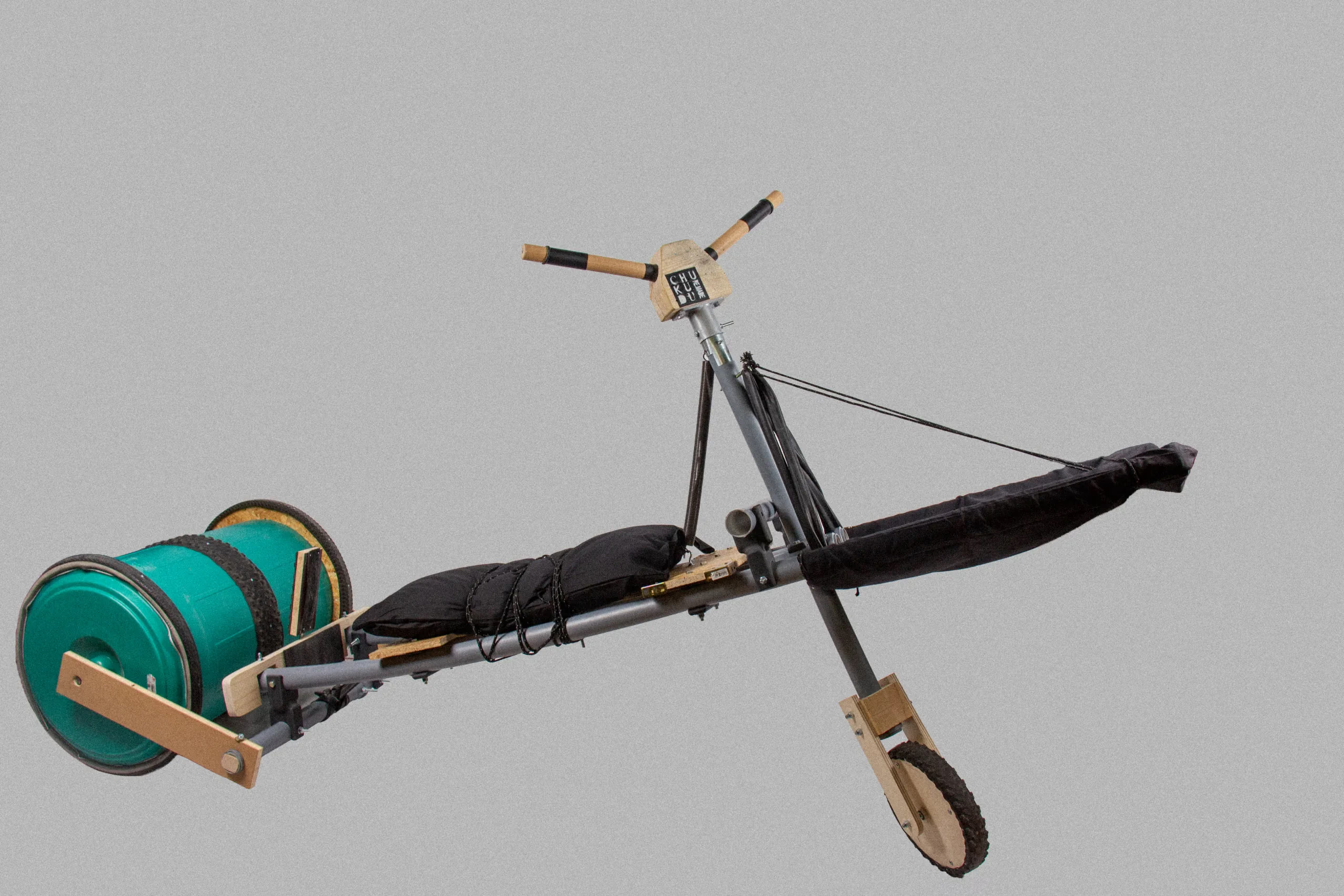
The chukudu is the wooden cargo scooter that moves goods in Goma, in the Democratic Republic of the Congo. Re.Made is a co-design system built around it: two rules that must not be broken, three tools, and a prototype made of scaffolding tubes and a reused drum.


There the limit is not the obstacle. It is the engine.
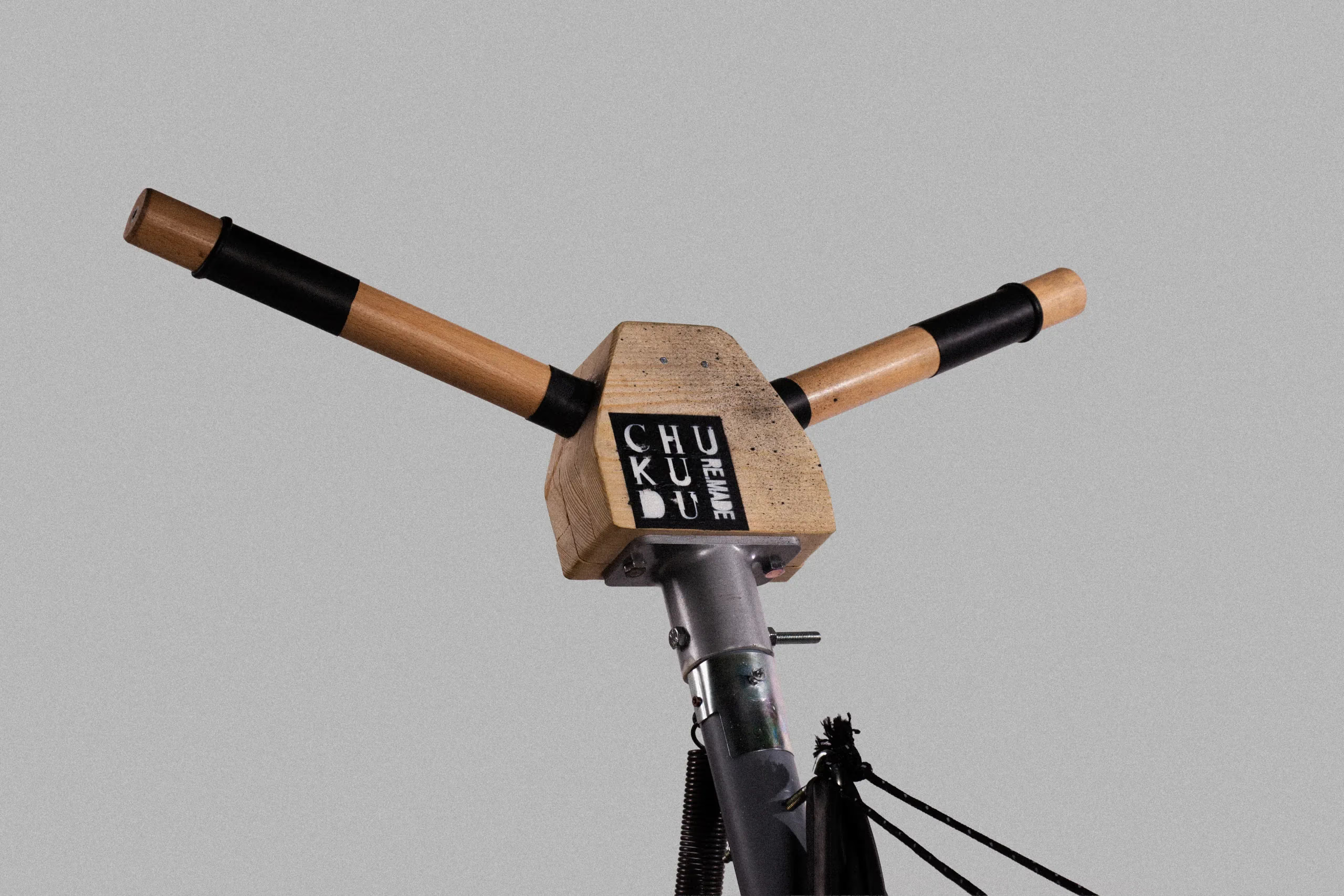
In Goma the chukudu carries the last mile: a wooden vehicle with no engine, a handlebar shaped like the horns of a kudu, a slanted beam, and whatever material is at hand. It takes loads out of all proportion to its cost, and it is repaired on the street. Read from an industrial desk it looks like a poor object waiting to be improved. We started from the opposite reading: it is proof of a competence, a design culture that has already solved the problem with the means available.

Three invariants stay: the kudu-horn handlebar, the slanted beam, scrap material. A chukudu that stops being recognisable loses the one thing that gets it adopted.
It has to be built and repaired where it is used. An object that can be made but not mended, in a place with no service network, dies at the first breakdown.
Re.Made is designed as a week-long hackathon in Goma, where local designers and makers work on the vehicle together. Three tools keep what happens there usable afterwards.
It maps the matter available, end-of-life components from Toyota Material Handling included, and grades each one on how easily it comes apart and how fast it can be replaced.
Seven parameters, the same for everyone and declared before anyone starts drawing: stability, repairability, load, volume, comfort, manoeuvrability, versatility.
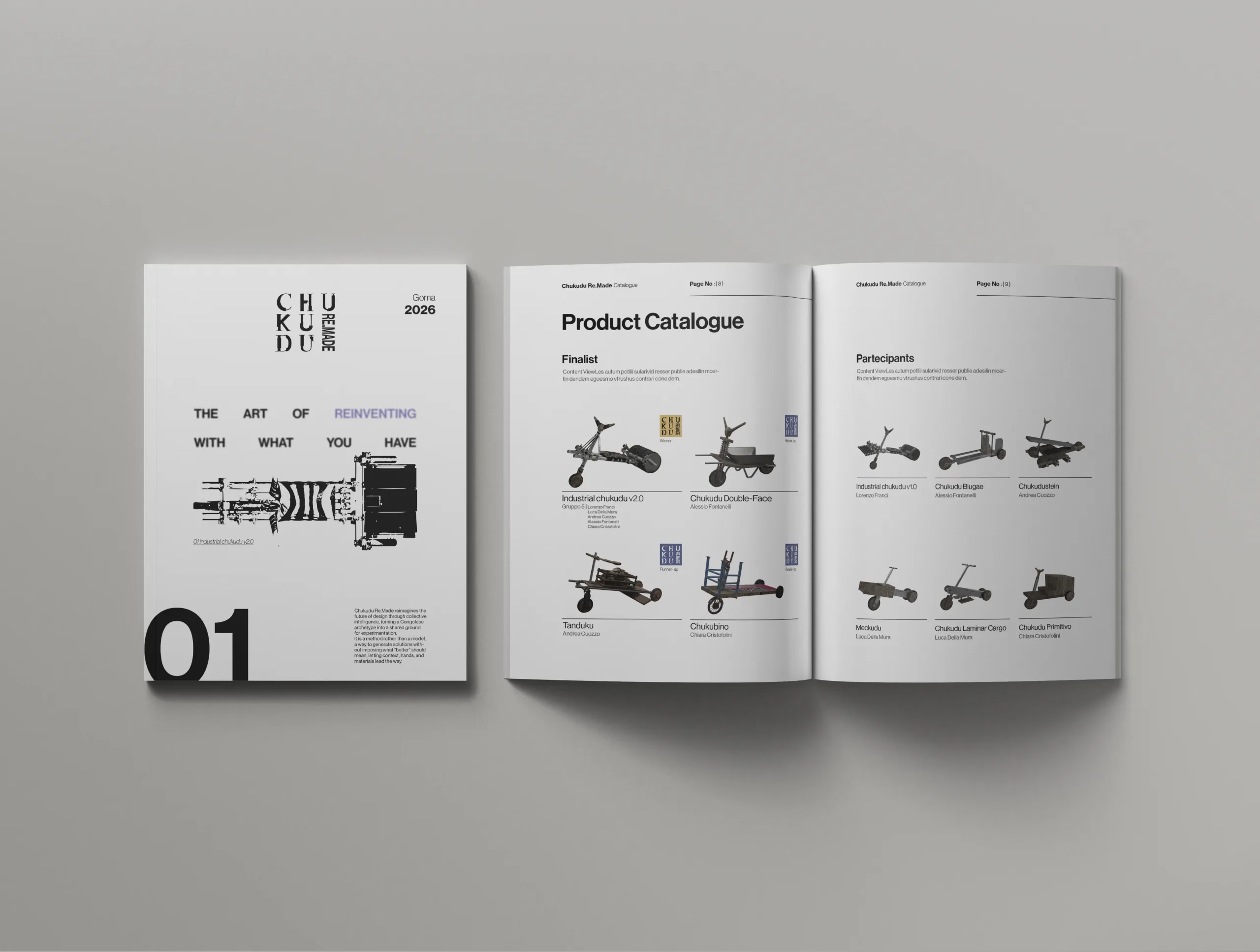
It gathers everything the week produces, and nothing is discarded: the value of the system is in how many answers it holds, not in picking one.
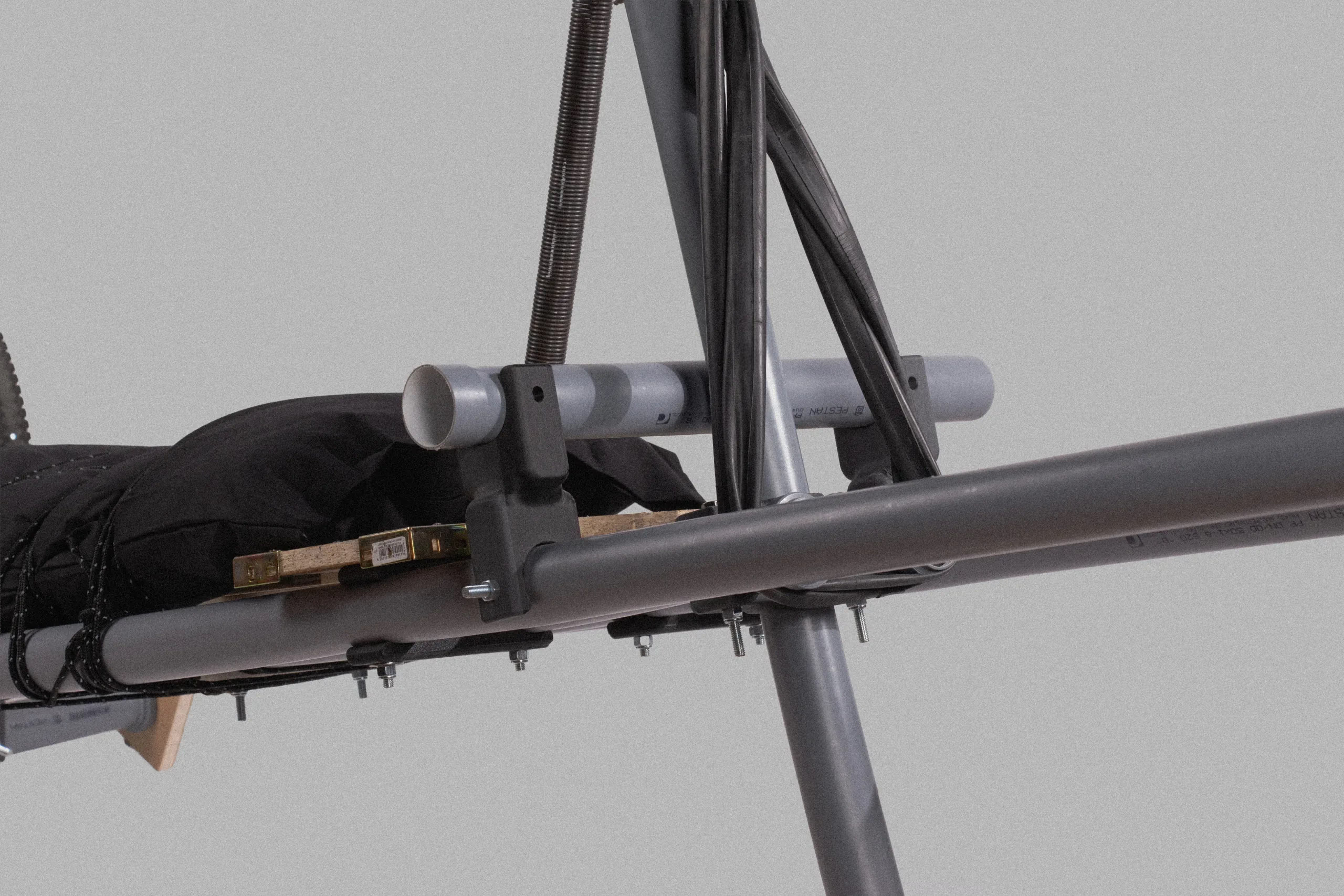
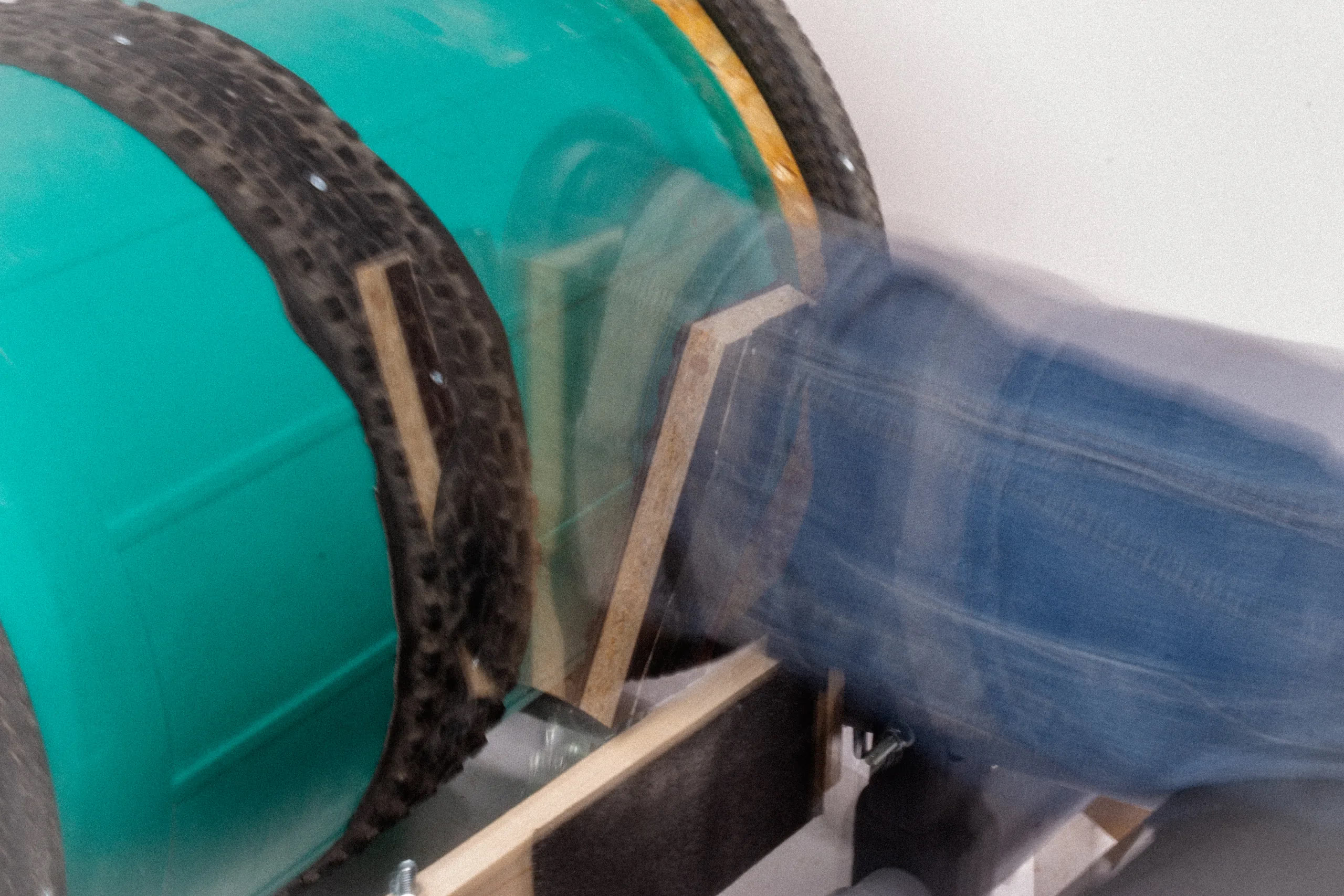
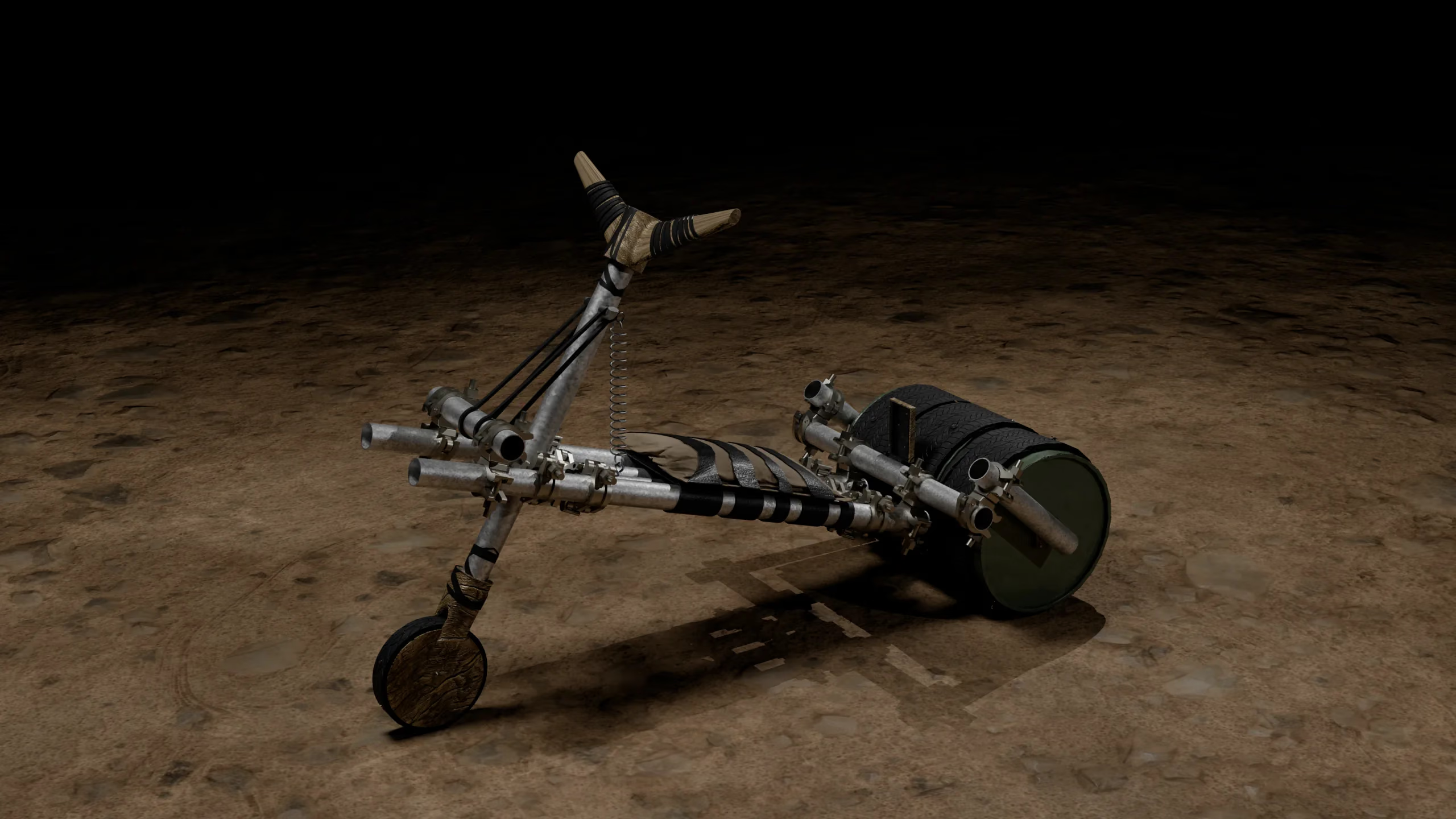
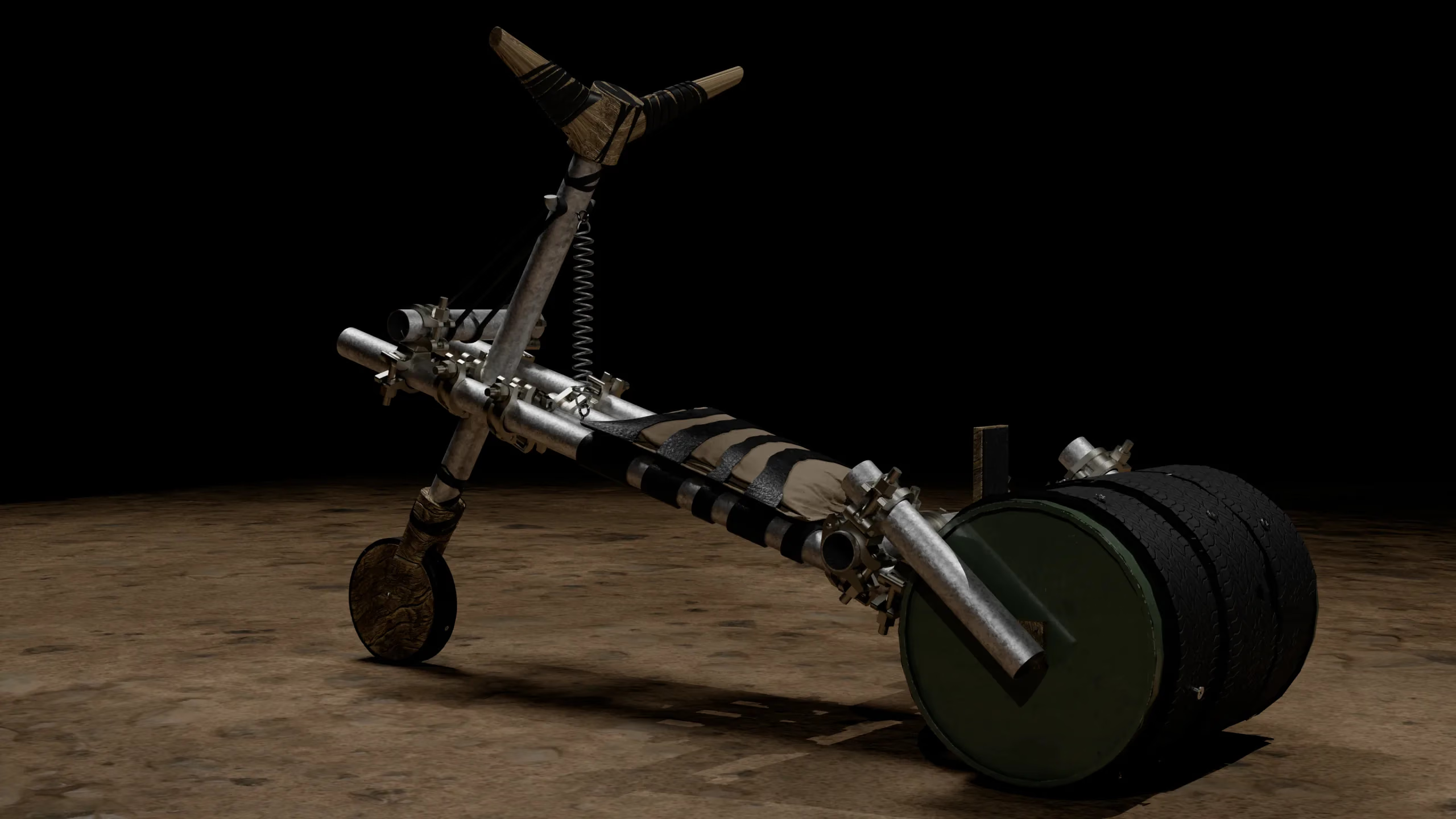
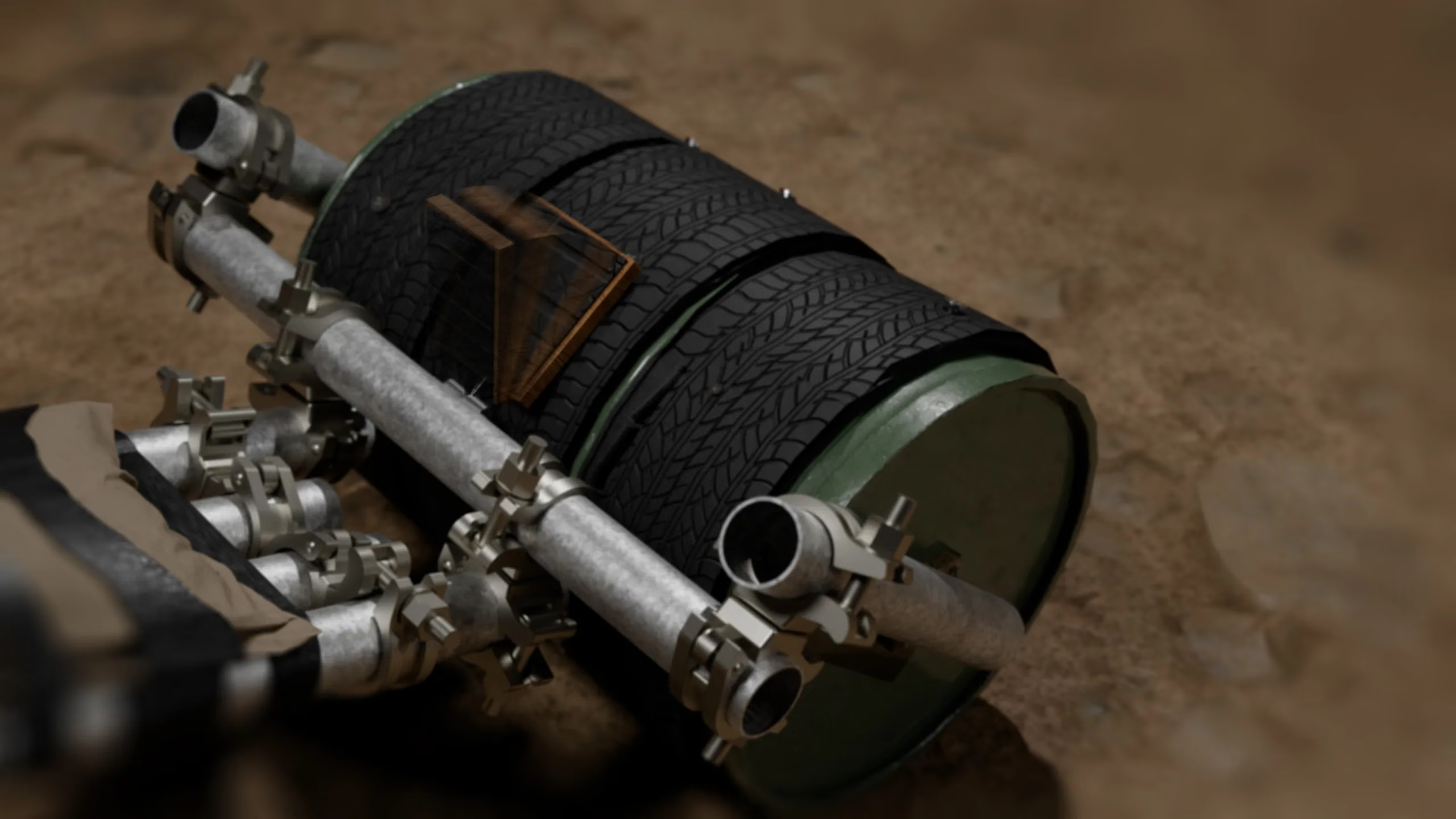
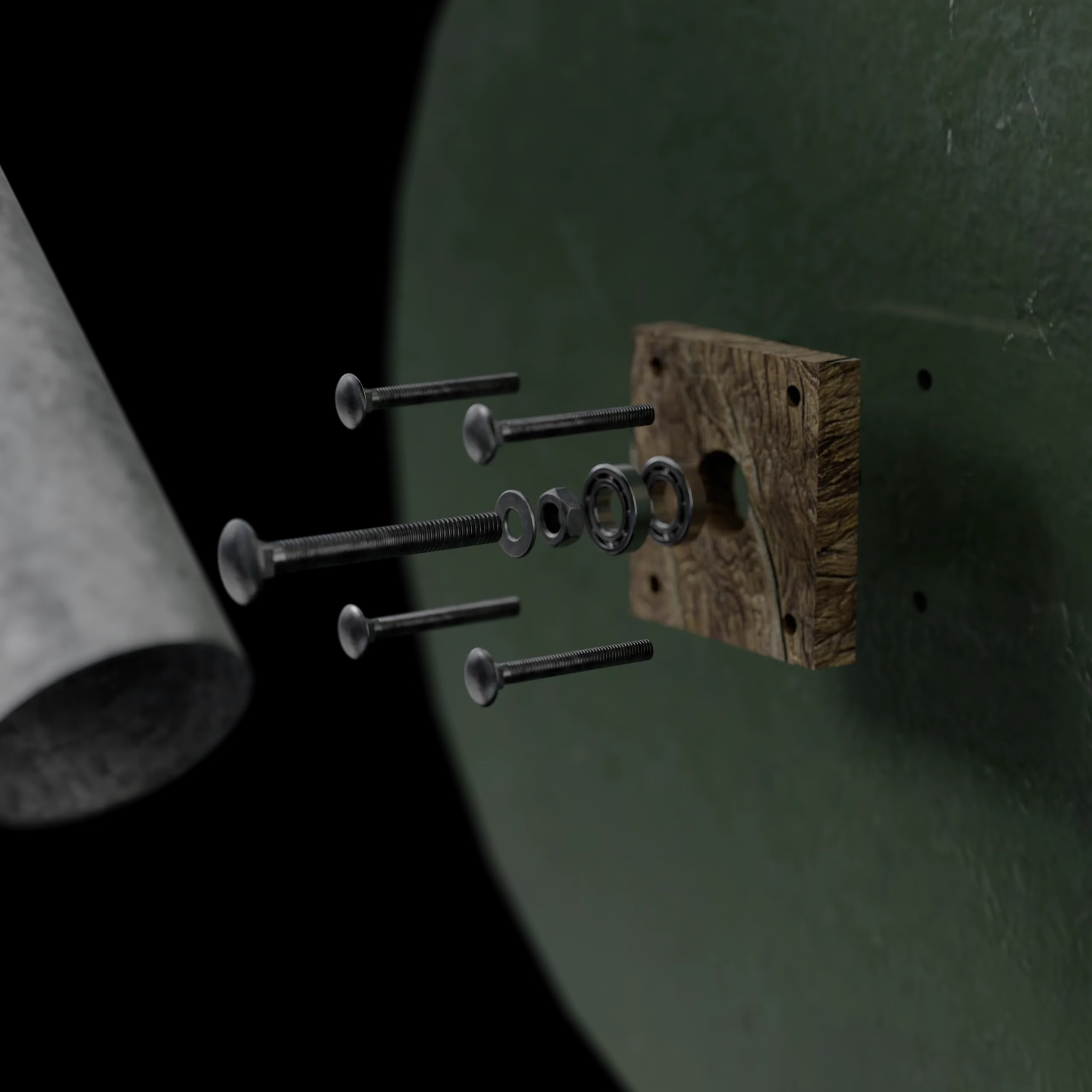
Of the directions that came out of the method, this is the one taken to a prototype. The frame is modular, in scaffolding tubes and industrial couplers that go together by hand. The rear wheel is a reused drum: it widens the base and becomes cargo volume at the same time. The brake comes from the spring of a door closer, a spent part given the opposite job to the one it was born for. The handlebar stays in wood, because the archetype is not up for discussion.
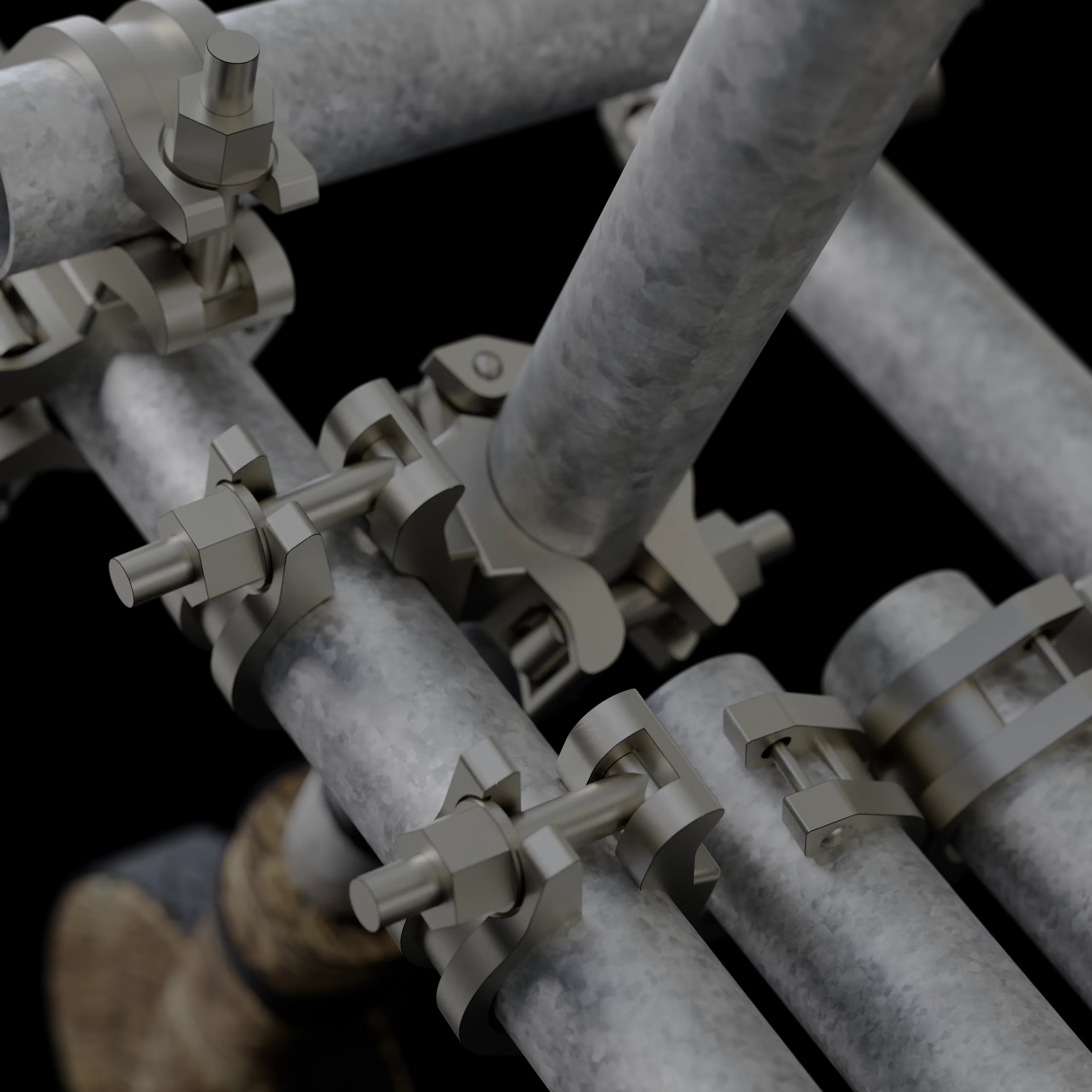
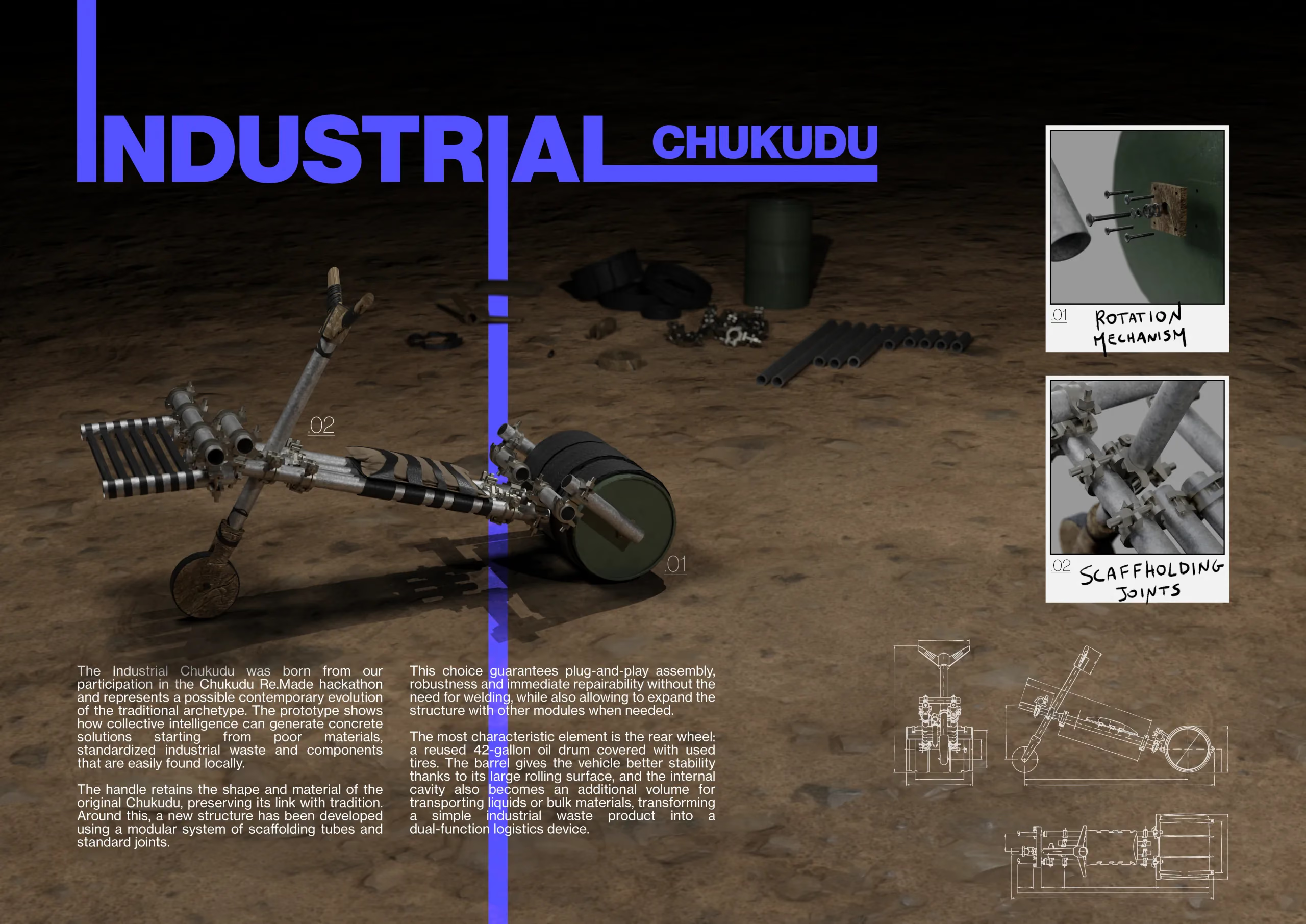
A tube-and-coupler frame can be extended forever, and that is its most dangerous temptation. One rule keeps it honest: a module that only optimises is superfluous. It earns its place when it turns the chukudu into something else.
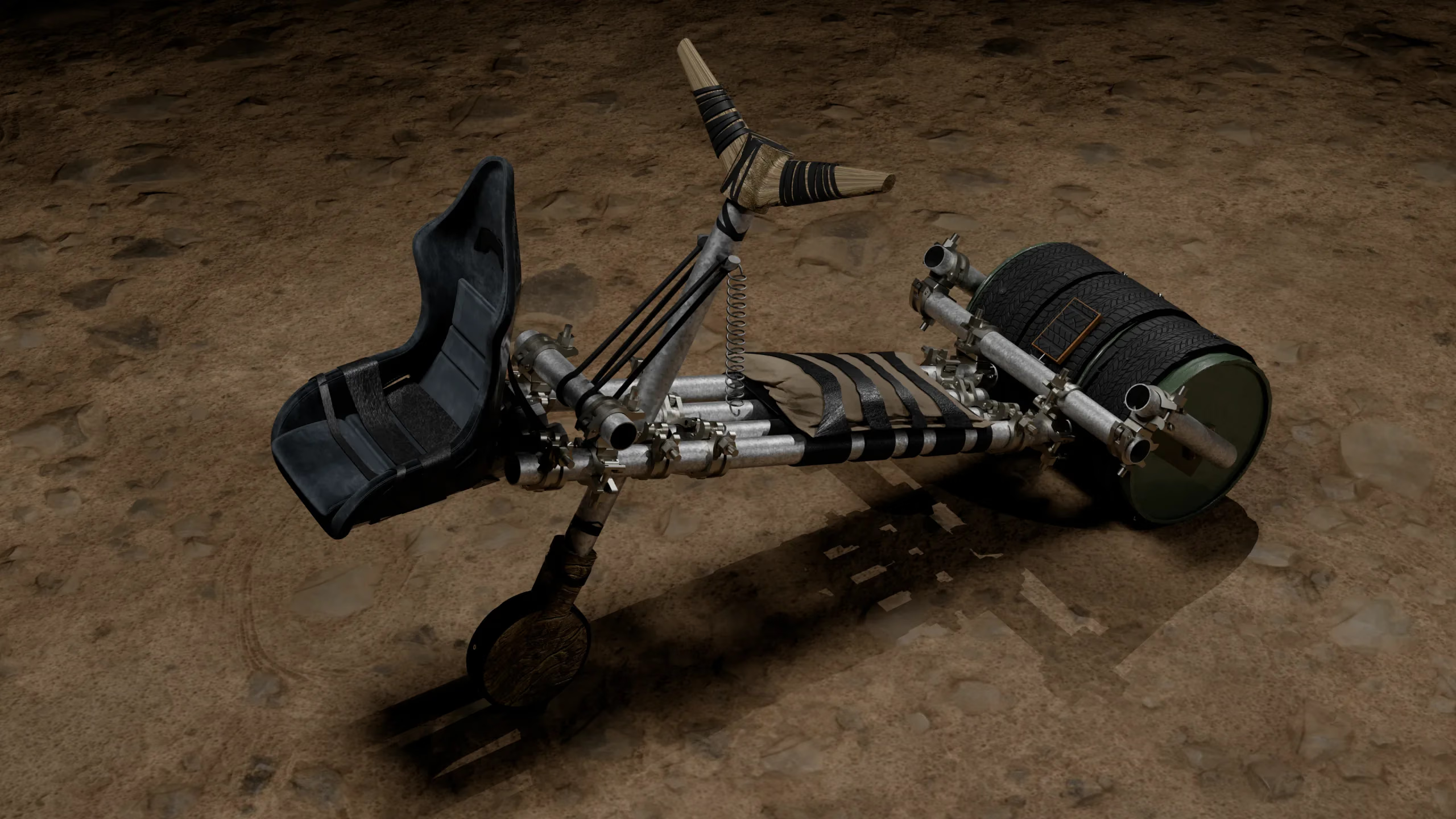
A seat made from scrap turns the vehicle into a taxi for short trips, and into income for whoever pushes it.
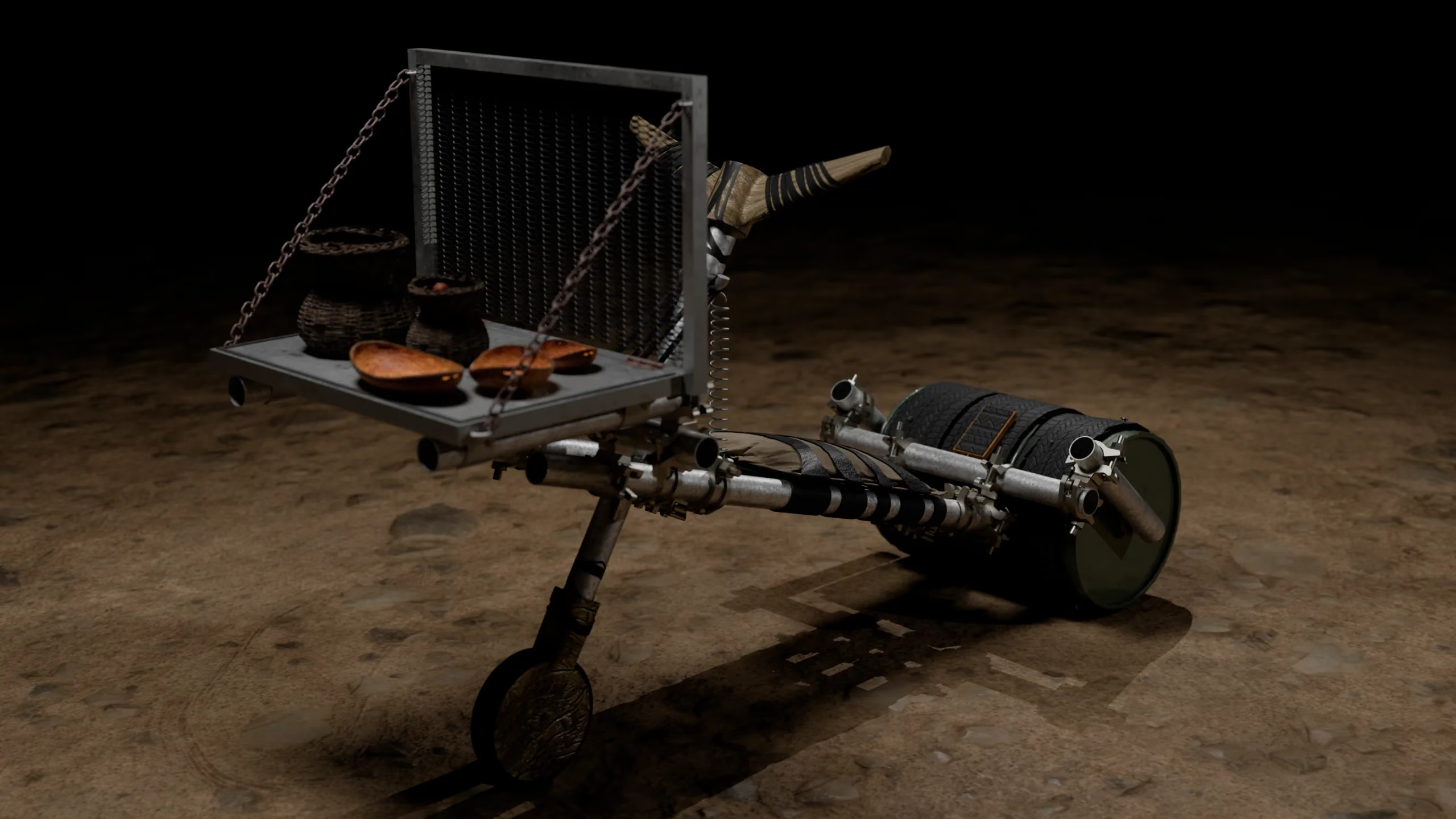
The vehicle becomes the stall: transport and point of sale coincide, and unloading disappears from the day.
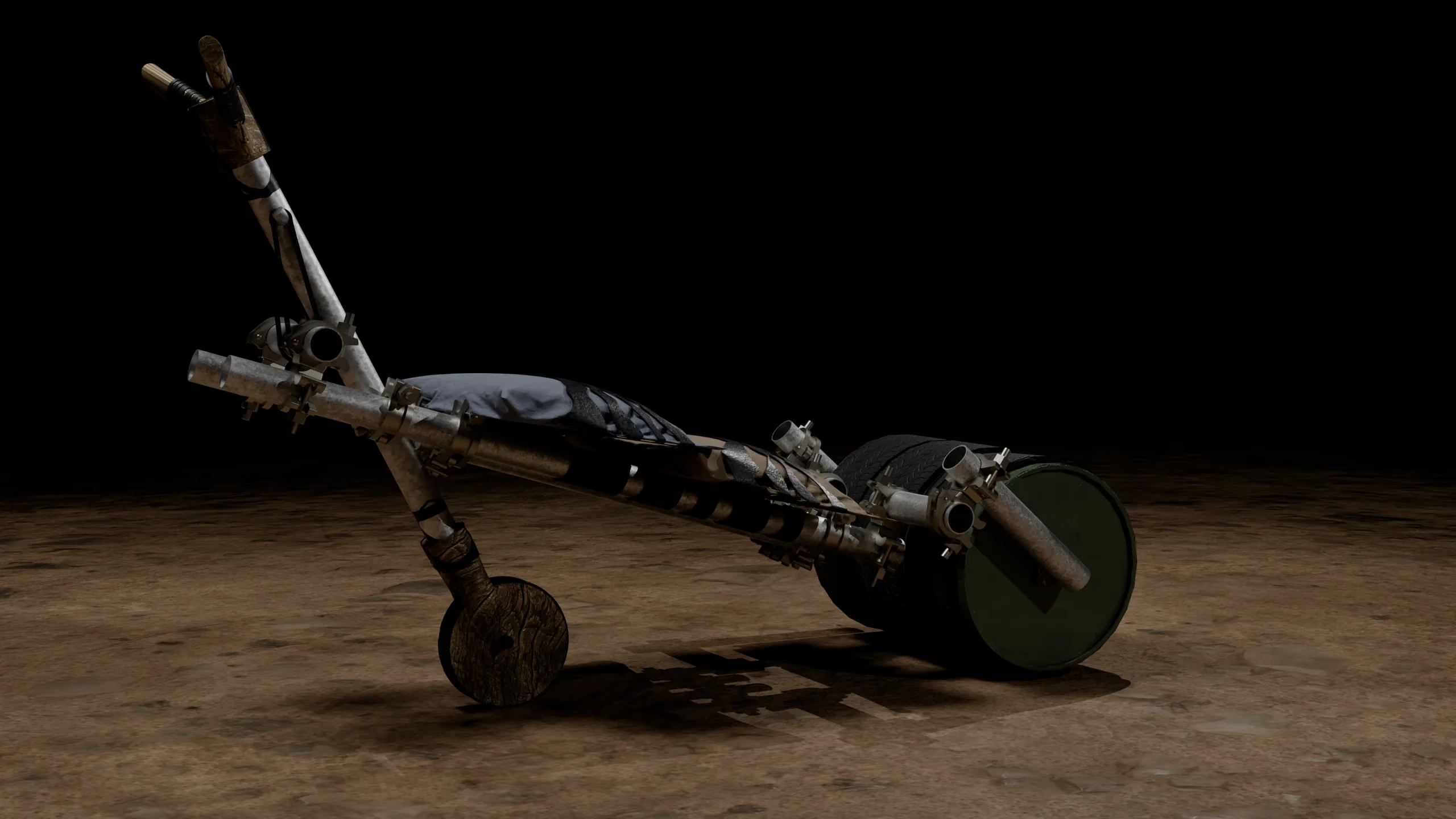
The frame holds a stretcher and reaches where an ambulance cannot. The stability of the drum and the flex of the tubes, there for other reasons, do the work.
The prototype was assembled with the same tubes, couplers and reused parts the abacus lists, and it was ridden. The project was developed during a university course, and entered in a competition held by Toyota Material Handling.