


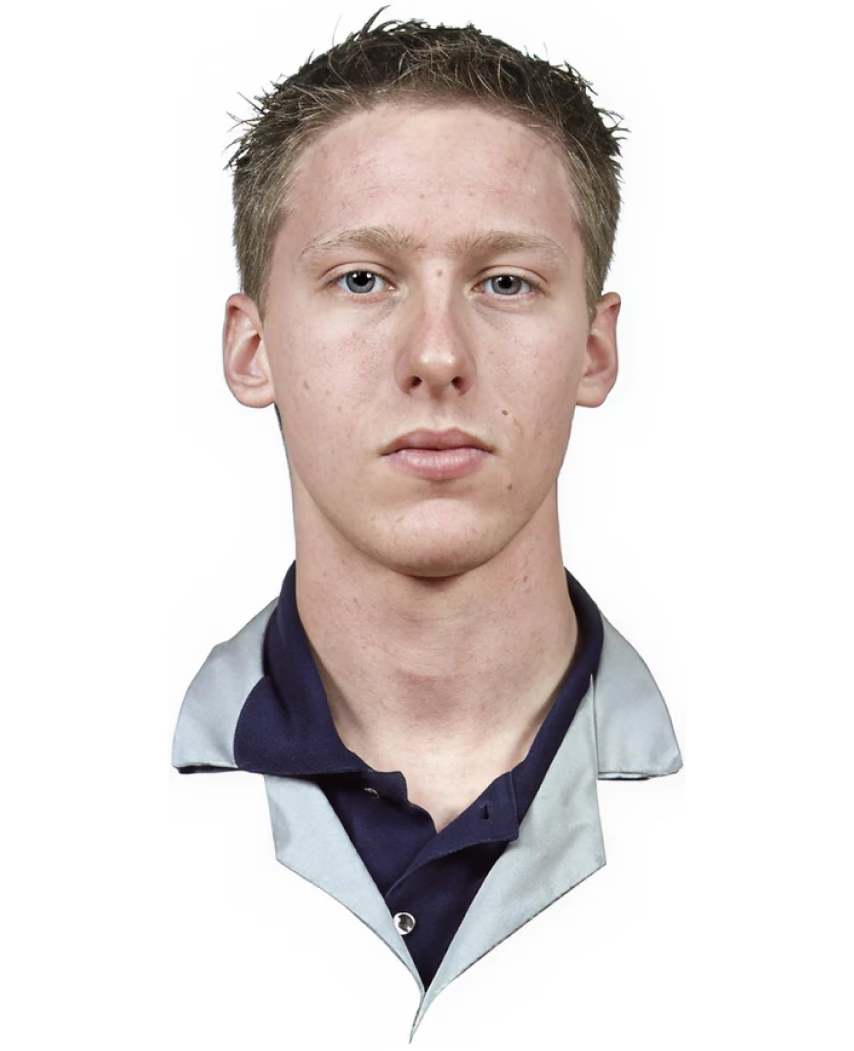
The operator
“There is always some fear in walking up to the machine, even when you know it is safe.”
Opportunity: work on how the machine is perceived.
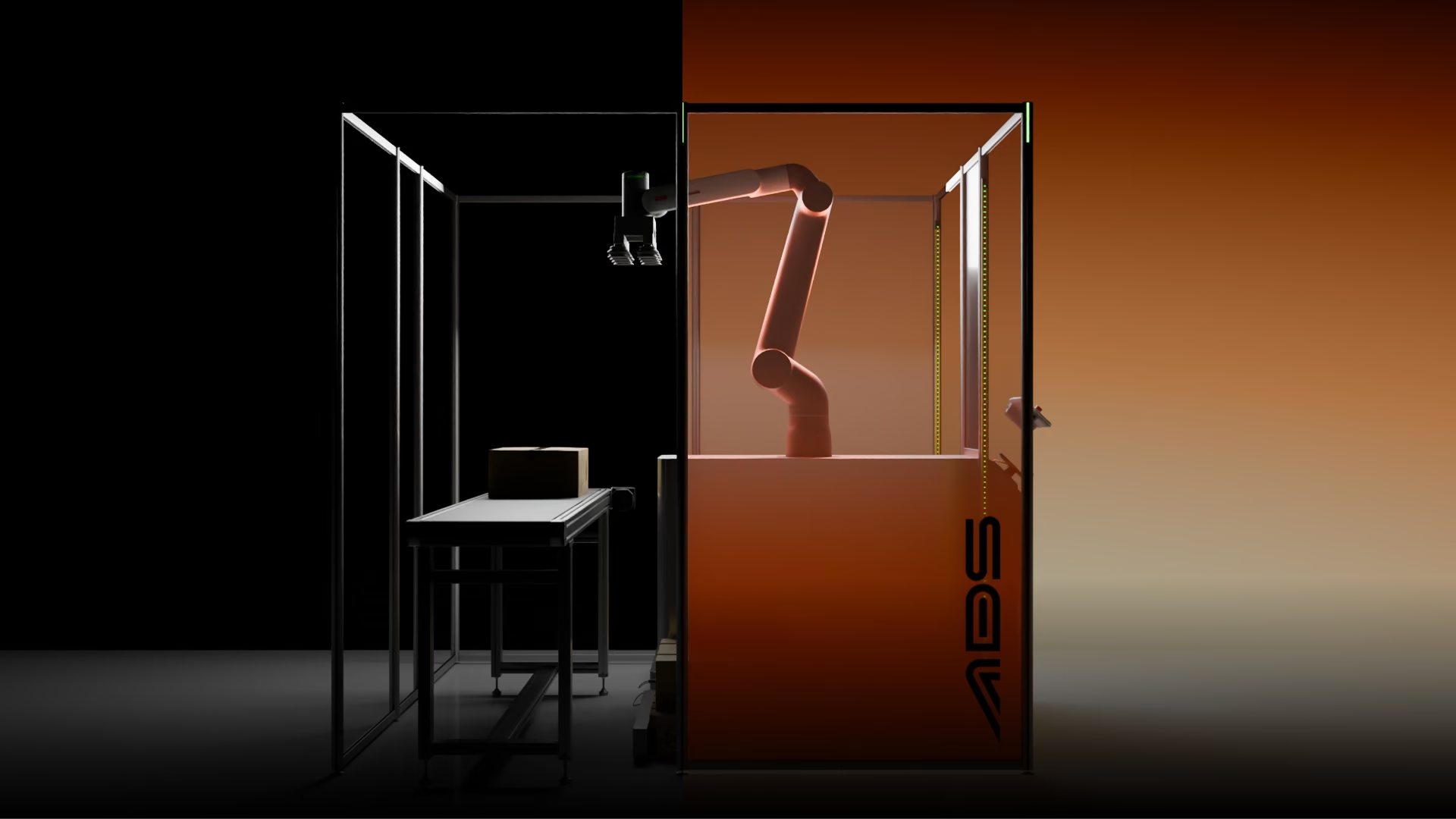
A palletizing island for ADS Automation, built around an ABB GoFa cobot. The safety cage stays, with panels that hide the pallets and leave the robot in view, and the island ships in pre-assembled parts.


The cage becomes the stage.
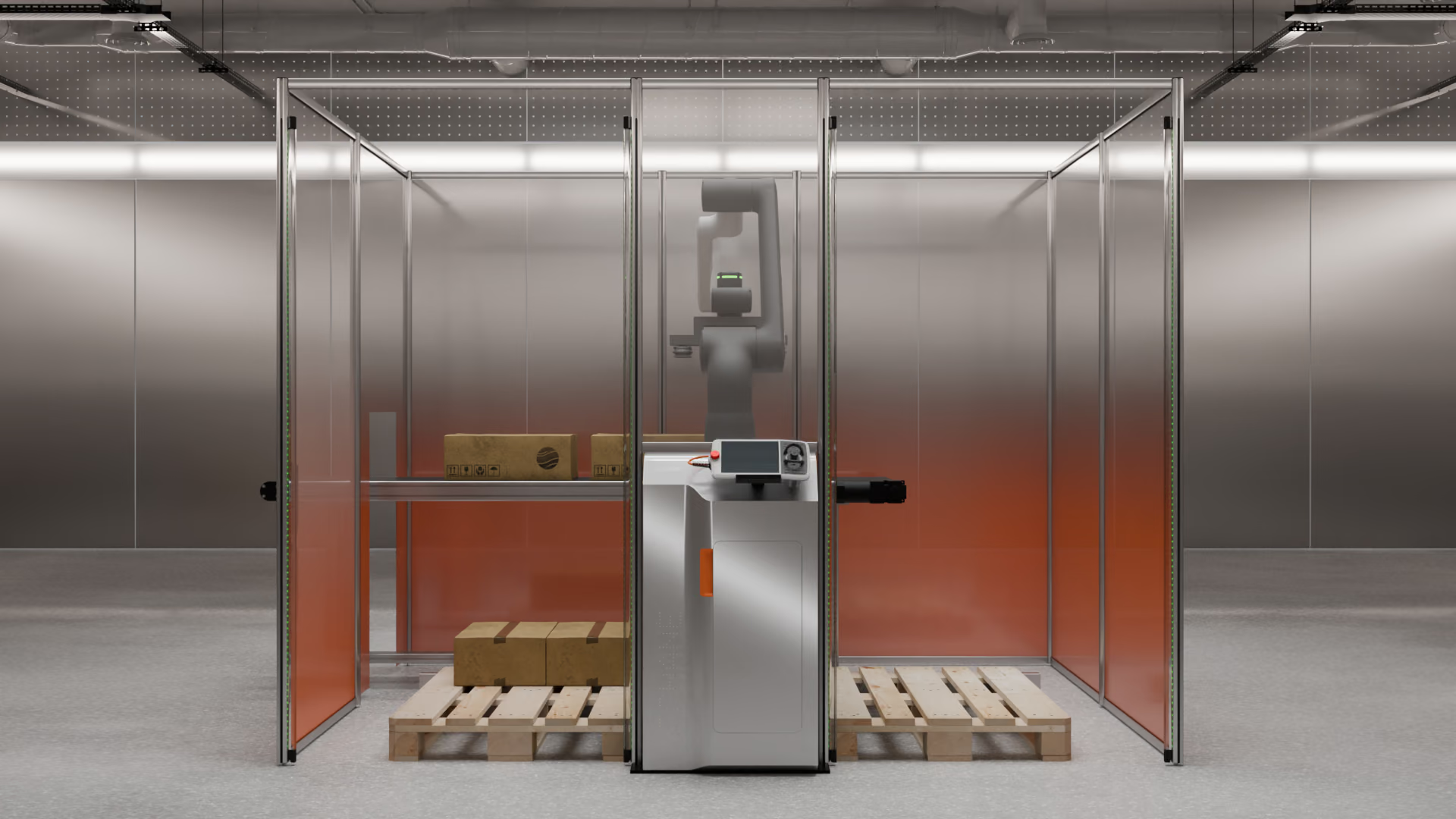
ADS Automation, an ABB system integrator in Imola, asked for a new end-of-line palletizing island, in a project run with Confartigianato Emilia-Romagna. The robot was fixed: an ABB GoFa collaborative arm. The brief was the island around it, which had to be accessible, safe and easy to adapt, and unlike the cells already on the market.
We started from four cells already on sale, and from what each of them puts first.
Deployable, utilitarian, compact, foldable.
Configurable, careful about looks, very compact, fully enclosed.
Transportable, rounded, agile, with a window for the operator.
Transparent, powerful, compact, for medium and slow lines.
Three people deal with the island: the operator who works beside it, the installer who sets it up and the company that ships it. One line from each of them set a direction for the project.
“There is always some fear in walking up to the machine, even when you know it is safe.”
Opportunity: work on how the machine is perceived.

“Safety cages are necessary, but if I could I would take them away: they are really ugly to look at.”
Opportunity: give the cage some dignity.

“Shipping costs always matter: sending machines this big is not simple, and above all not cheap.”
Opportunity: modularity, with easy assembly as a value.
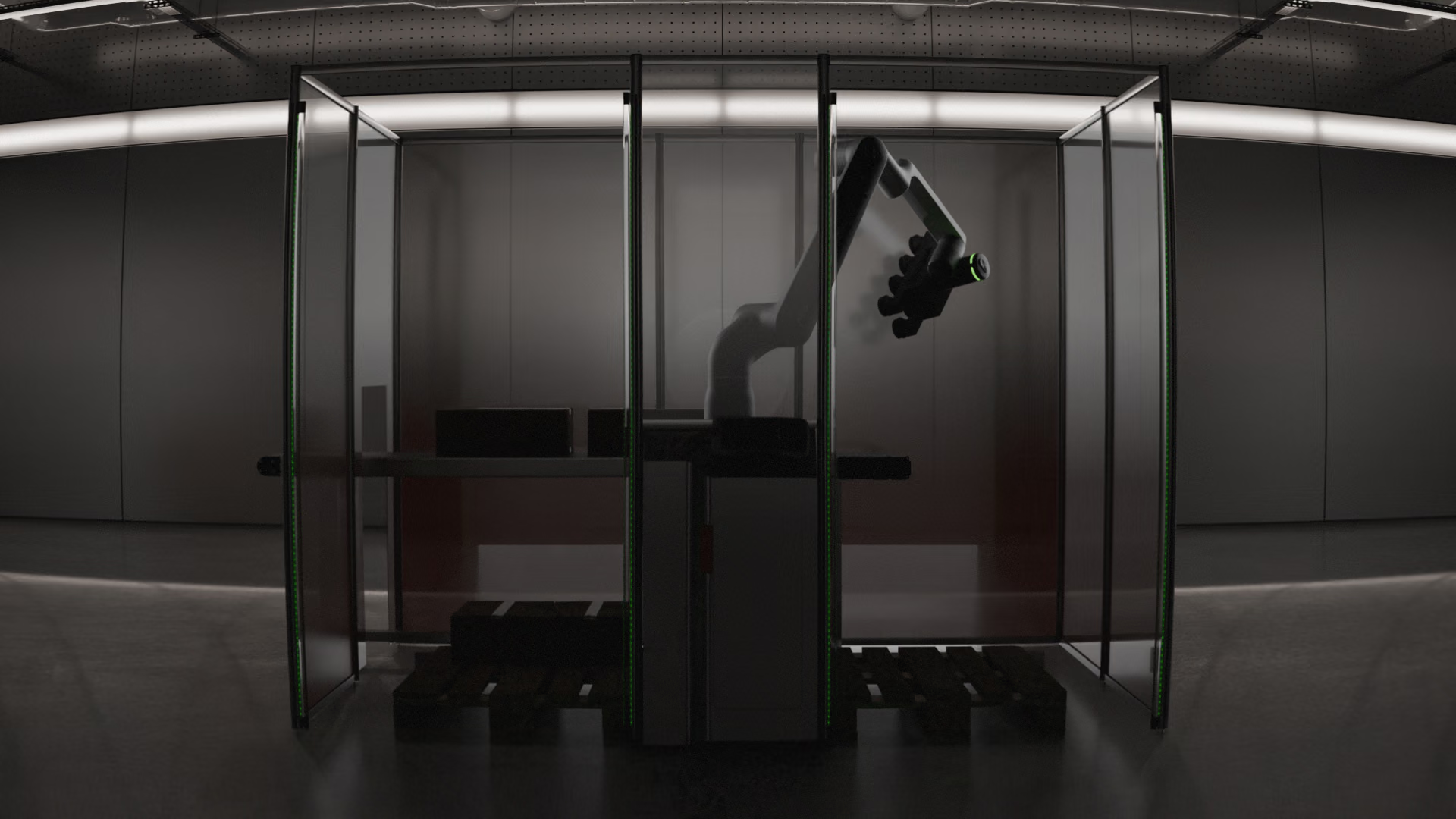
In Greek theatre the mechanè was the crane that lifted actors over the stage.
This one lifts boxes onto a pallet, and lets you watch.
The project kept to four principles. Each one answers something the three of them said.
The robot stays in view, behind clear panels.
Lights in the posts and an HMI tell the state of the machine and where it is working.
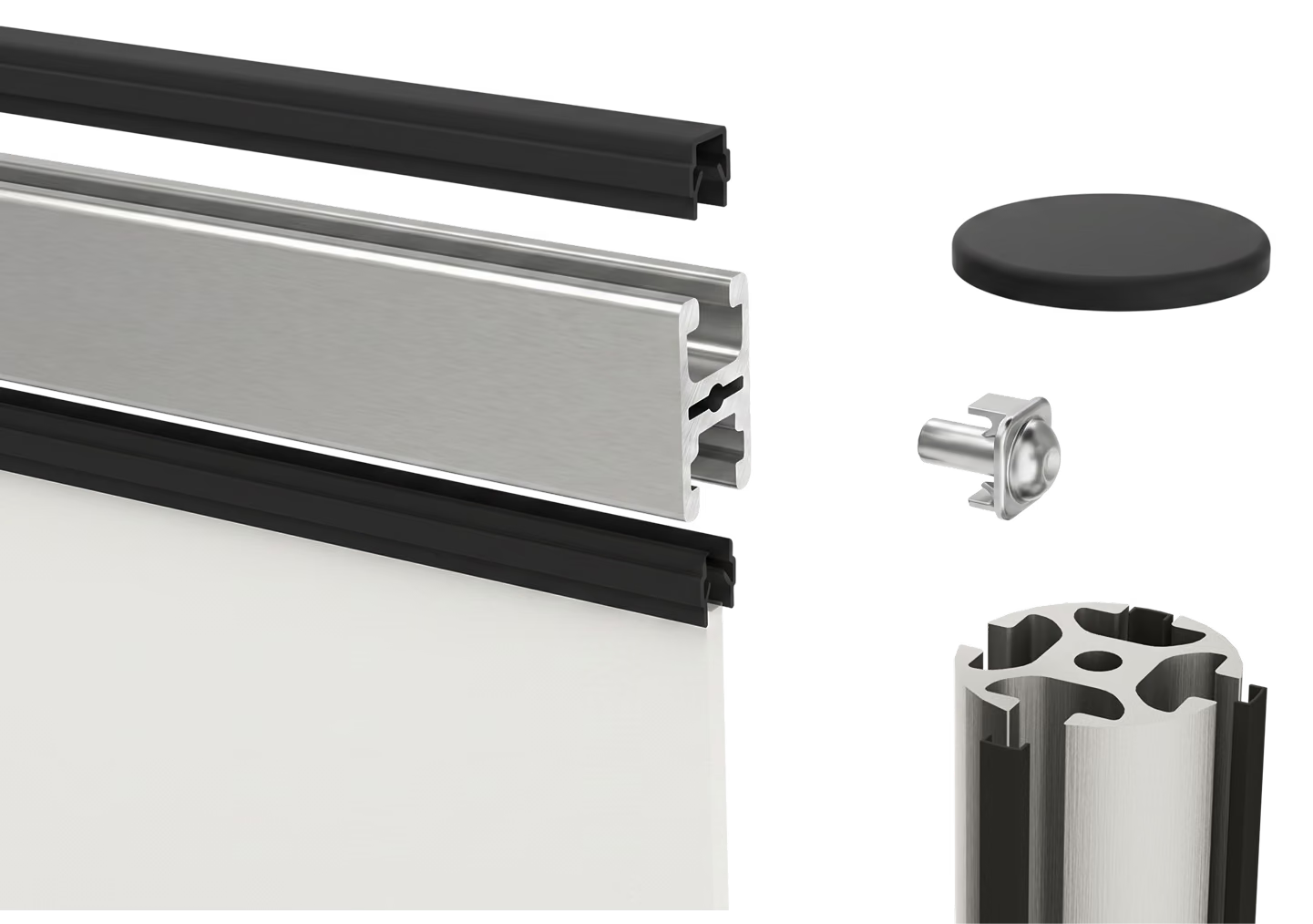
Standard profiles and a nut-and-bolt base, assembled in sub-groups.
One or two pallet stations, from the same parts.
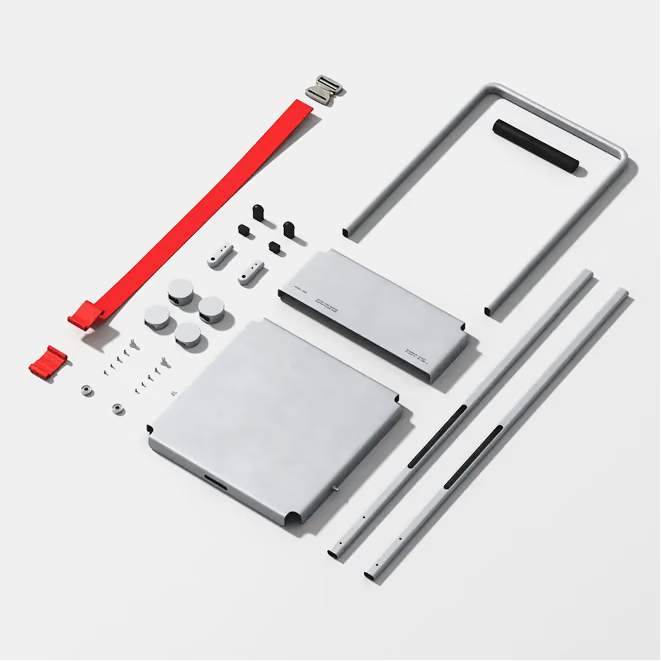
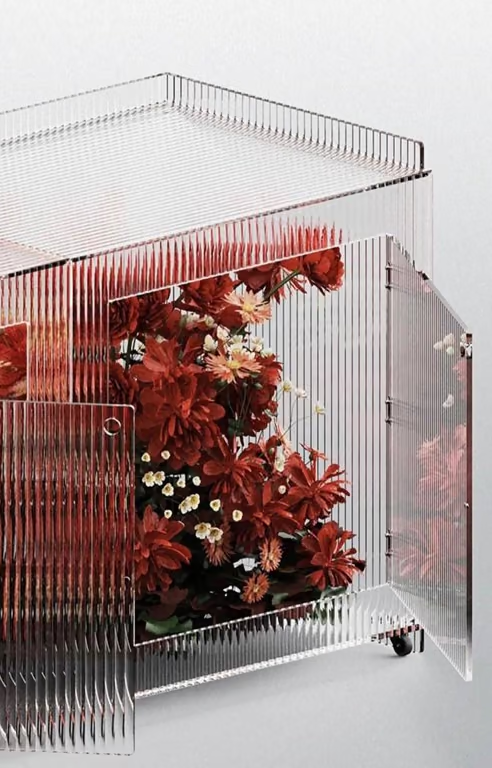
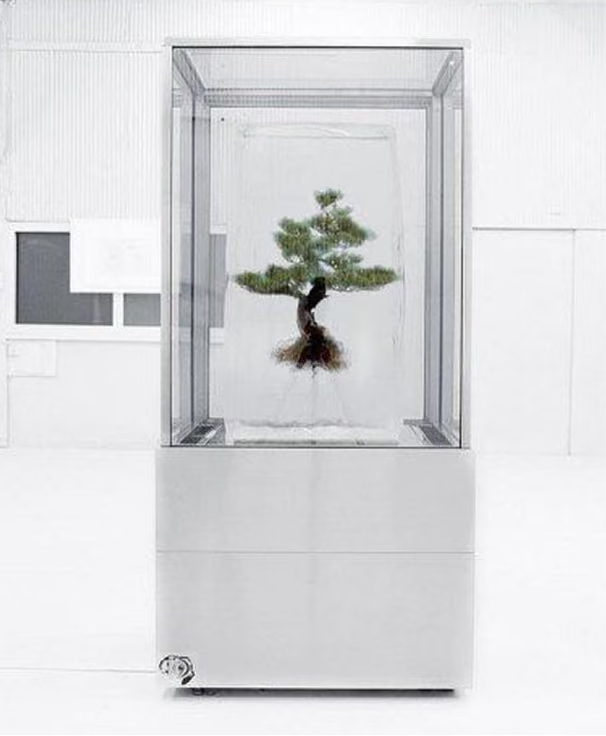
References from the moodboard: the kit for assembly, the two cases for a cage that shows what it holds.
Alessio Fontanelli and Piera Marinelli made the film, soundtrack included. It runs 53 seconds and has sound.
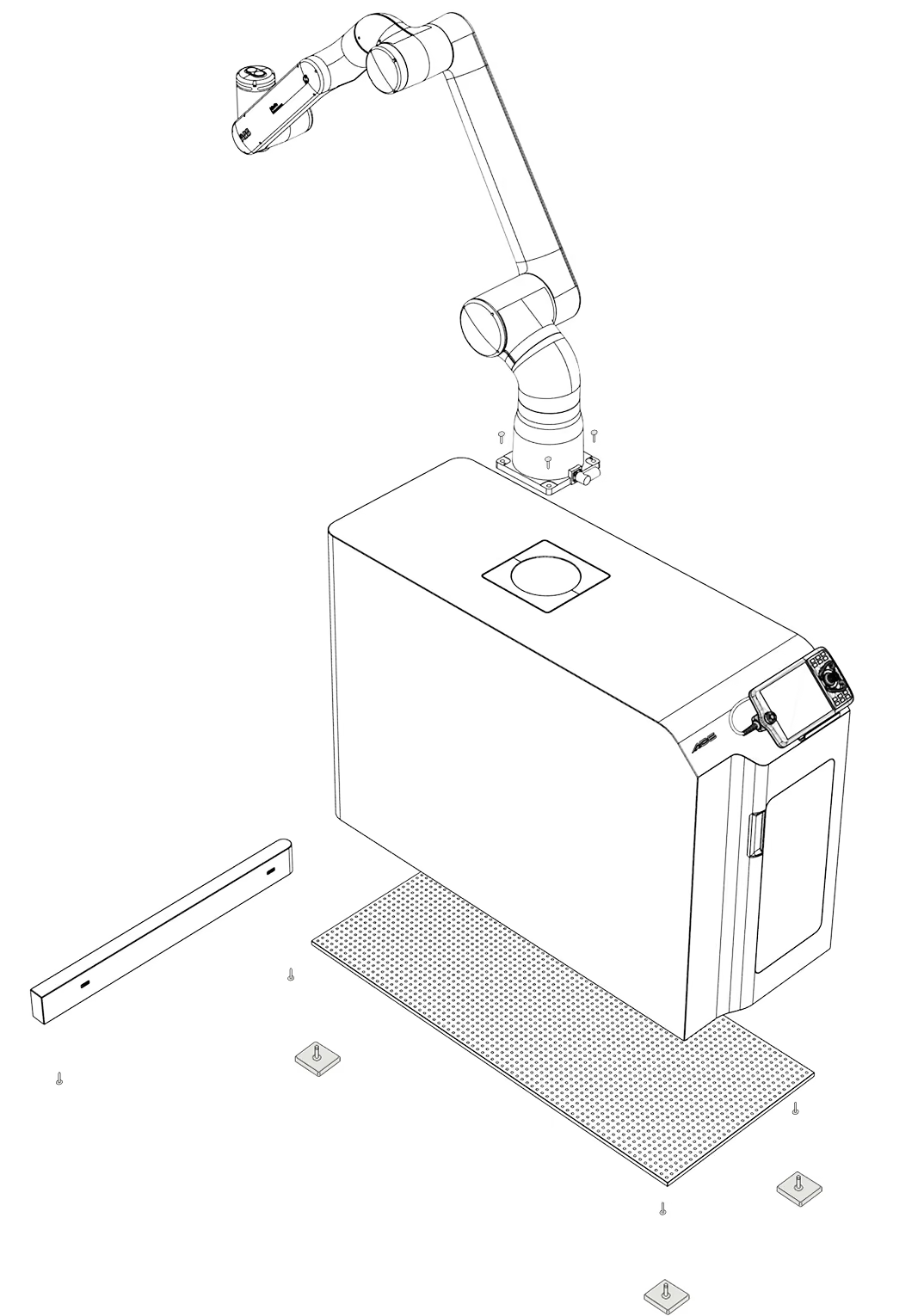
The island ships in three parts that are assembled on site.
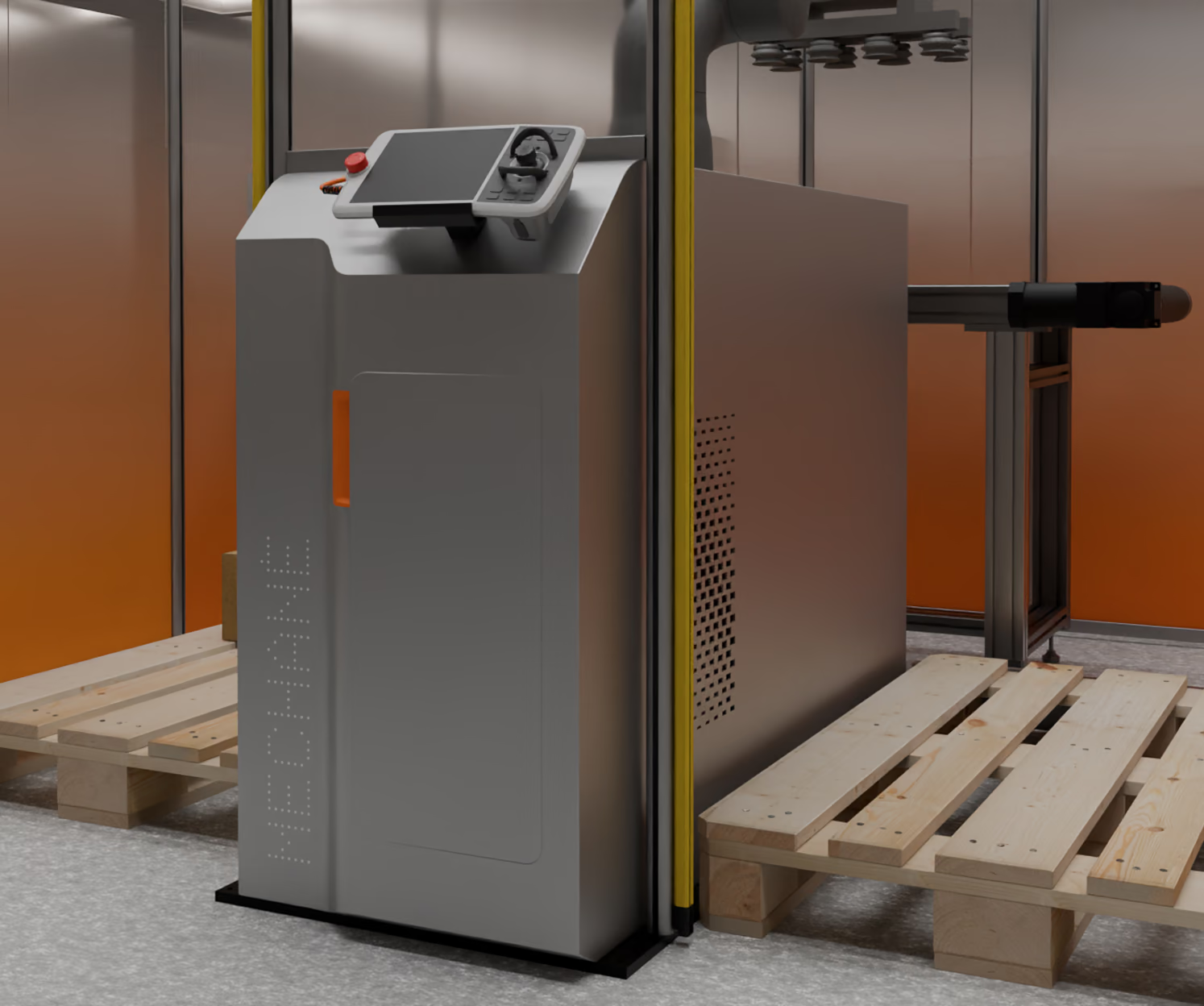
The GoFa stands on a module in folded stainless steel sheet. The HMI and the emergency stop sit on top, at the operator's height; a door on the side opens for maintenance.
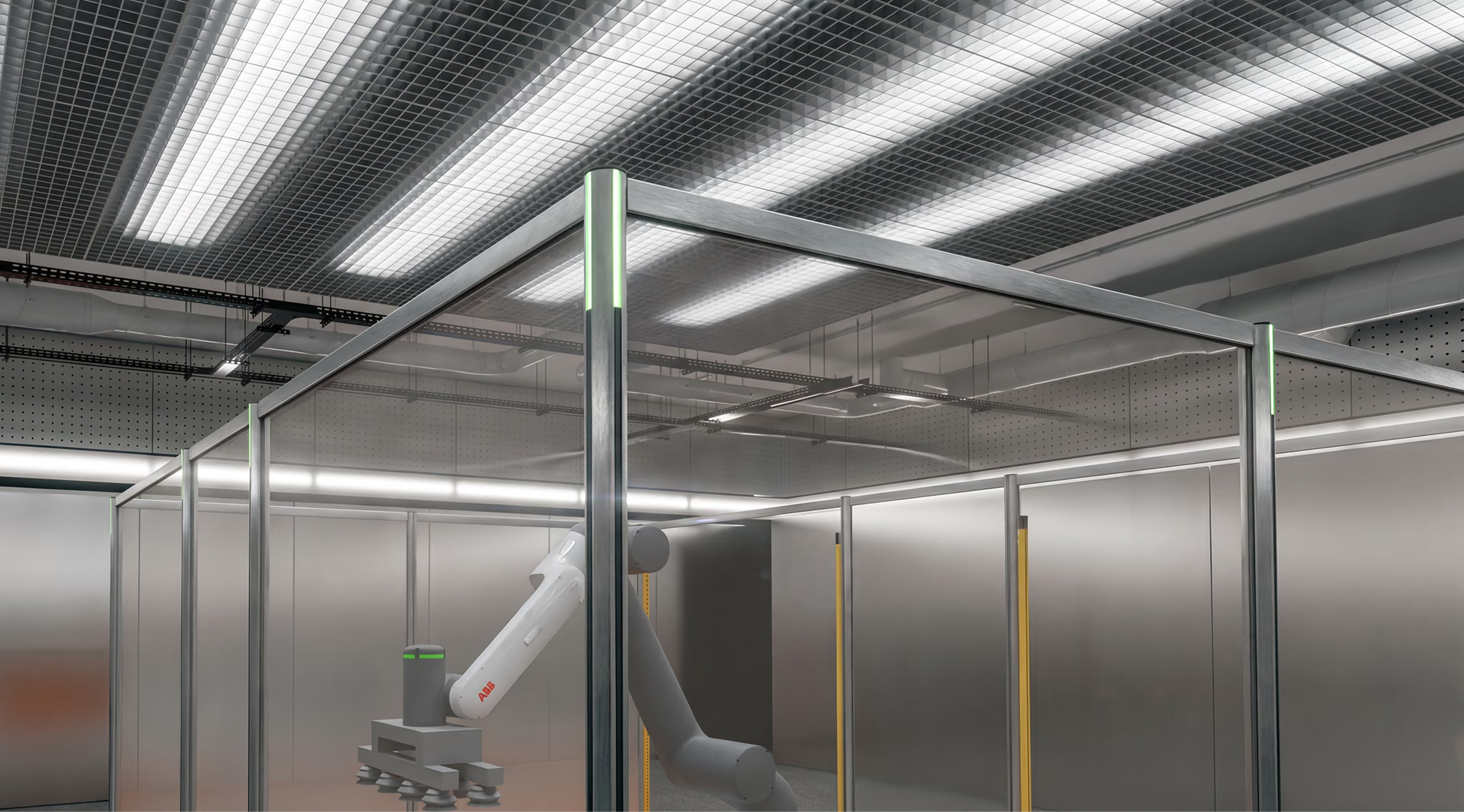
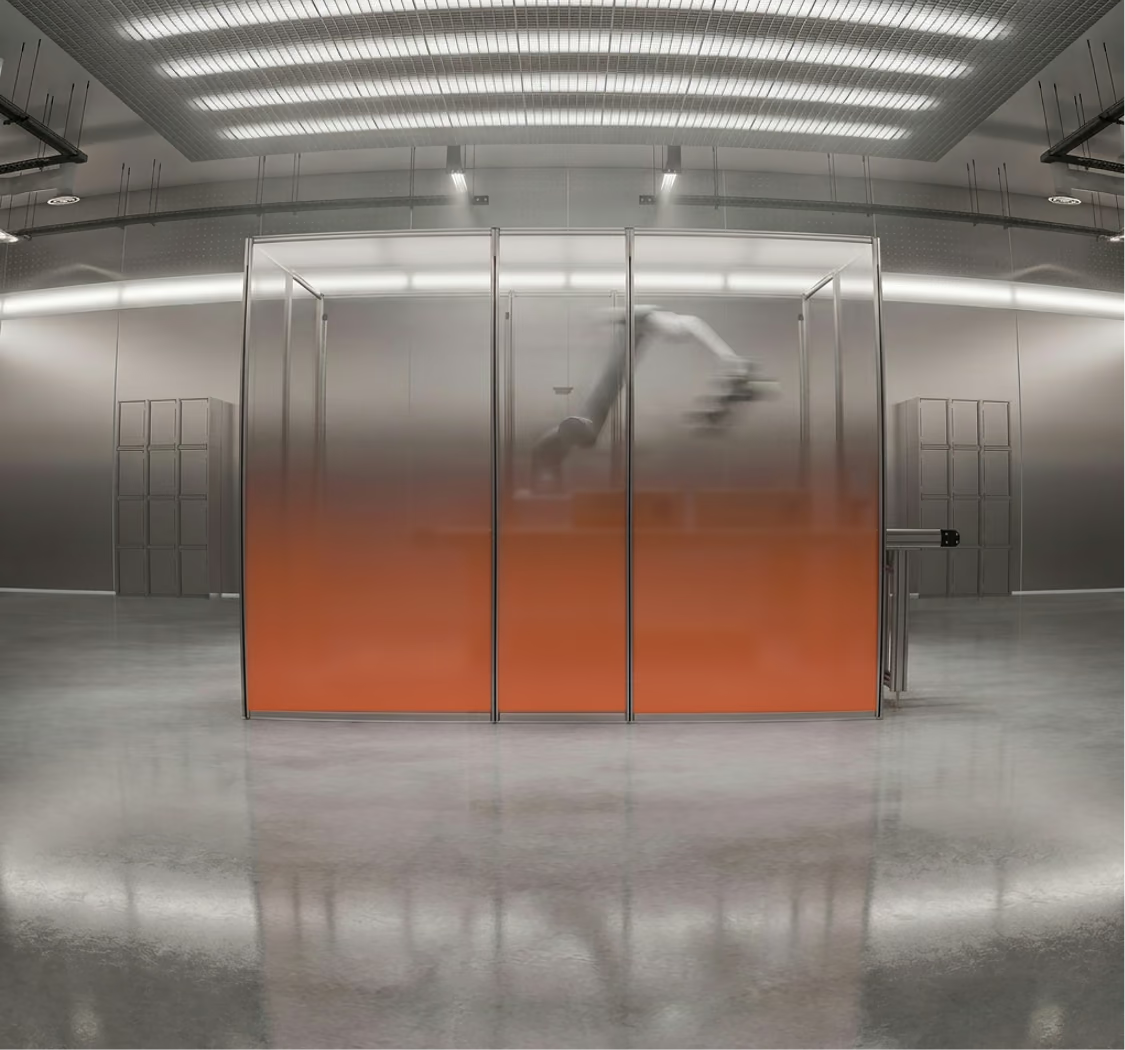
Installers would rather do without safety cages. Here an adhesive gradient on the panels hides the pallets, leaves the robot in view and carries the client's brand, and the graphics can change for each customer.
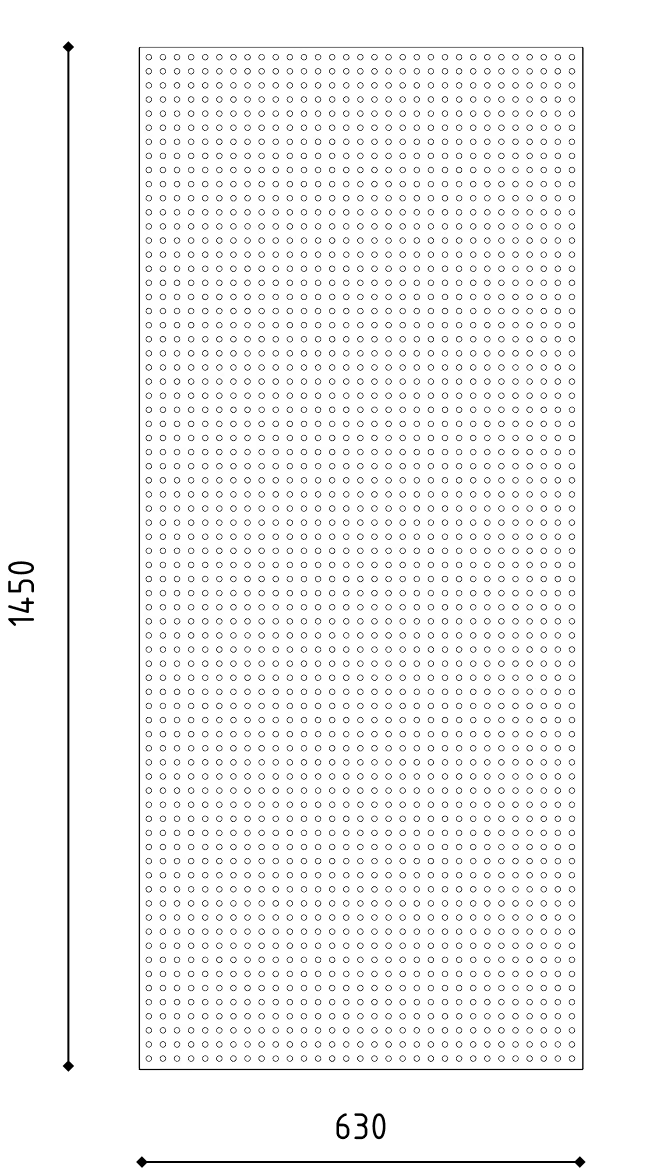
The cage is built from item profiles, assembled in sub-groups. Under the core, an M8 pegboard plate of 630 × 1450 mm: every element bolts where it is needed, with a nut and a bolt.
Both are built from the same parts.
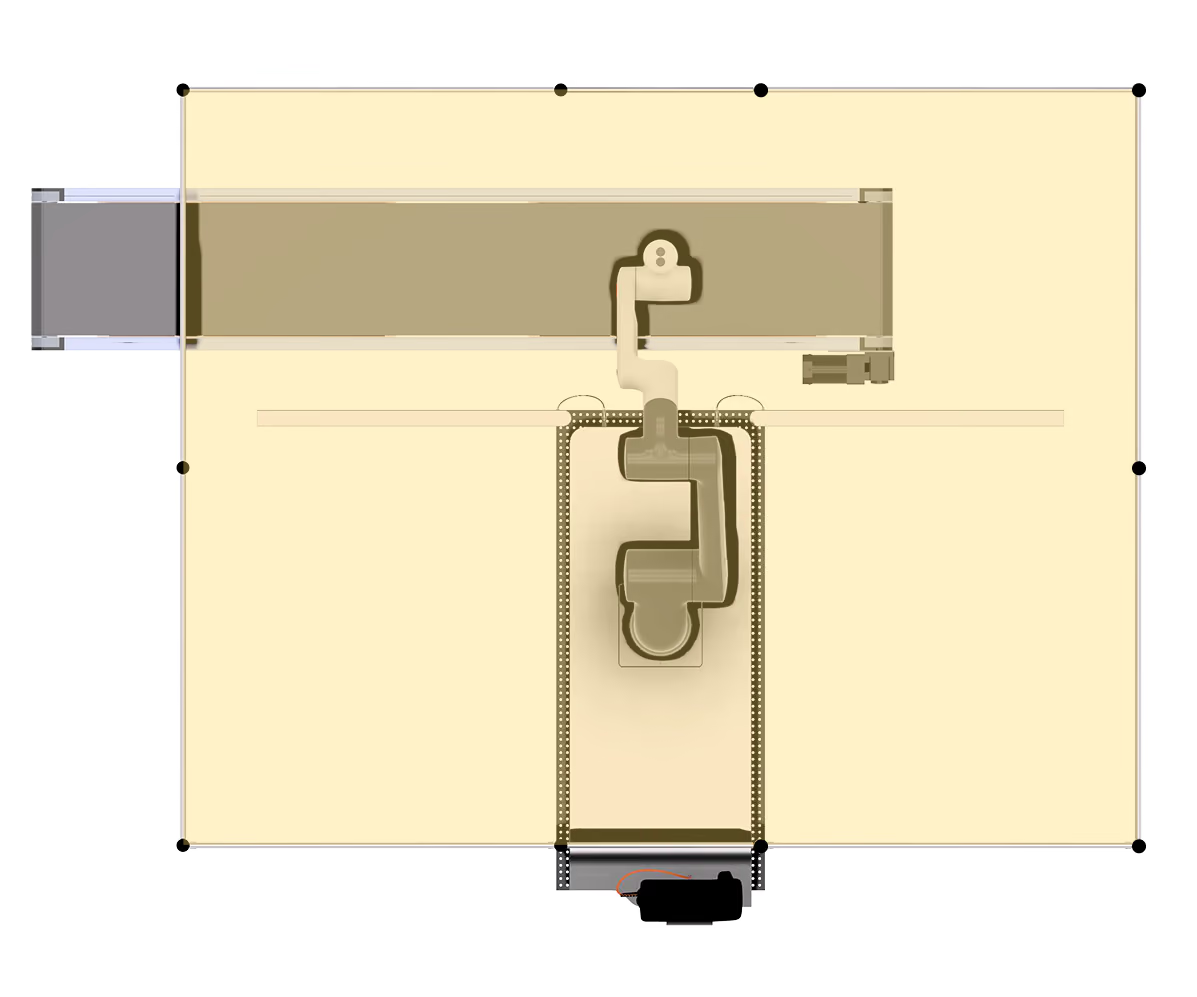
292 × 232 cm. Pallet buffering, for high volume at high speed.
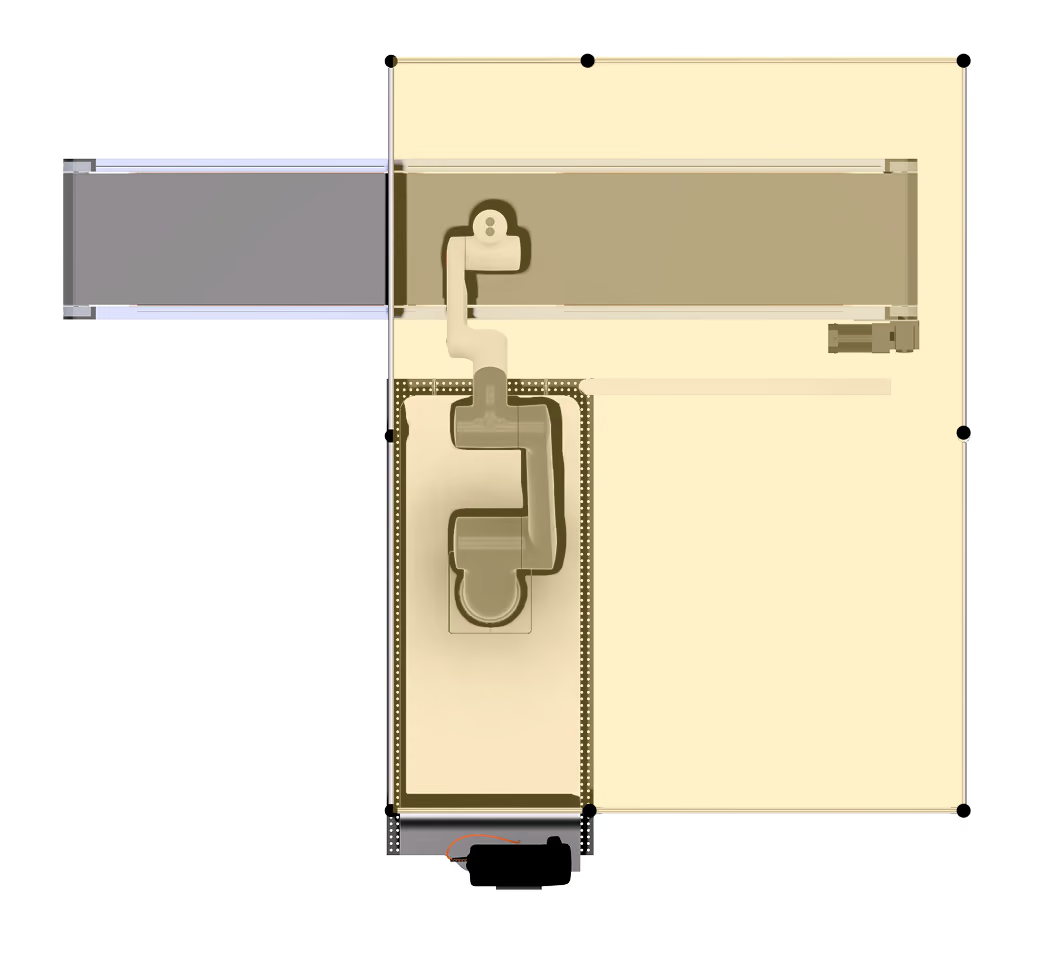
178 × 232 cm. No buffering, for lower volume at high speed.
Keyence sensors keep the operator safe and the pallet aligned; the HMI shows the state of the machine.
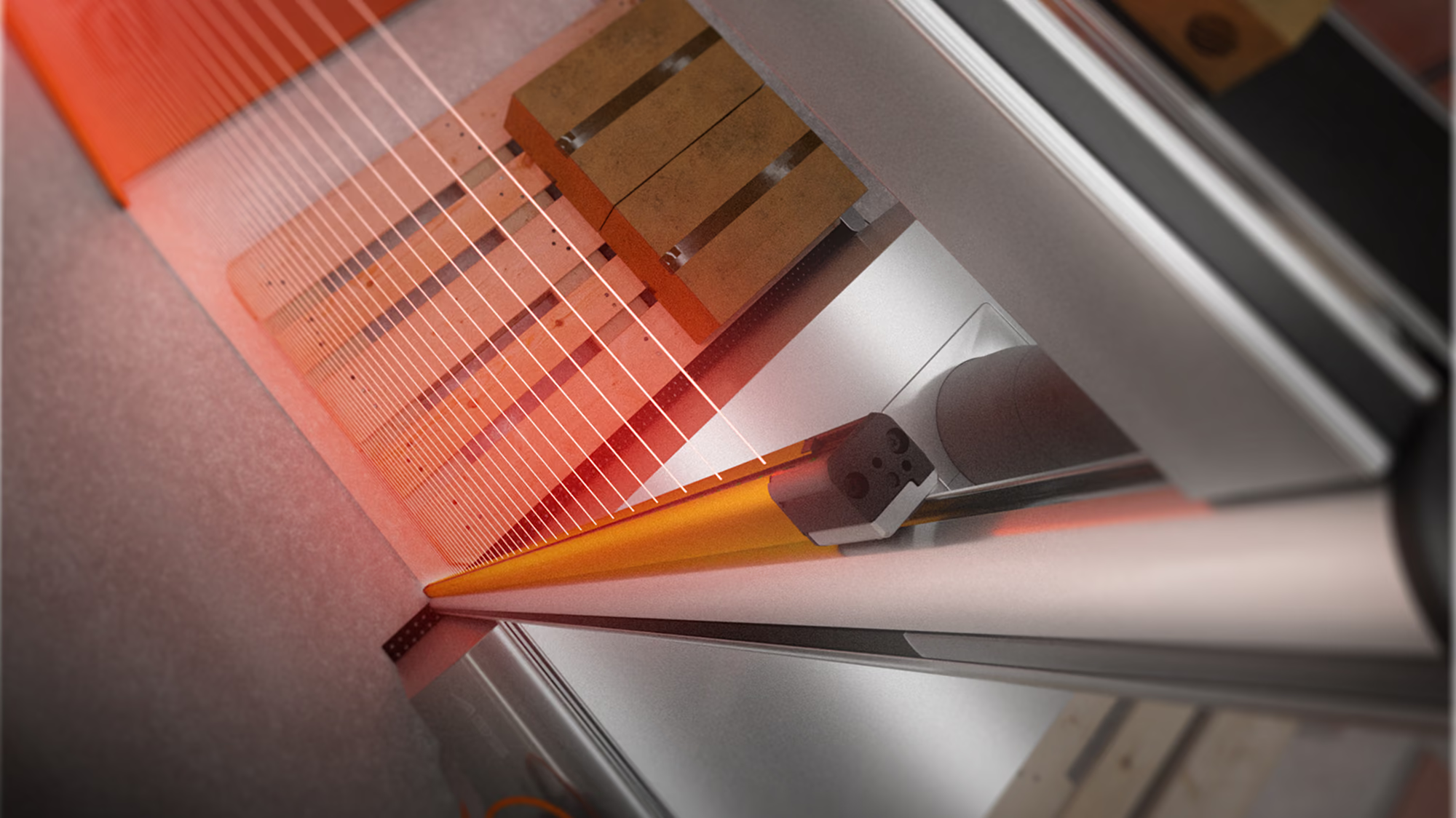
A safety scanner for the operator, on the side of the pallet station.
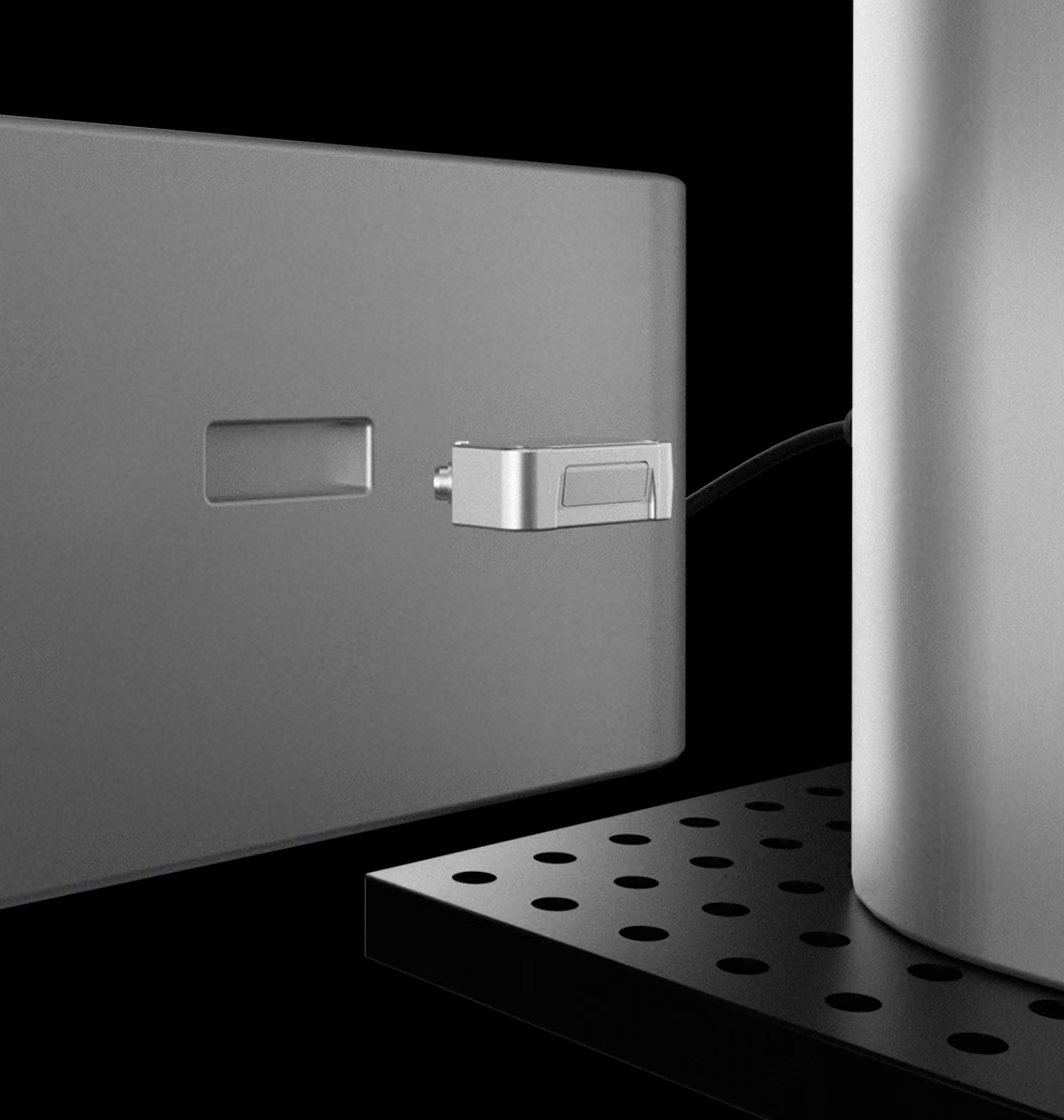
They check that the pallet is aligned, with a standard connection to the core.
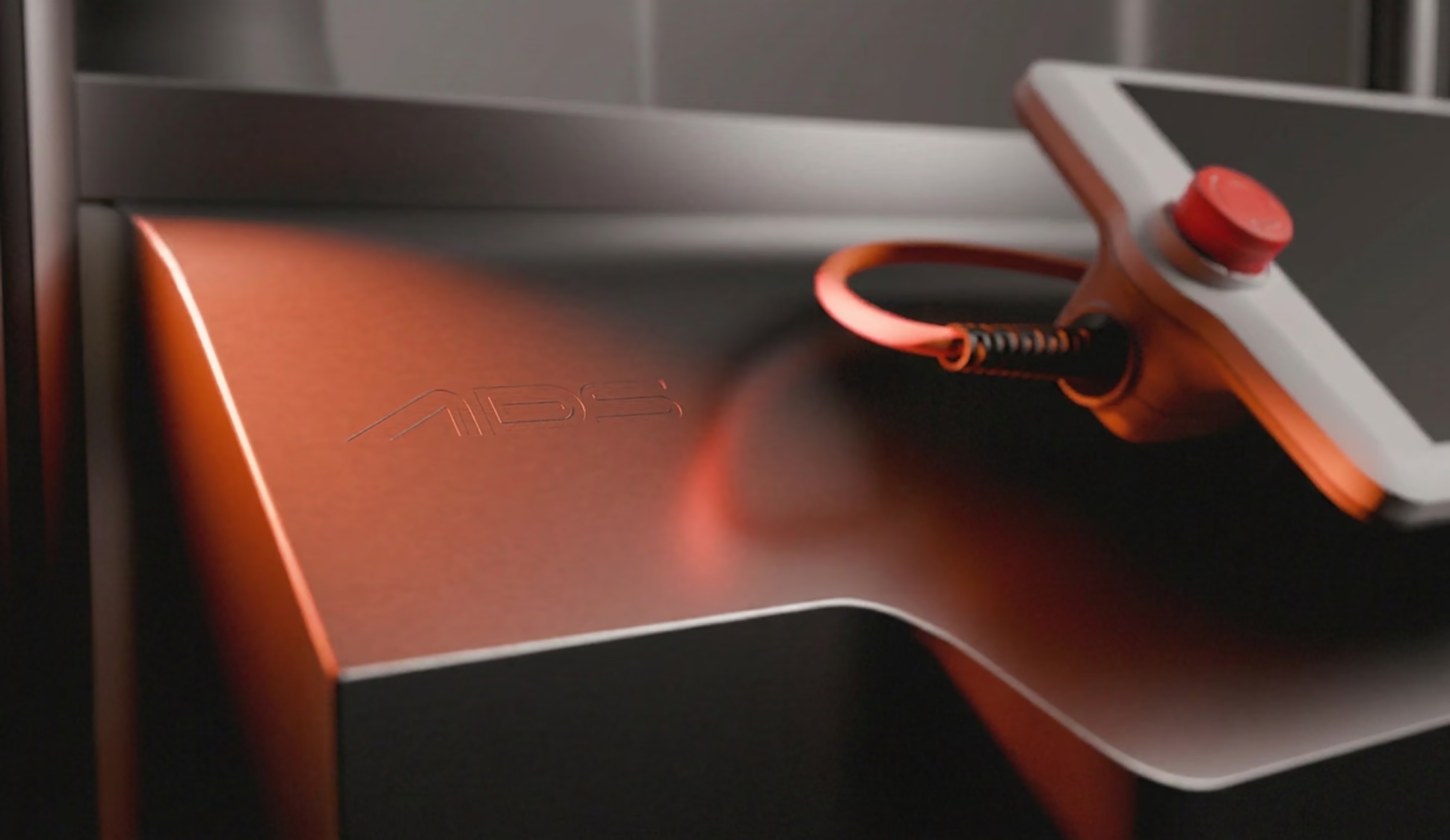
Feedback on the state of the machine and on the zones where it is working.
The team also redrew the ADS identity: a logotype, a pictogram taken from its A, and three colours. On the island the mark goes on the HMI and on the panels.
Keyence sensors with instant visual feedback, and a cage that no longer reads as a wall or a danger.
The enclosure becomes a brand asset: a panel that can be customised, and an opaque gradient that puts the robot in focus.
A configurable product that ships in pre-assembled parts.