


01
In the trunk
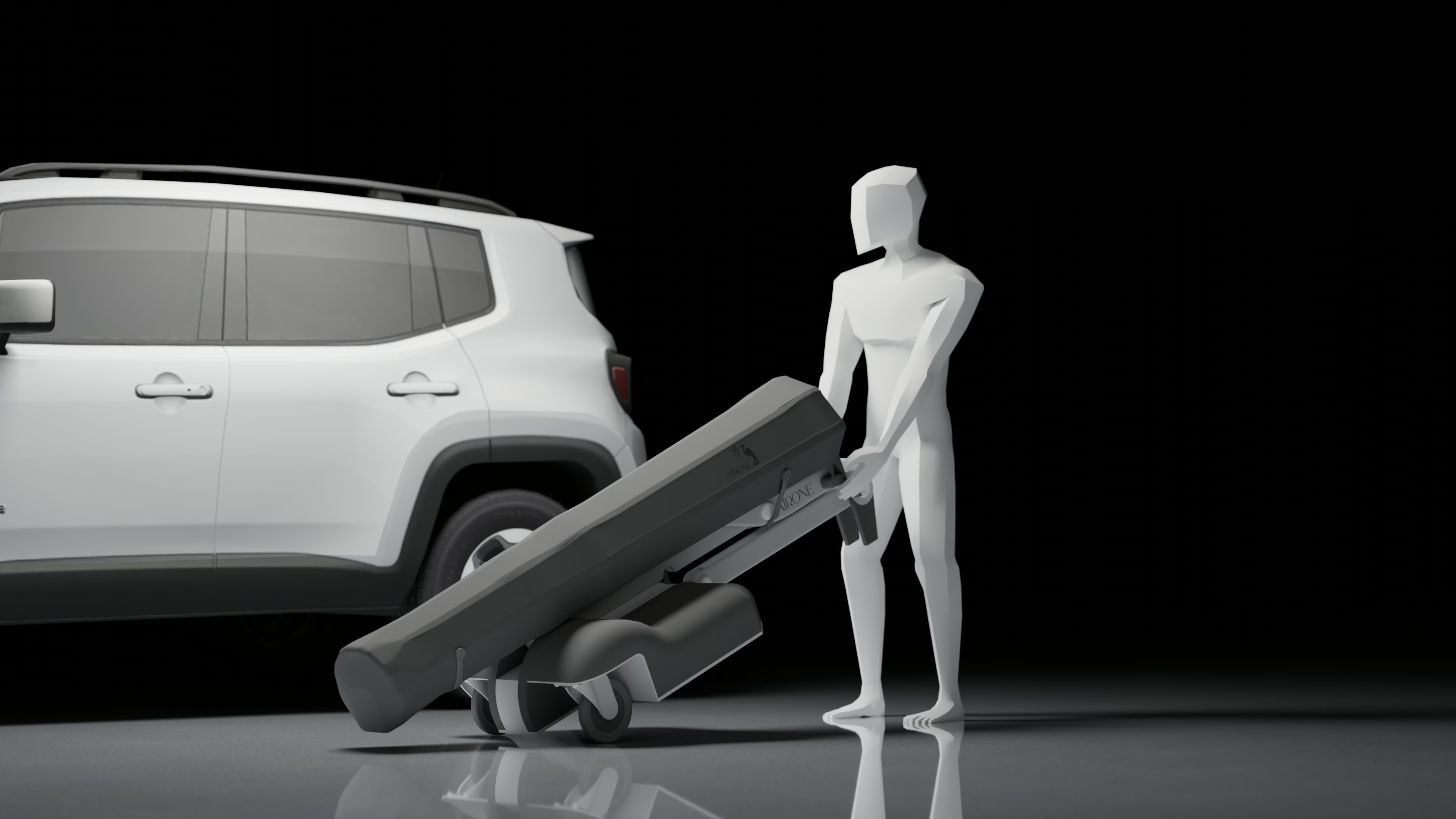
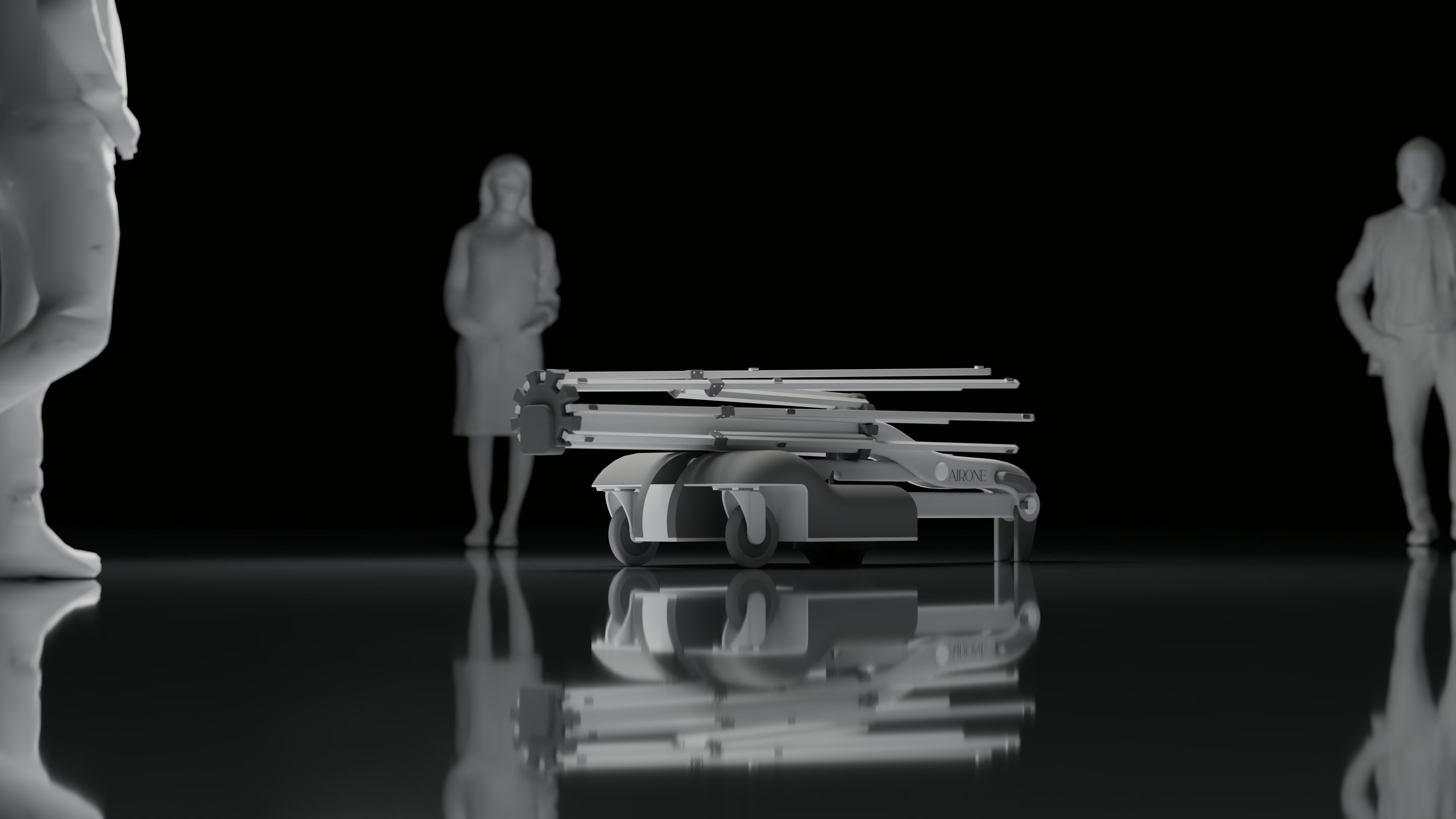
Folded inside its sheath, it fits in the trunk of an average car.
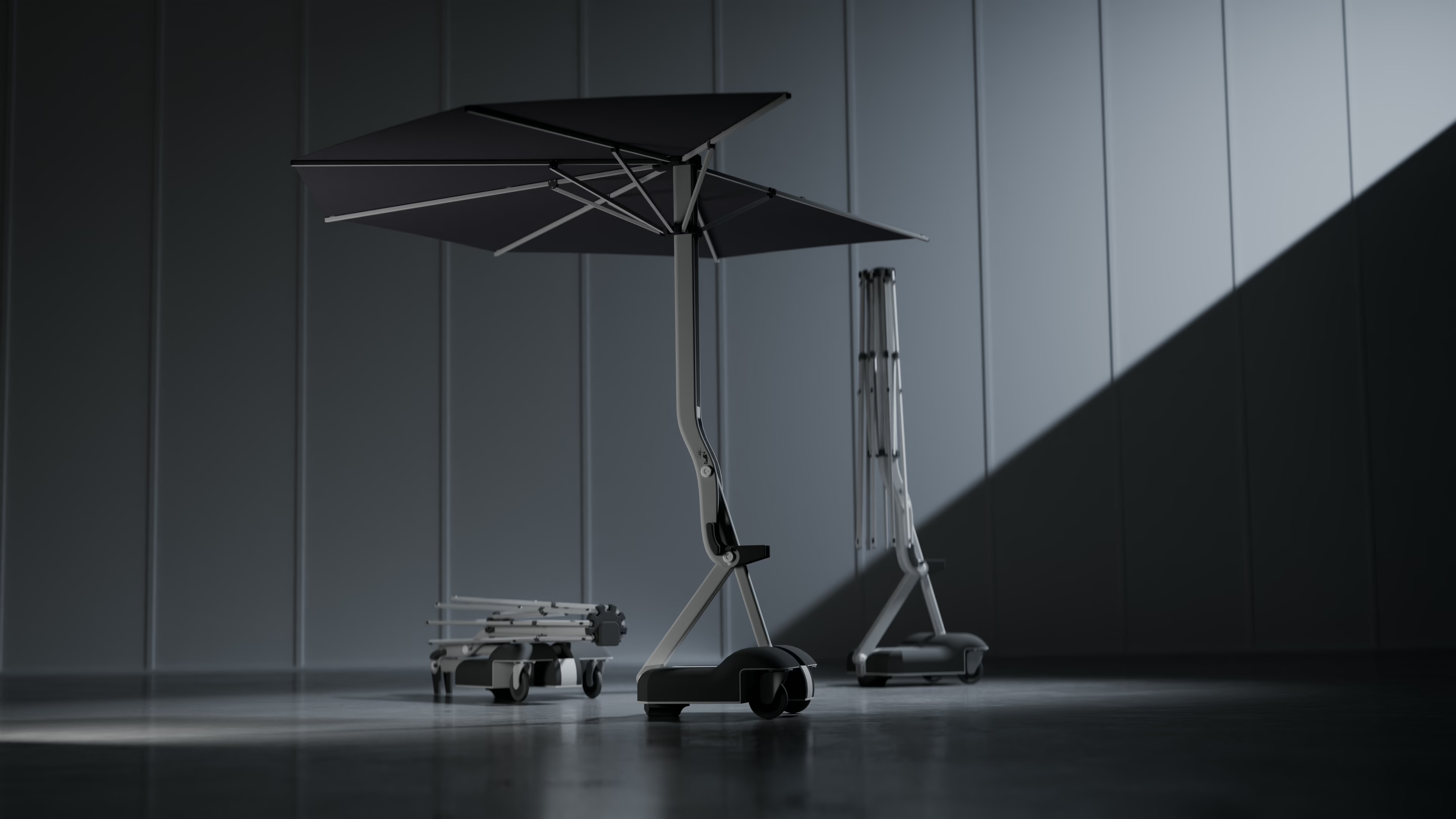
My bachelor's thesis: an umbrella for restaurant and café terraces. A four-bar linkage lowers it from upright to flat, so it can be stored, moved on its wheels or taken out of the wind.

The project started from the moments a terrace umbrella has to be put away: at the end of the season, when strong wind picks up, or simply when it has to move to another spot.
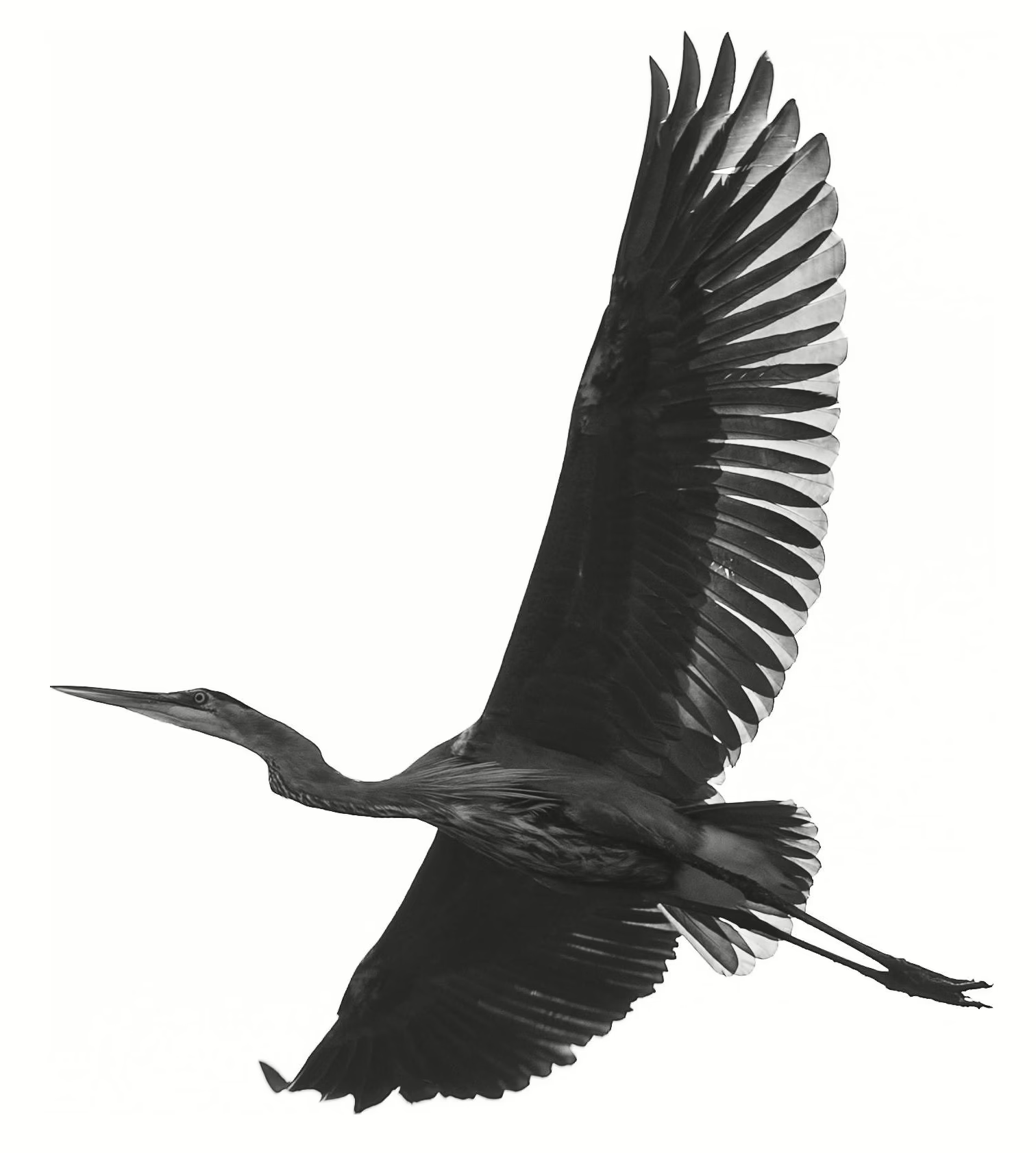
The shape comes from a heron. The structure is slender and the main arm curves like the bird's neck, a curve the mechanism needs anyway, because it follows the way the four-bar linkage folds. The umbrella has two positions: upright and open, or folded flat.
I defined the movement in CAD with geometric constraints: fixing the base line AB and the radii AC and BD leaves the linkage a single degree of freedom. FDM printed prototypes then showed that the mechanisms work.
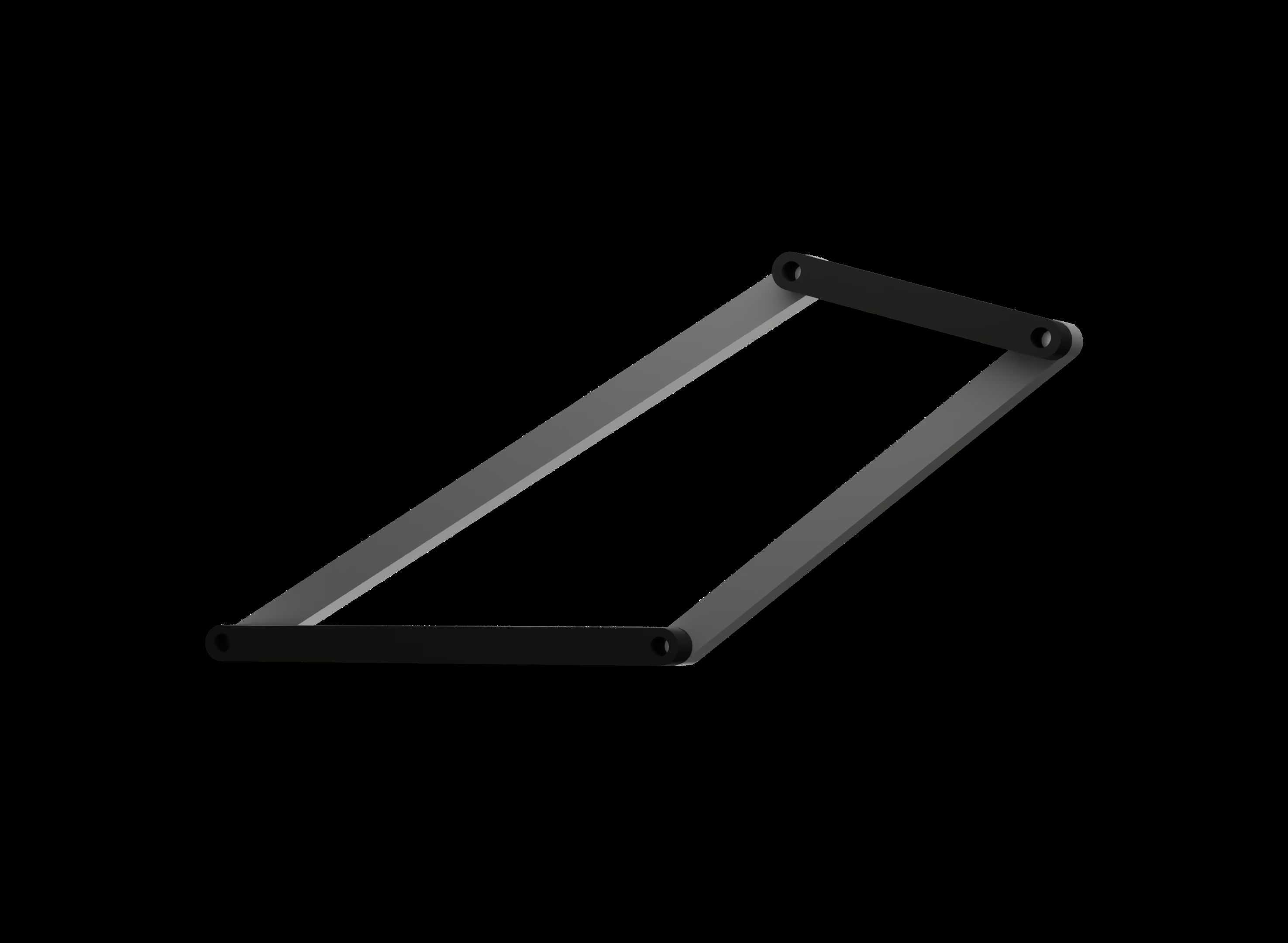
The four-bar linkage works like the pantograph on a train roof: it raises and lowers the arm with a single degree of freedom.
An open umbrella catches the wind like a sail.
On Airone the four-bar linkage folds the main arm down until the whole structure lies parallel to the ground. Folded like this it offers the wind very little surface and takes up far less space.
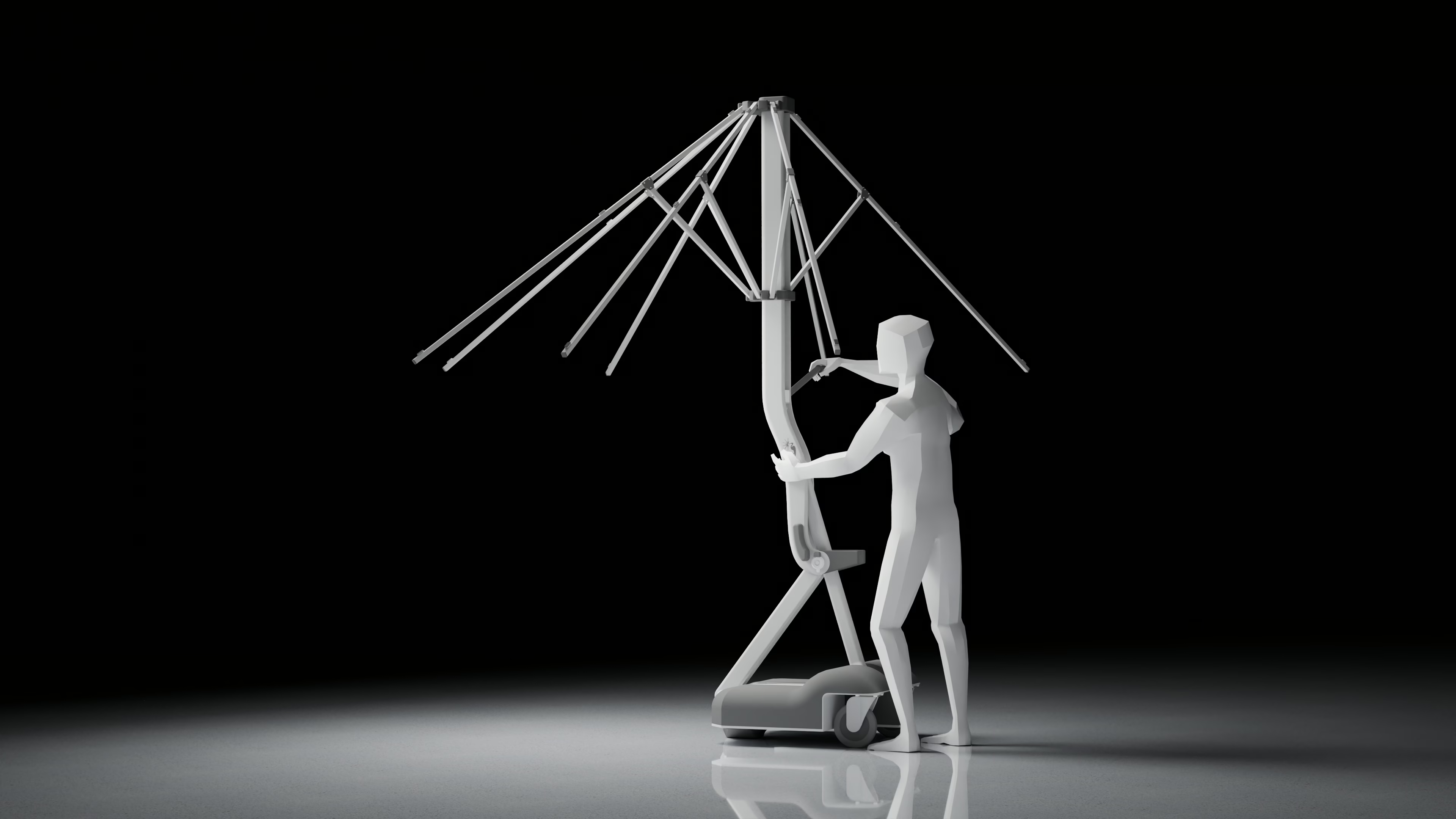
The base carries removable concrete ballast, and folding brings the rest of the weight down close to the ground.
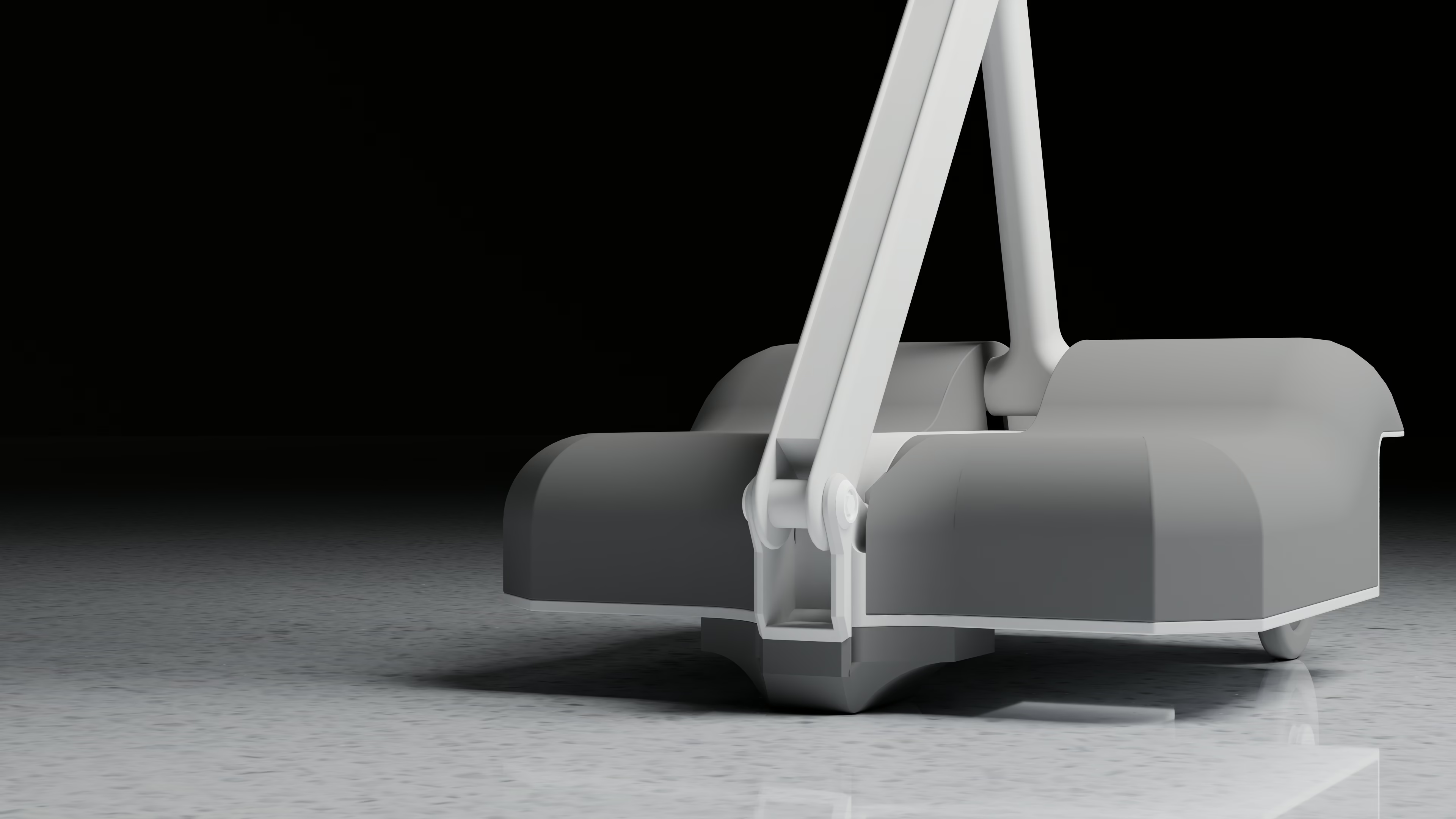
Swivel wheels in the base let one person move it without taking it apart.
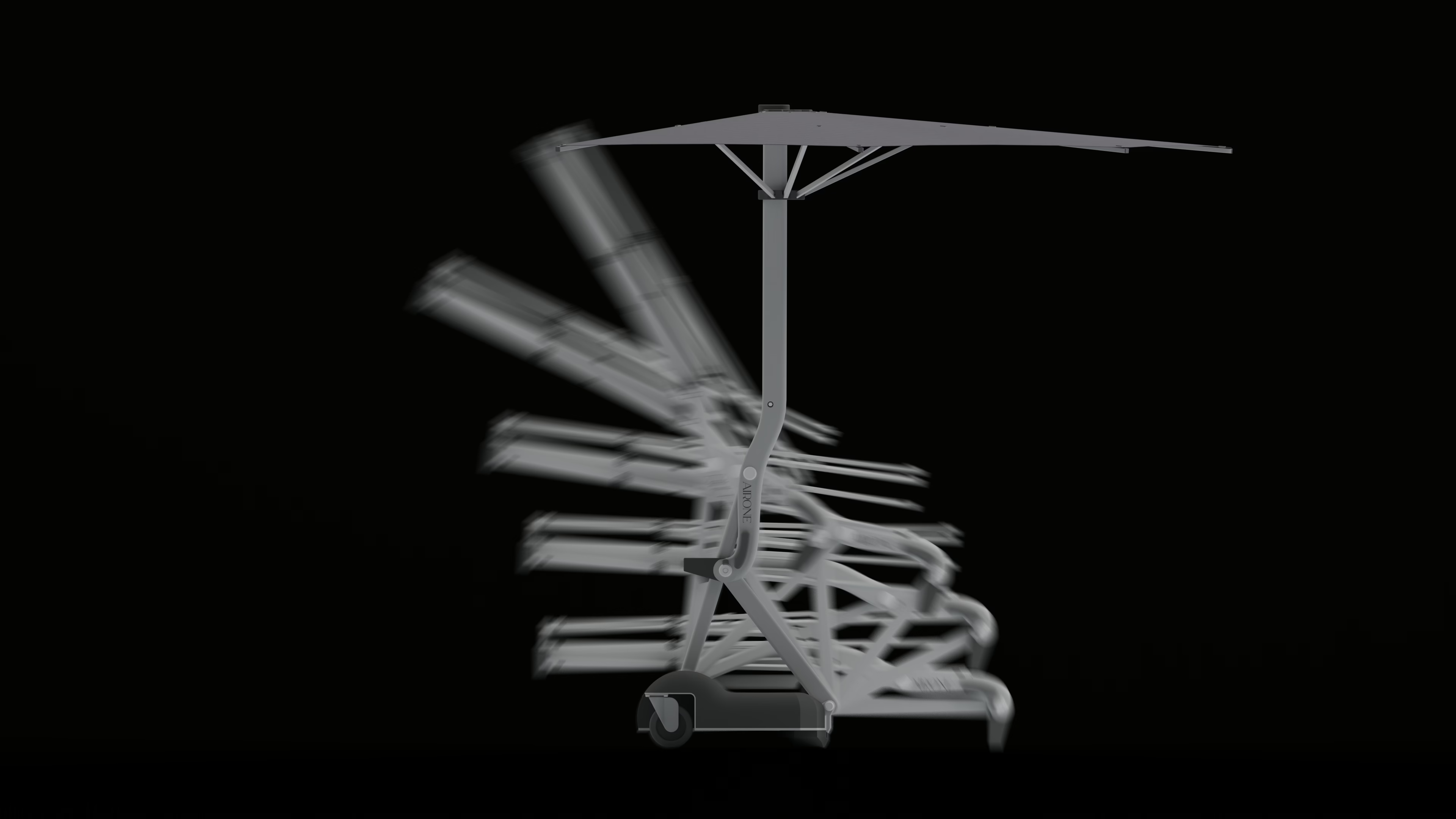
The whole movement, opening and folding, is driven by a single crank.
I specified each material to last outdoors and to be recycled at the end of the umbrella's life. They are the project's targets, not the result of a production run.
The structure: extruded, CNC machined and powder coated against the weather.
Marine-grade steel for every joint and screw, so they resist corrosion even in salty air.
The injection-molded parts, base cover and handles, in plastic recycled from post-consumer waste.
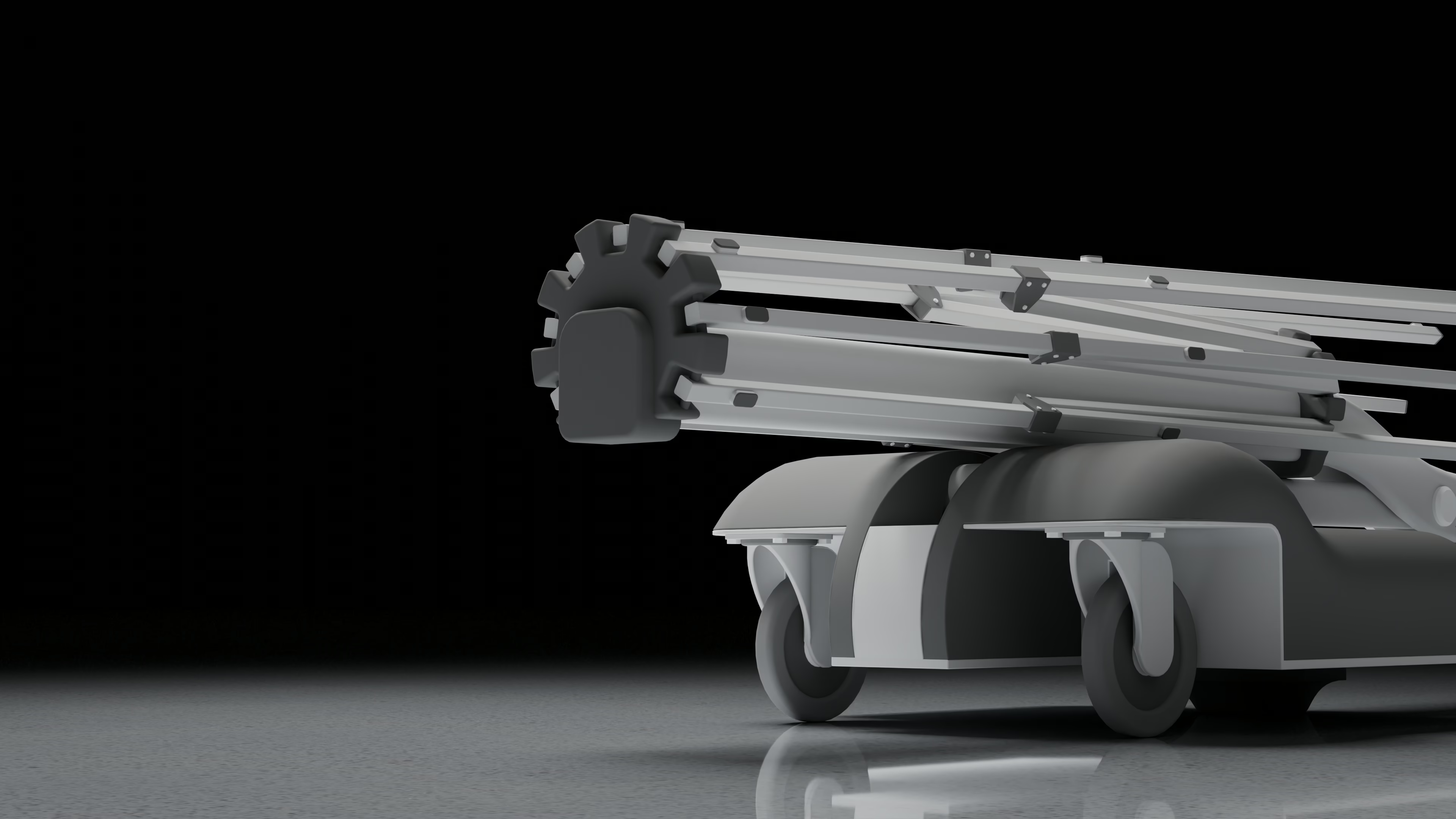
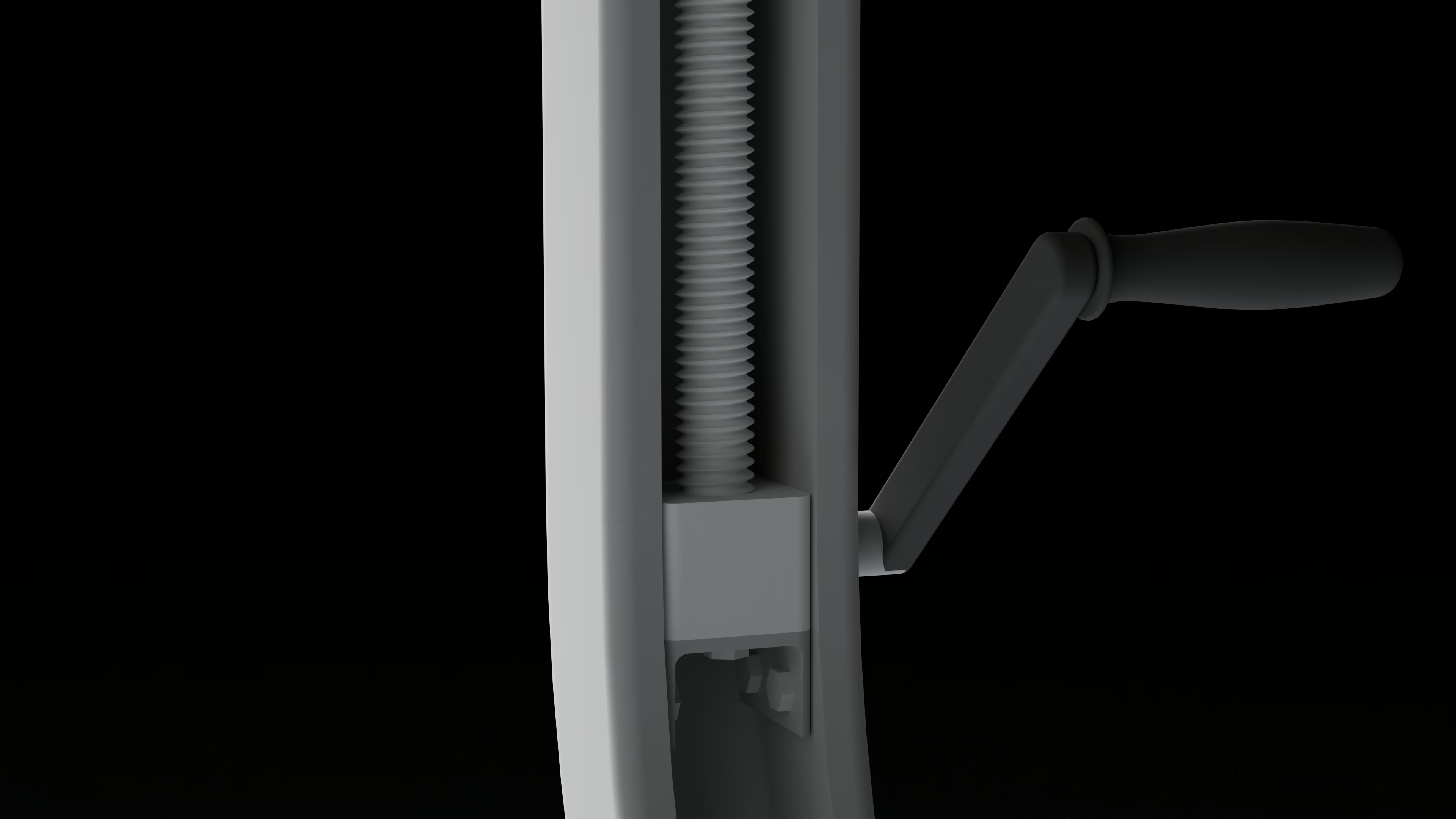
One hex tool for every screw
The crank that opens the umbrella, turning a worm screw, is also the only tool it needs.
Every screw has the same hexagonal head, which fits the crank. The owner can assemble the umbrella, take it apart and replace any part, fabric and ribs included, without a toolbox.
Five steps, from the back of a car to an open umbrella, and back.
Folded inside its sheath, it fits in the trunk of an average car.
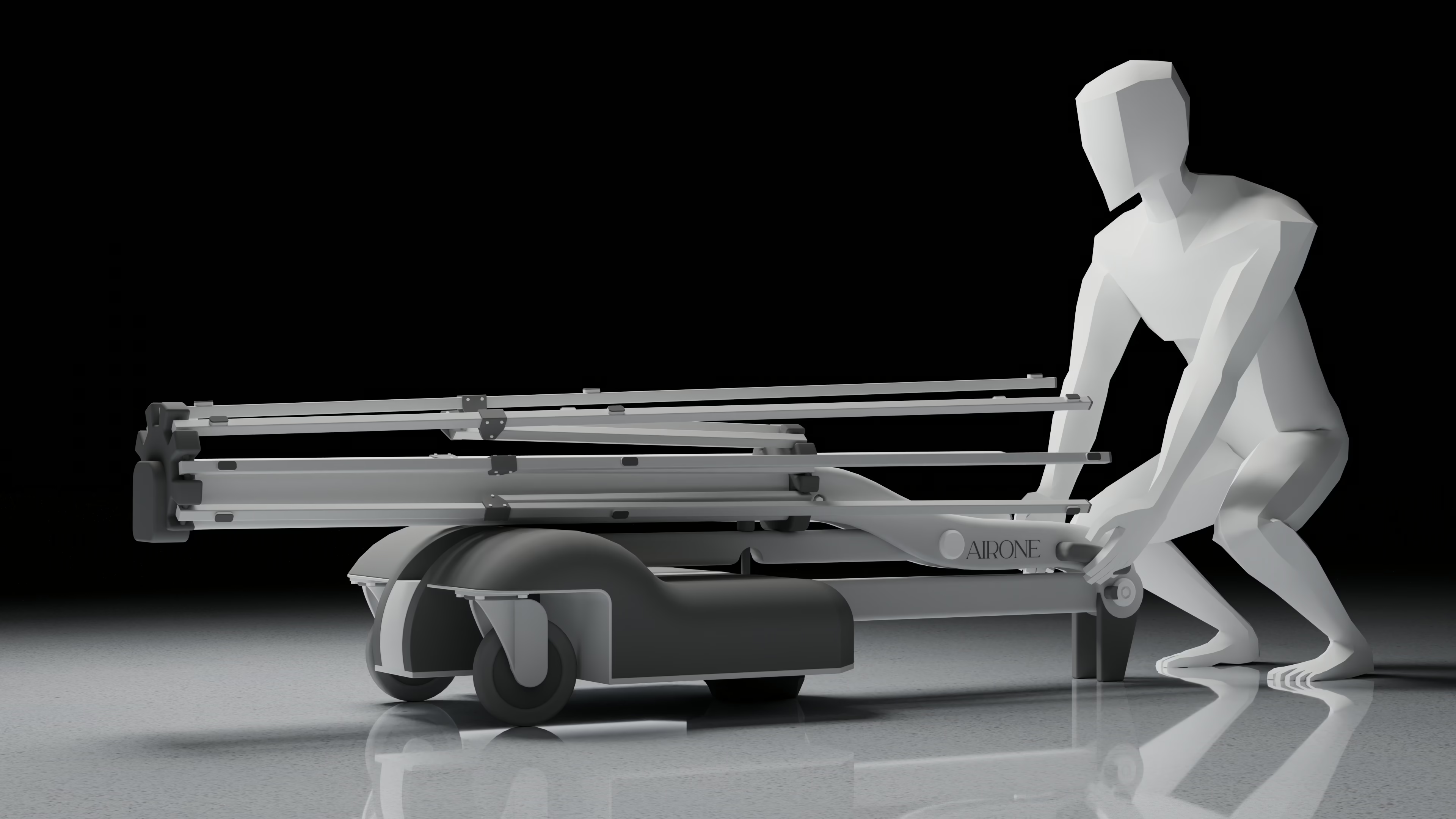
Out of the sheath, it is light enough for one person to roll into place on its wheels.
Turning the crank drives the four-bar linkage, which lifts the arm and spreads the ribs.
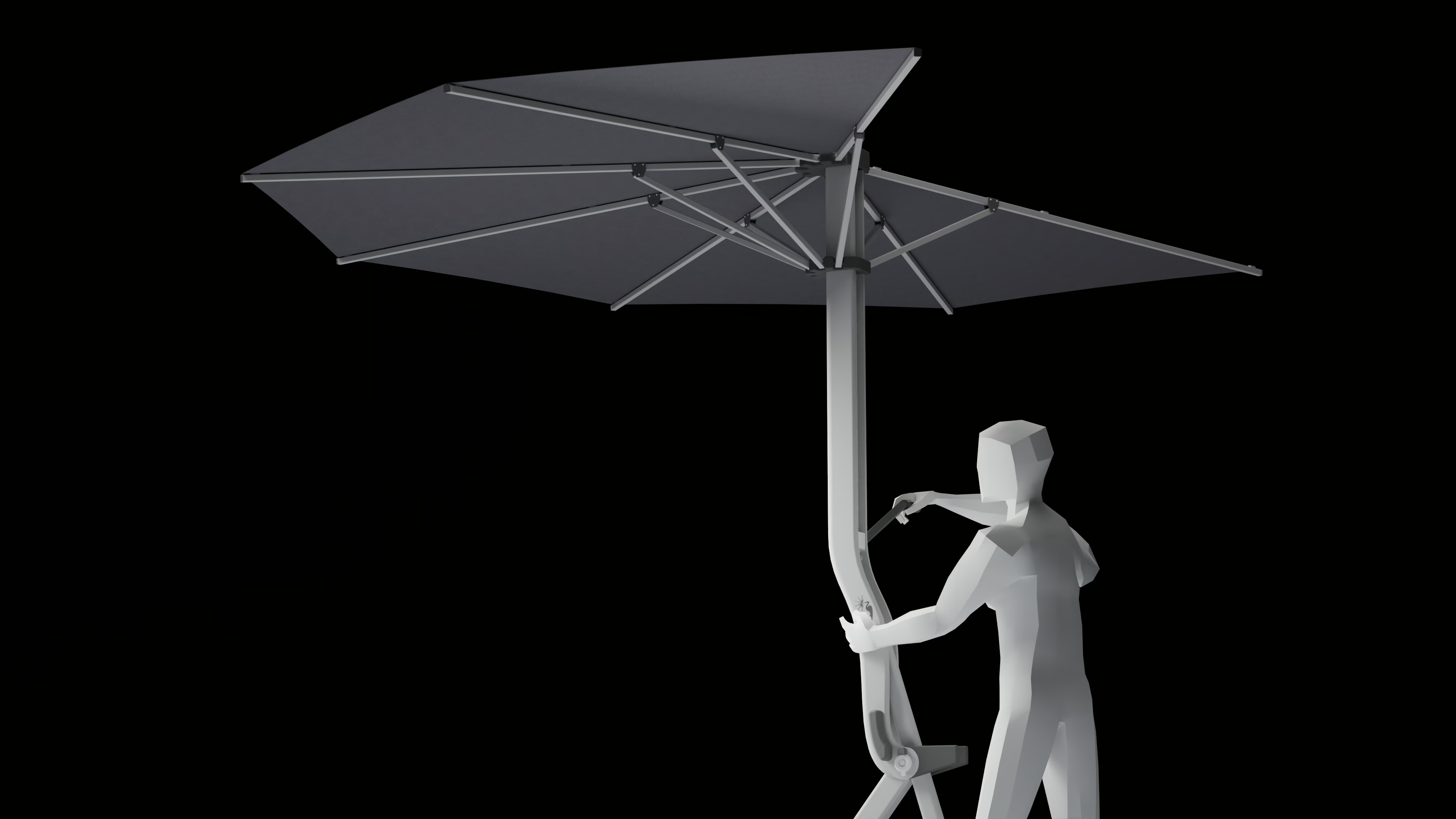
At full height it stands 265 cm tall under a 350 cm canopy, and the arm stays locked in place.
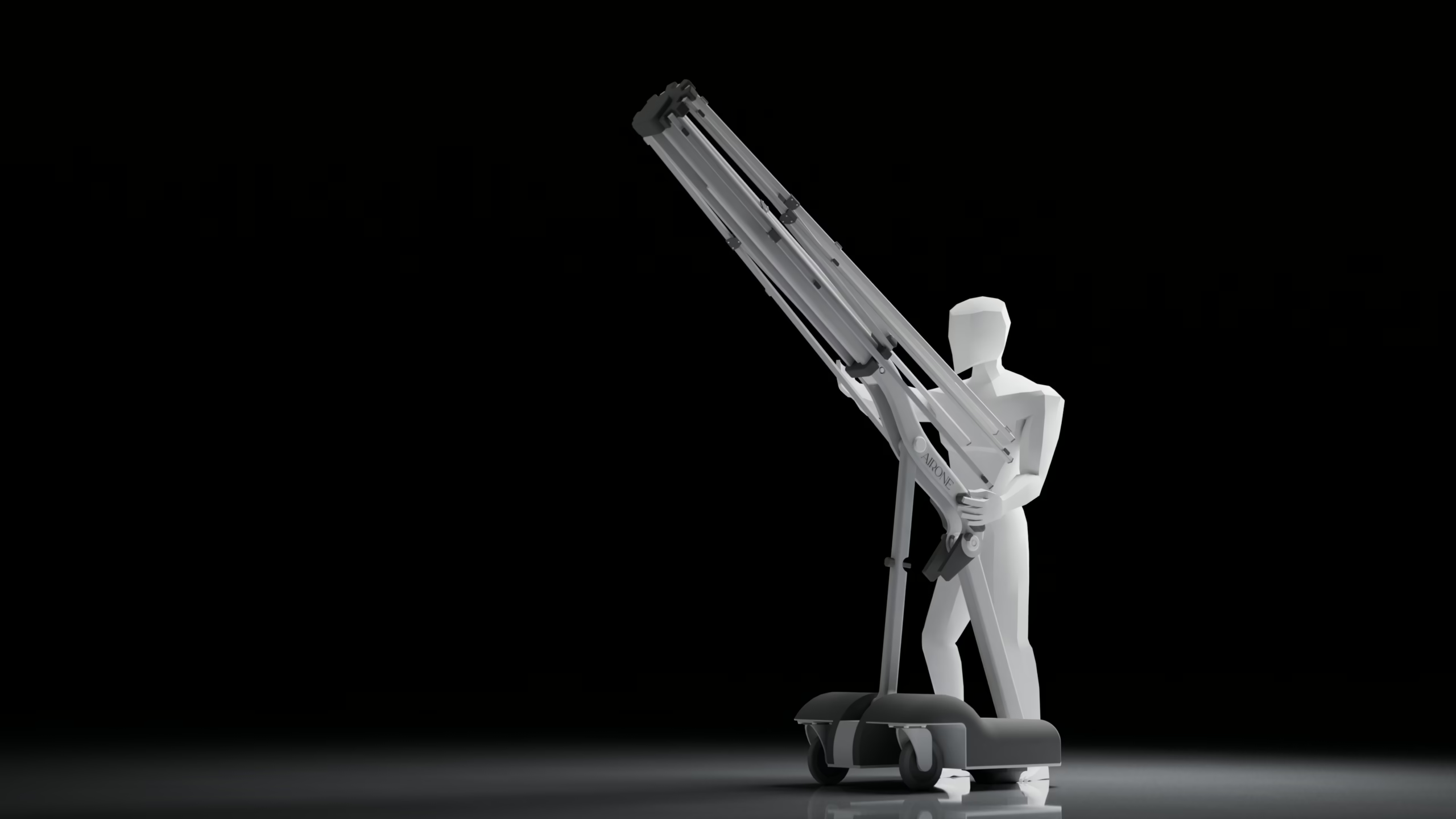
When the wind rises or service ends, the same crank brings it back down flat.
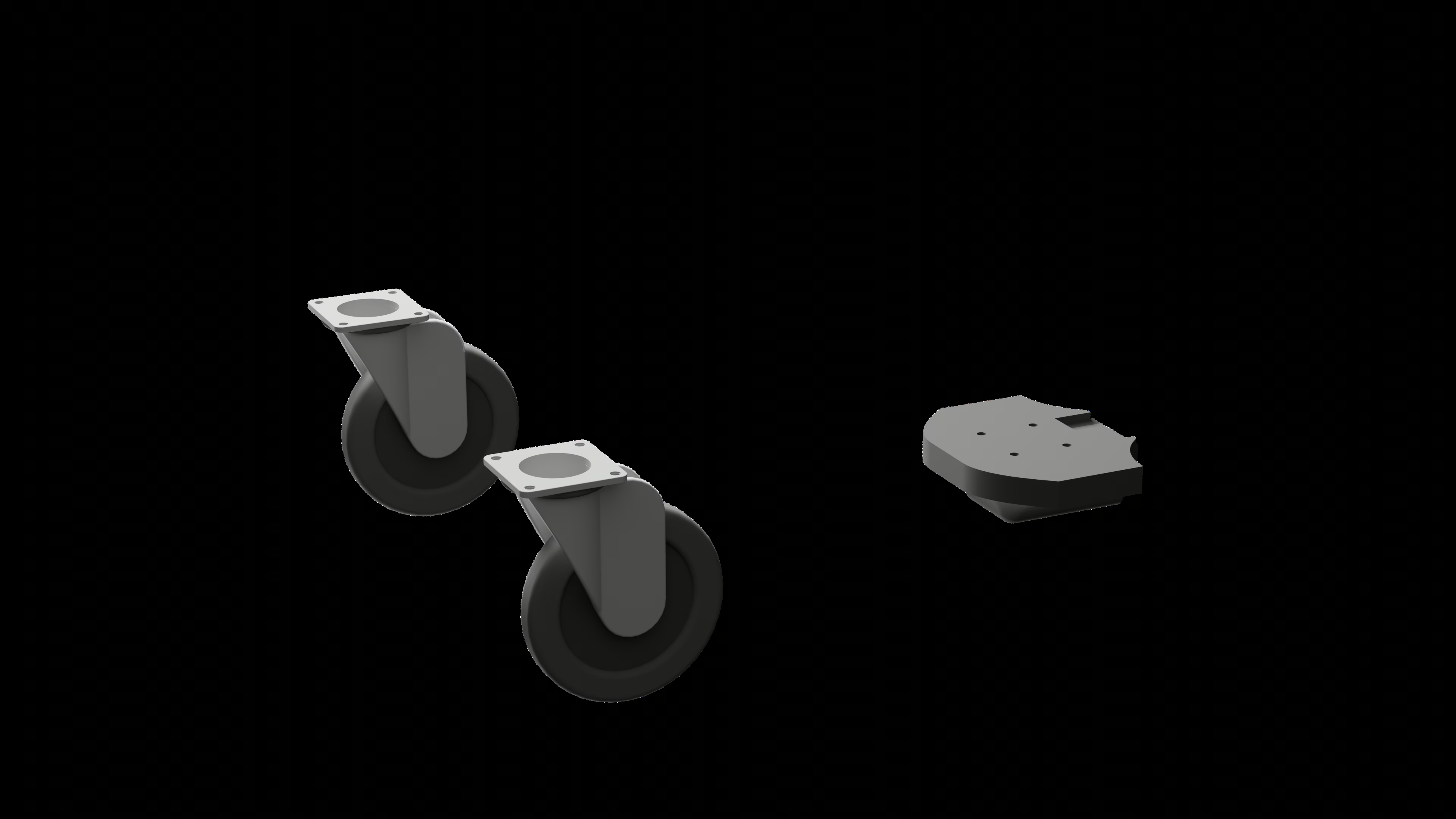
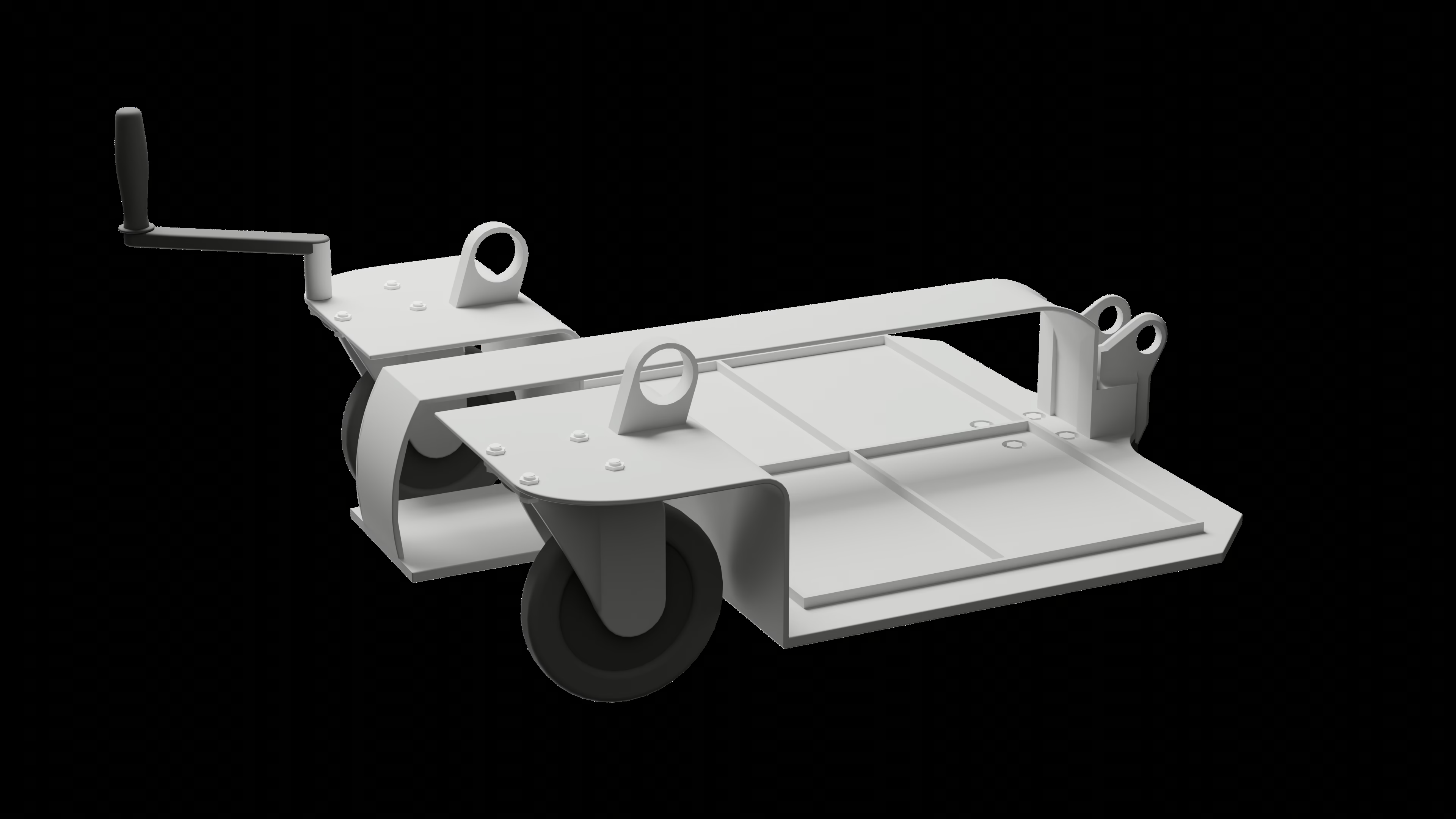
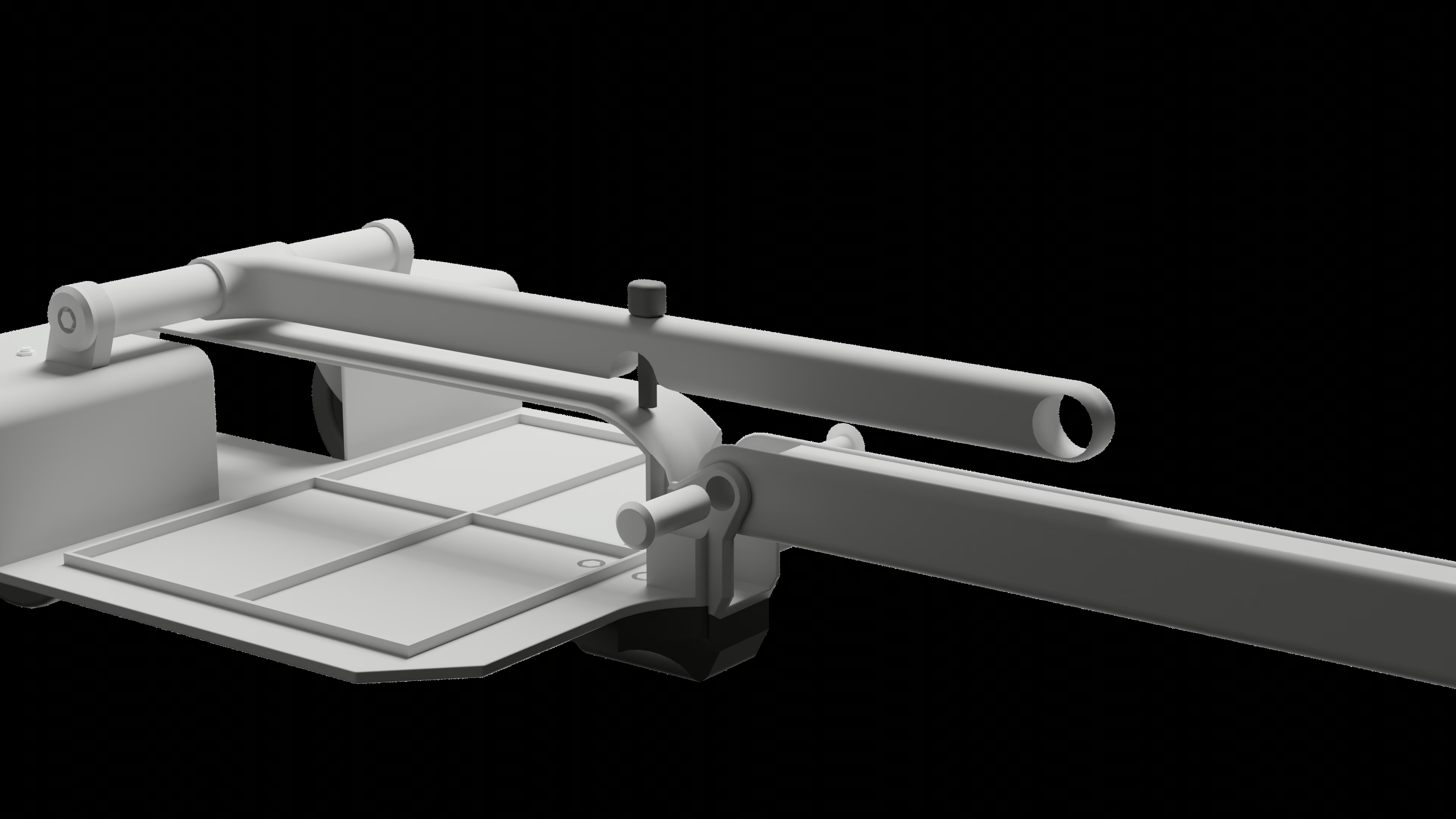
The umbrella goes together in six steps, with the crank as the only tool.
Fit the rear stabilizer and the heavy-duty wheels to the base.
With the crank, fix the wheels and the front support to the base frame.
Attach the load-bearing arms, the main frame of the umbrella.
Mount the main arm, which sets the height of the umbrella and the axis it turns around.
Clip on the plastic cover and slide in the concrete ballast blocks, which keep the center of gravity low.
Connect the ribs and counter-ribs, which stretch the fabric and lock the shape of the canopy.
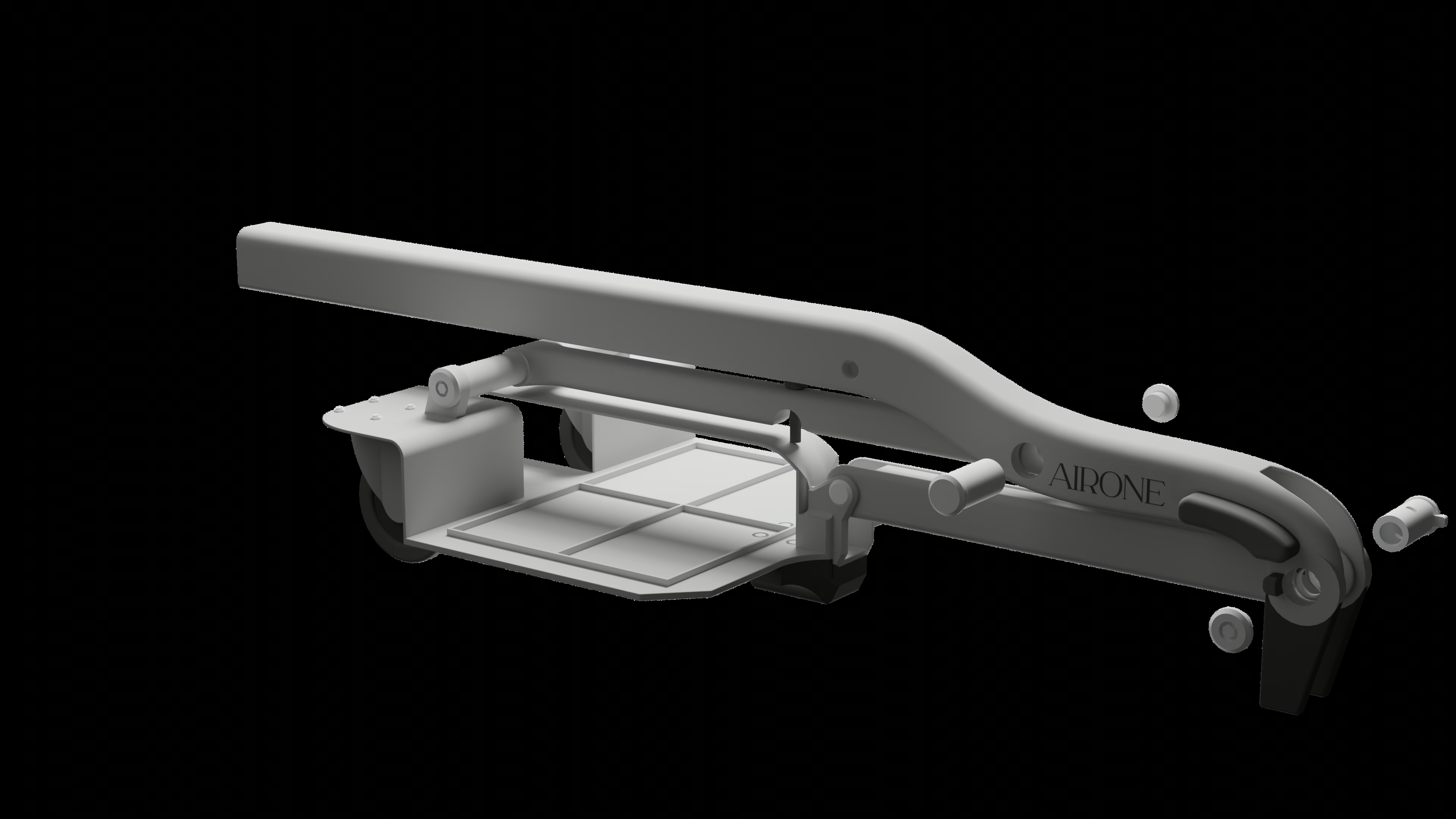
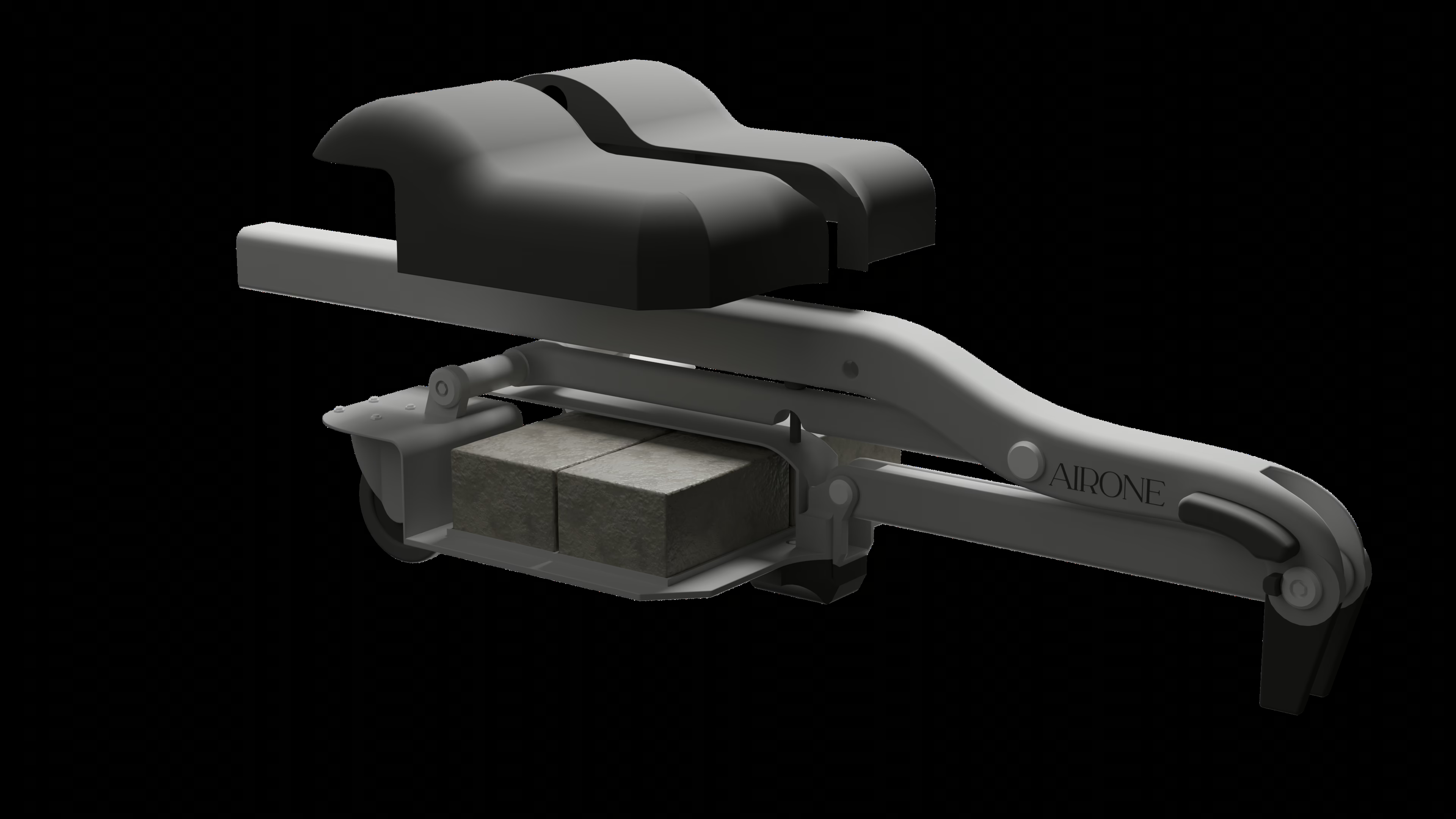
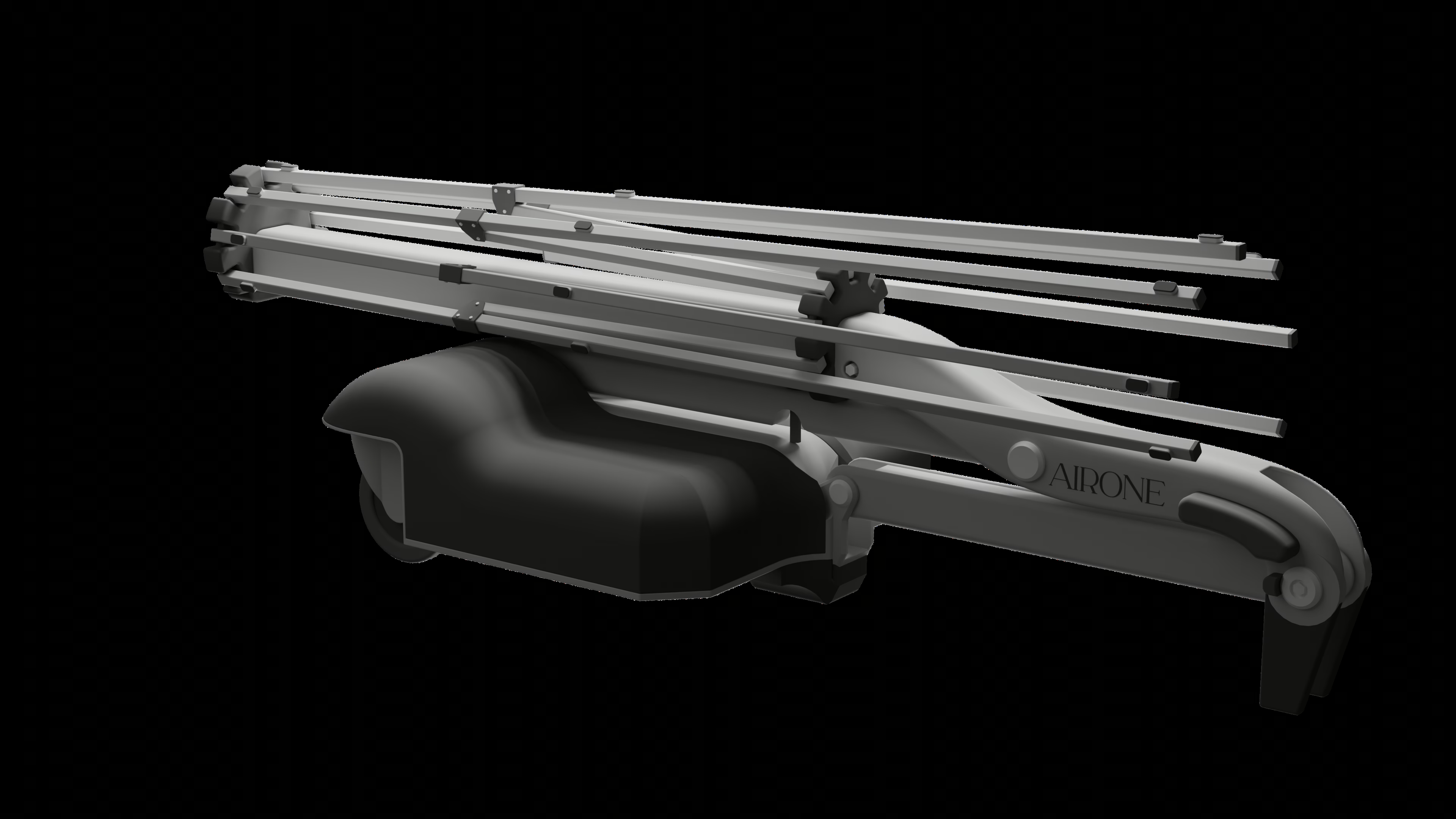
Airone is Italian for heron, the bird the main arm is drawn from. The name is engraved on the arm, and the pictogram with it.
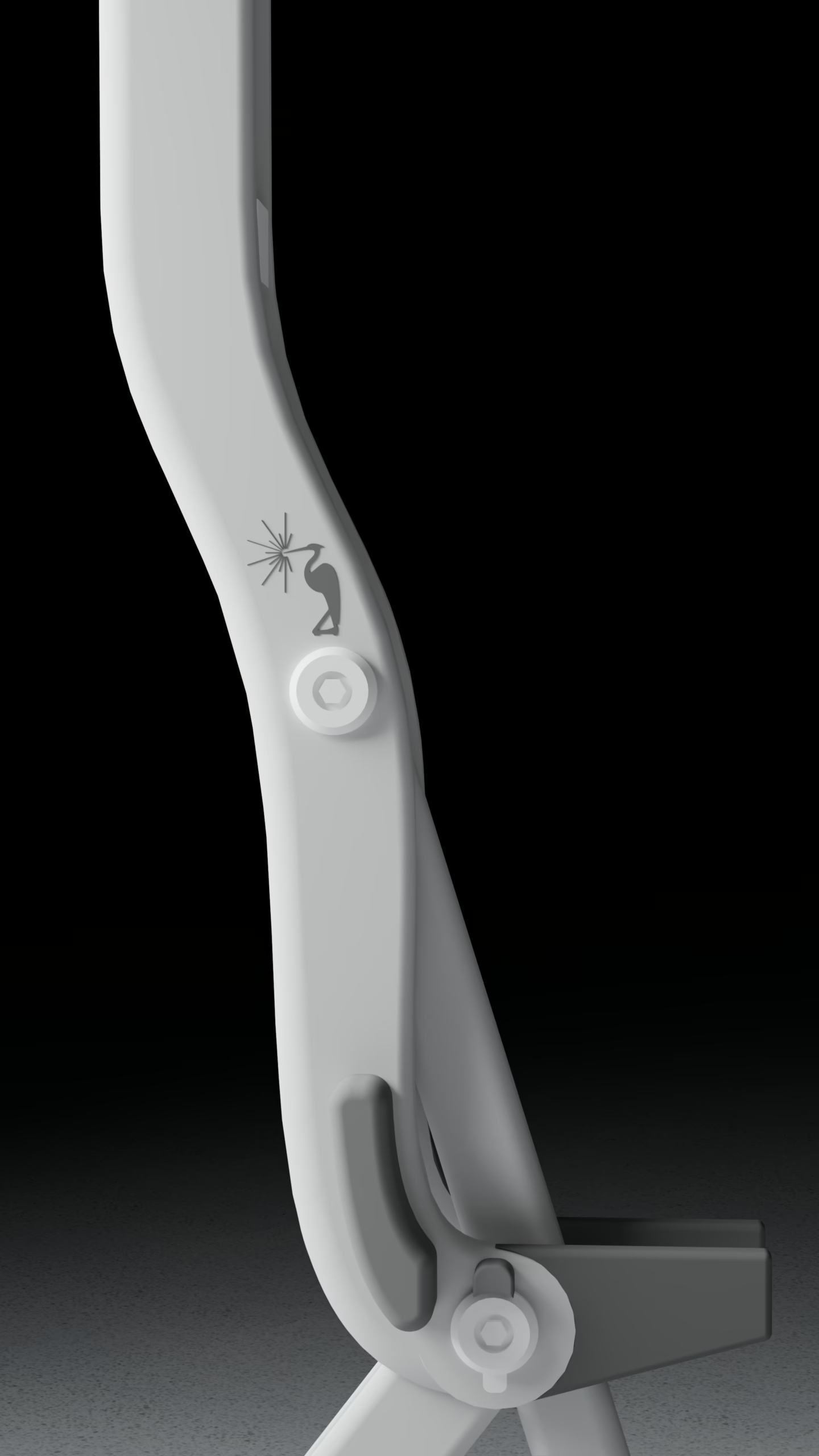
A heron under a sun, marked on the arm above the hex screw.
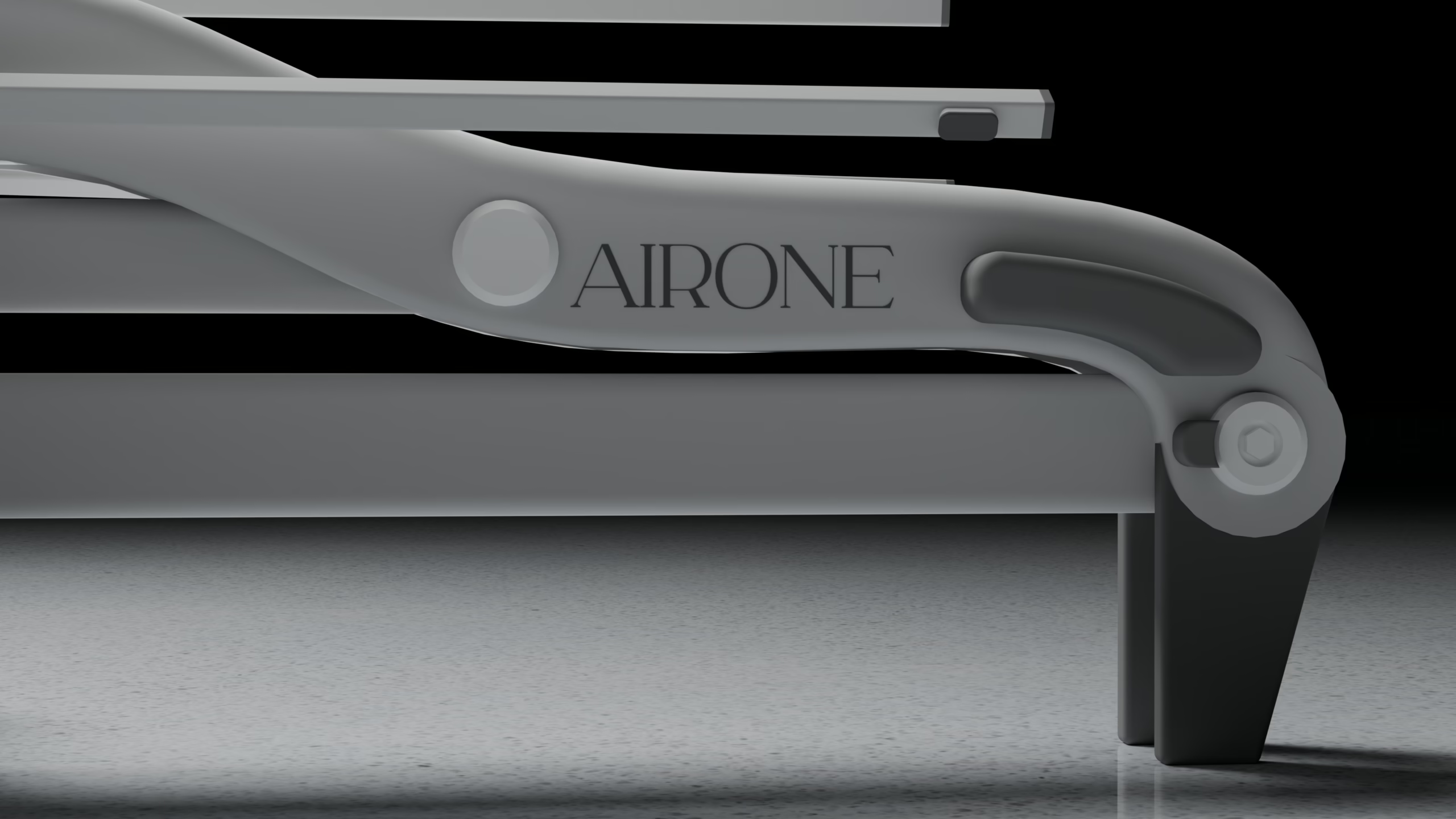
Engraved on the side of the main arm, next to the joint.
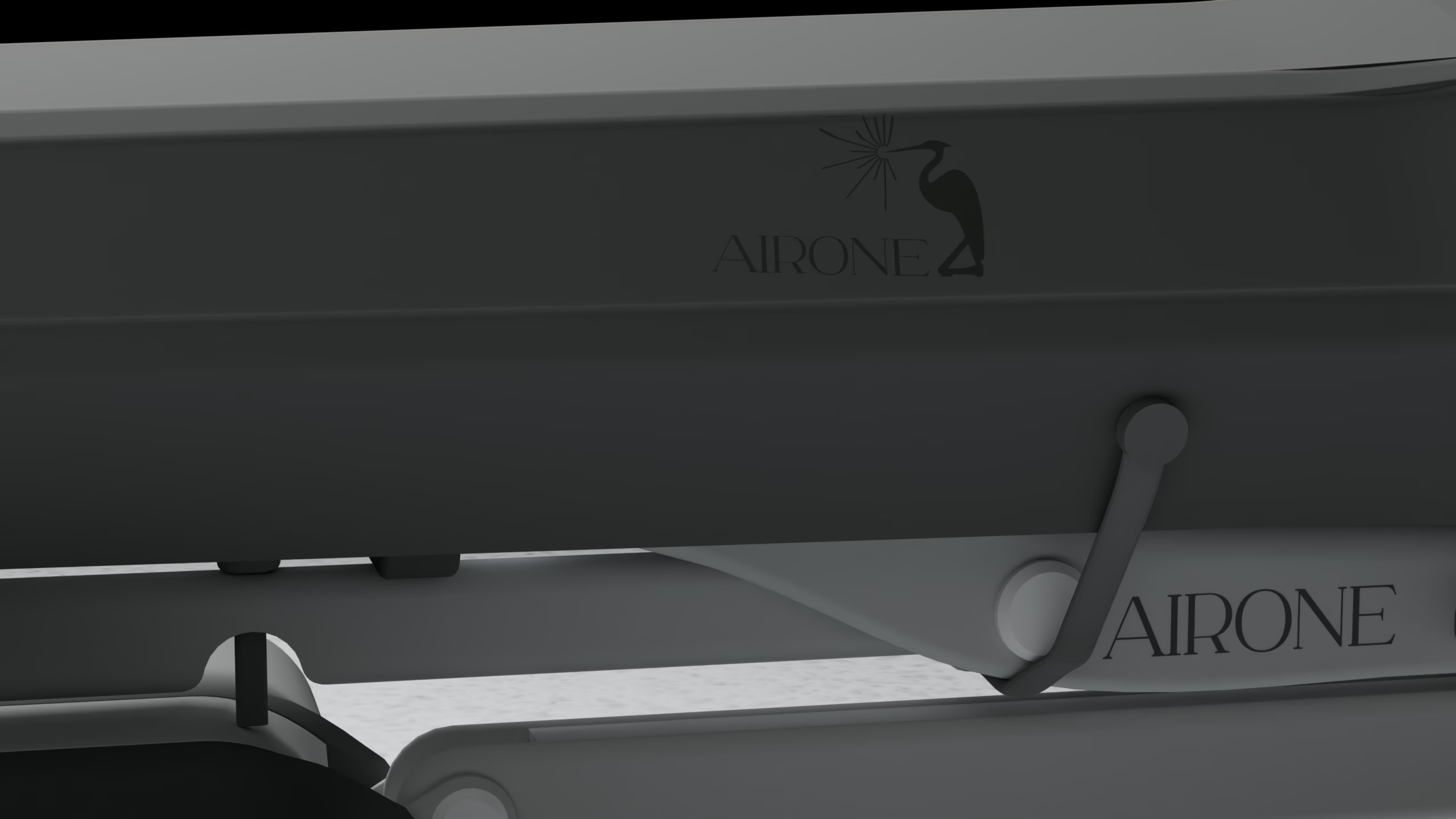
The same two marks return on the frame, where they stay in view once the umbrella is down.
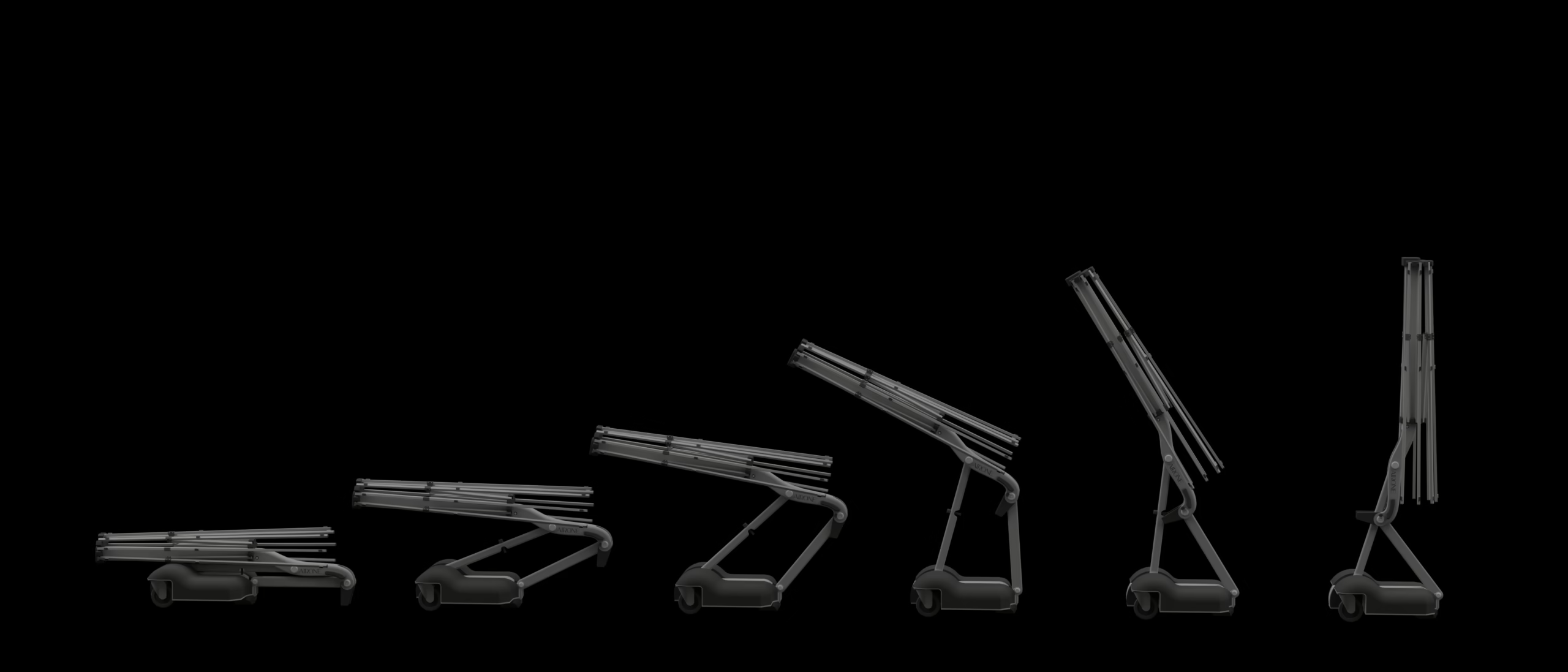
Open, it shades a restaurant terrace. Folded, it lies flat and low, ready to roll into storage or into the trunk of a car.