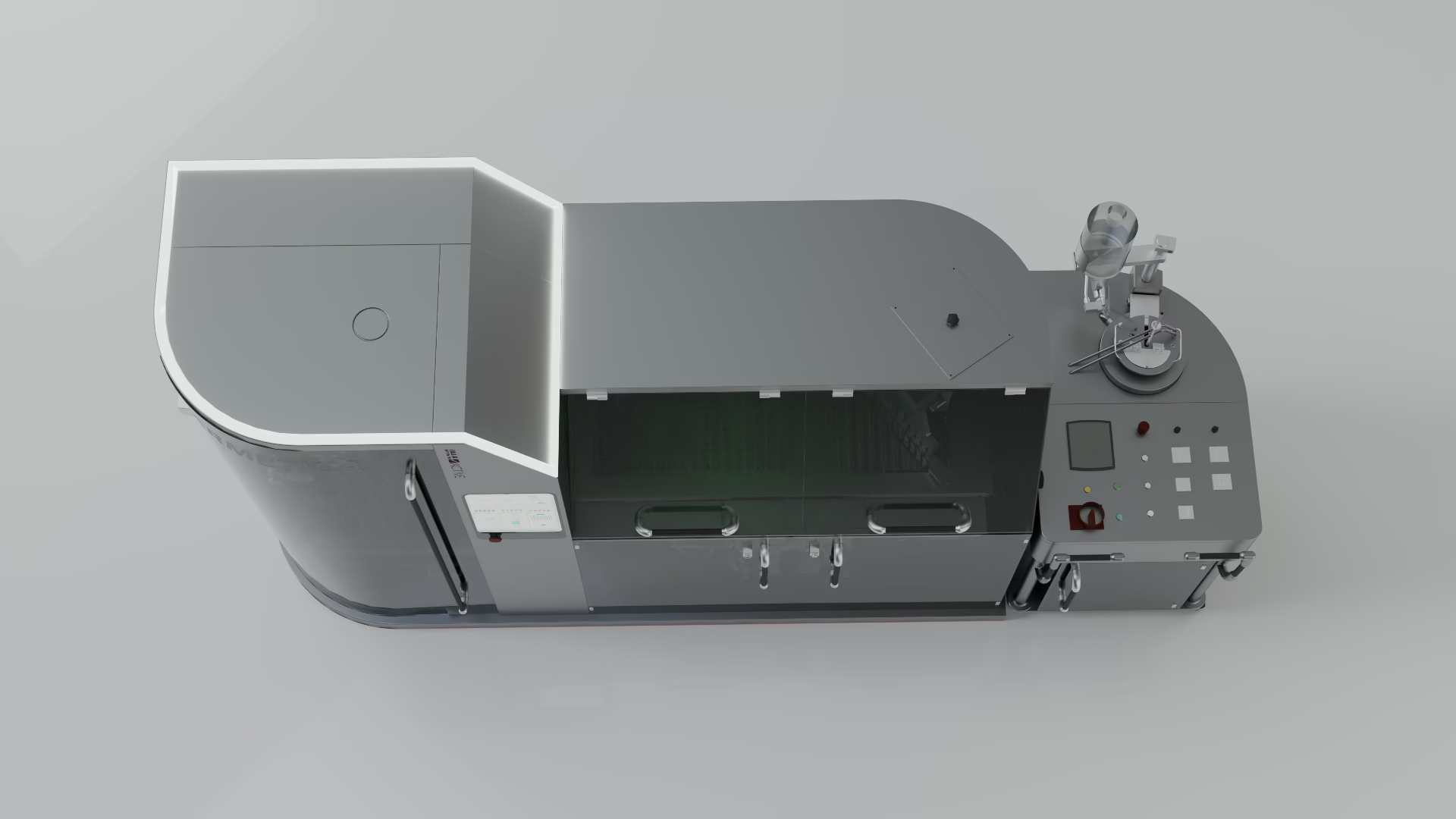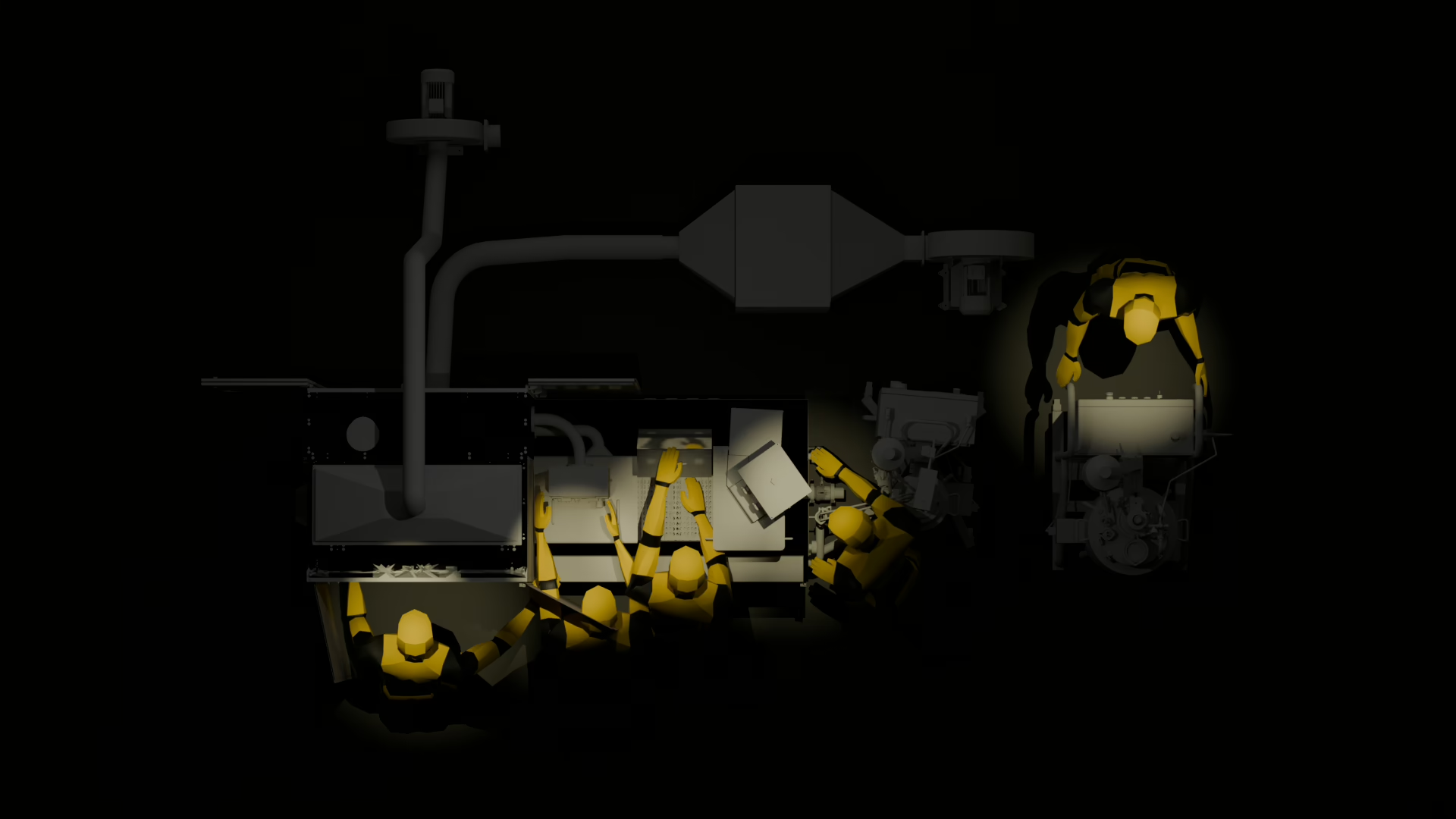
The routine, from above
Where the operator works around the machine during a shift.
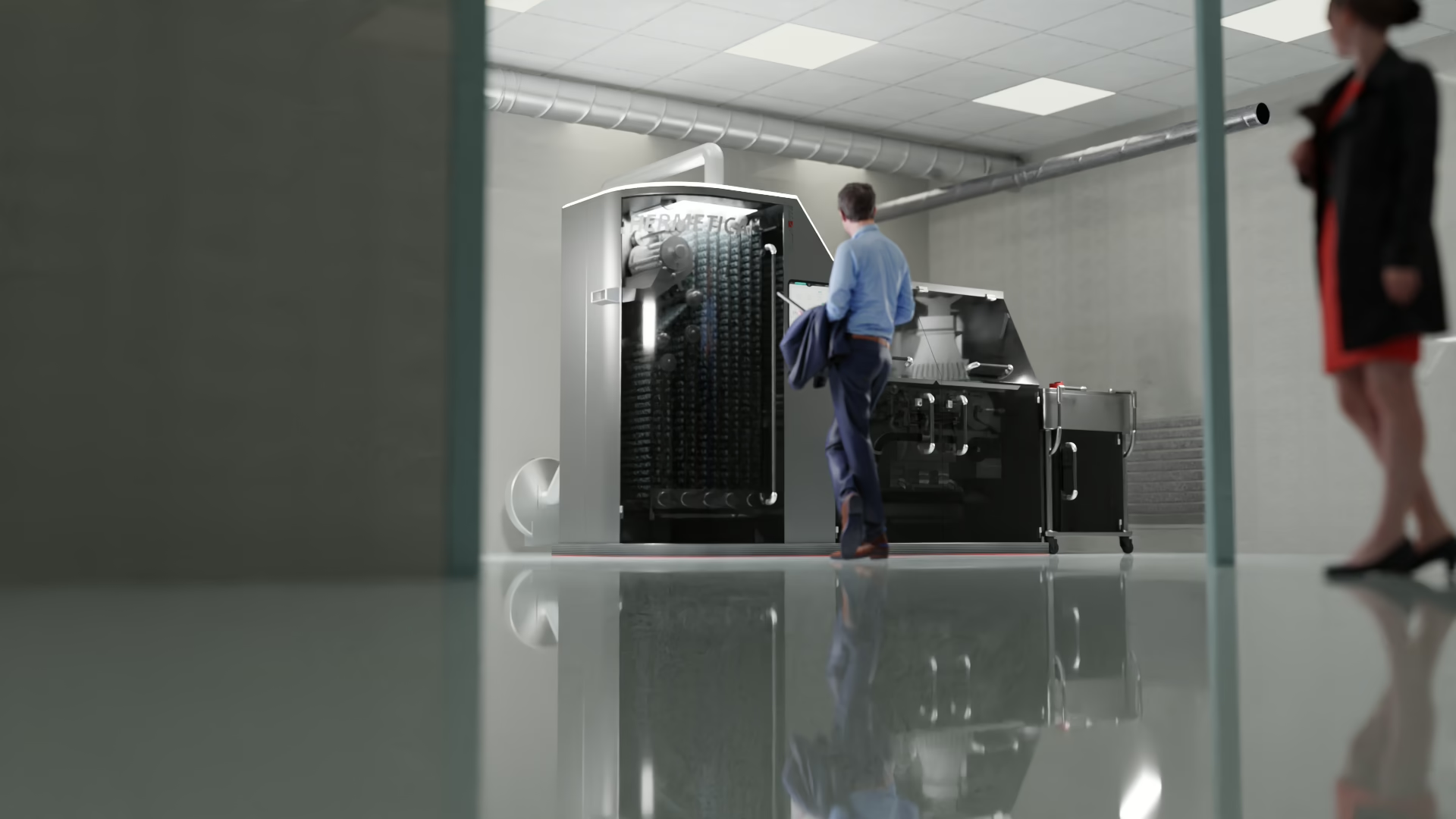
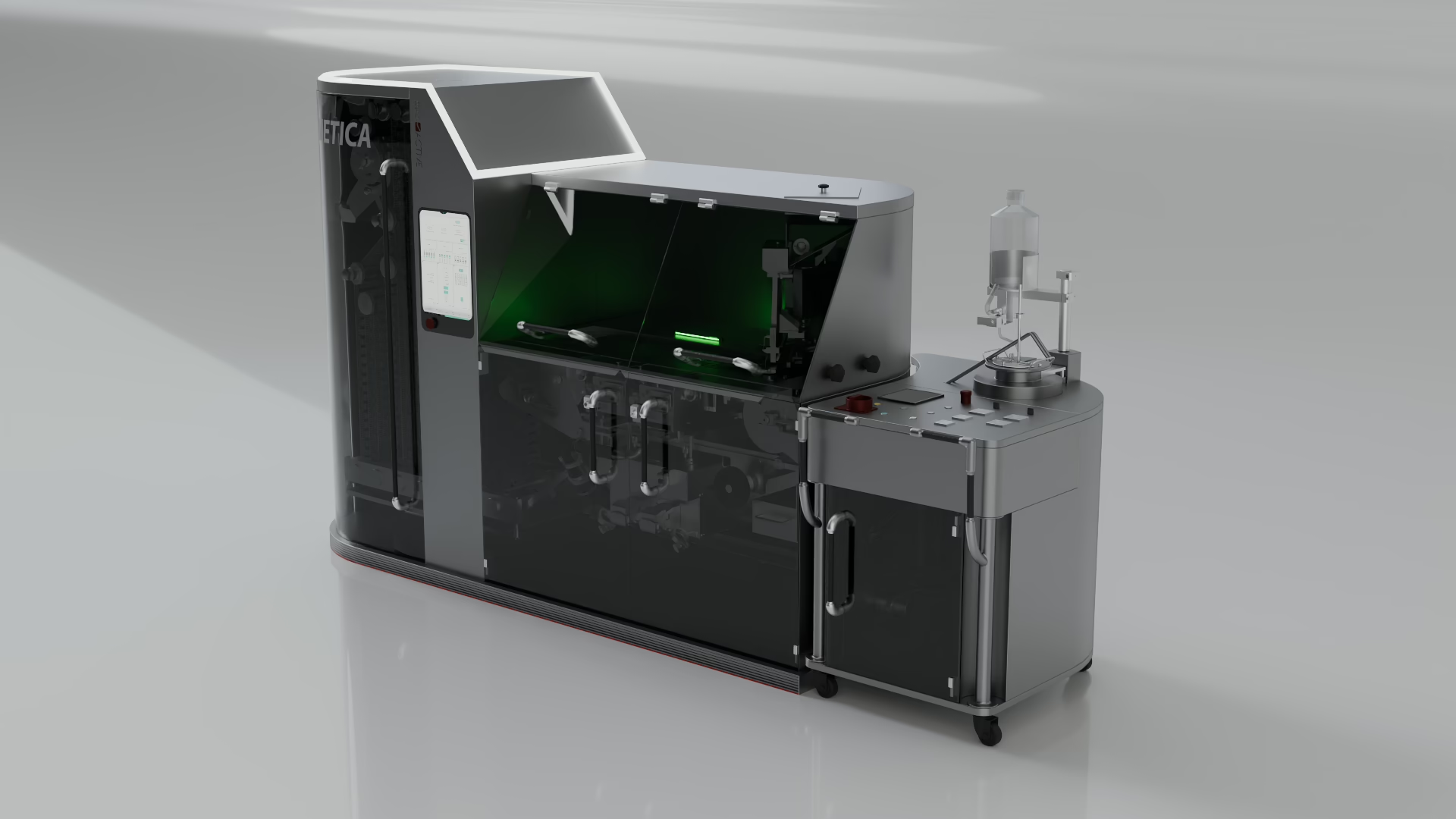
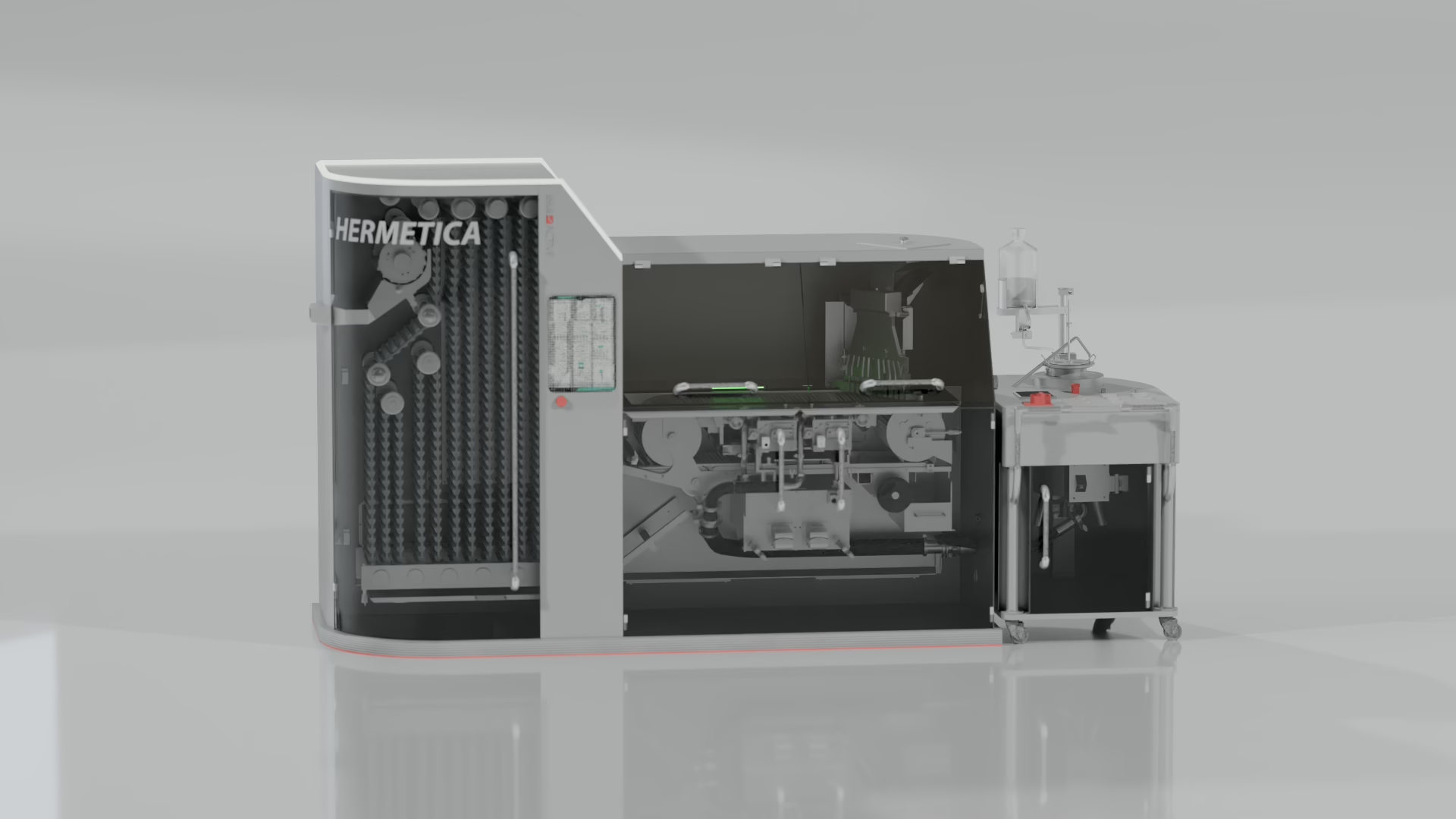
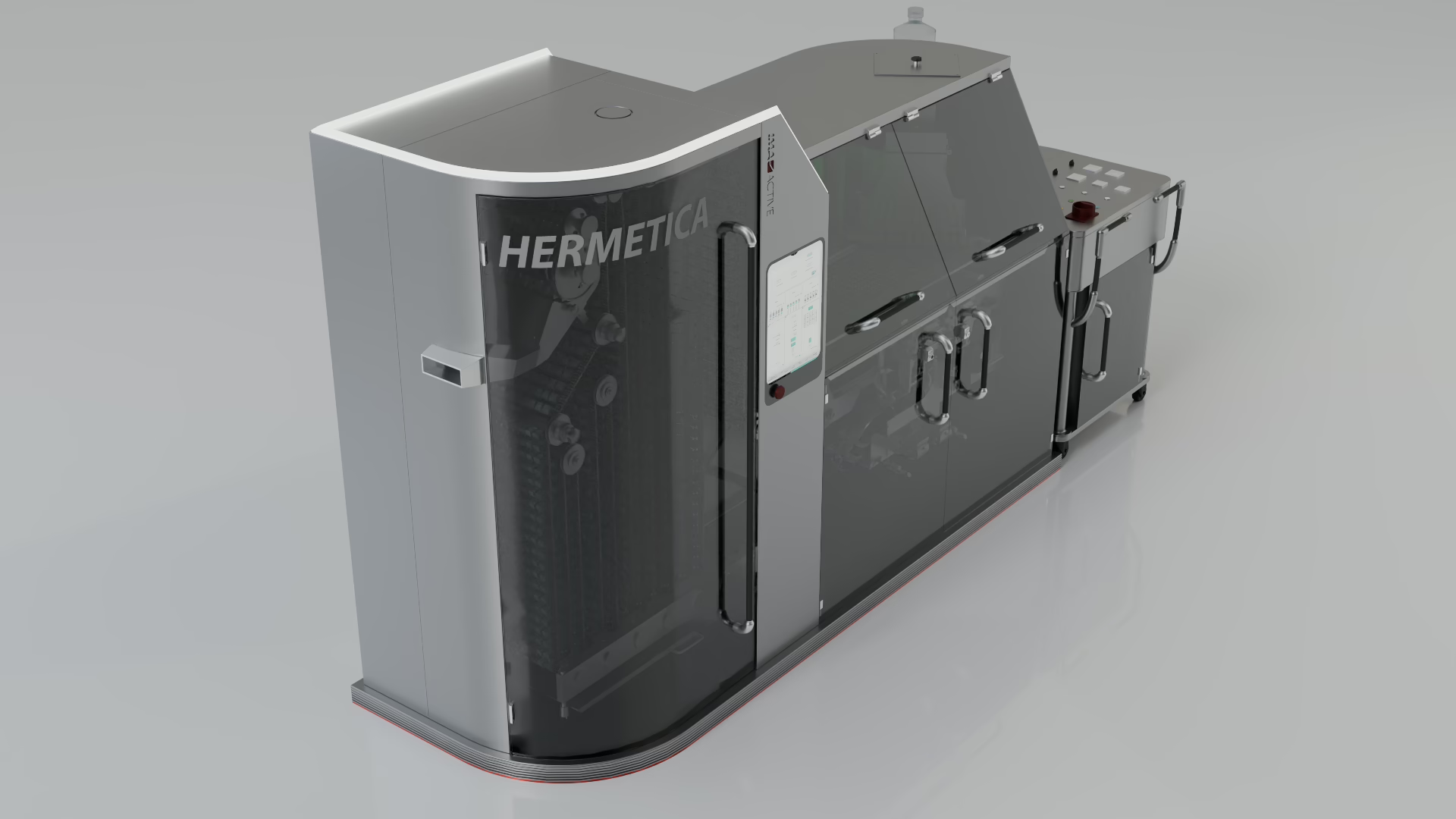
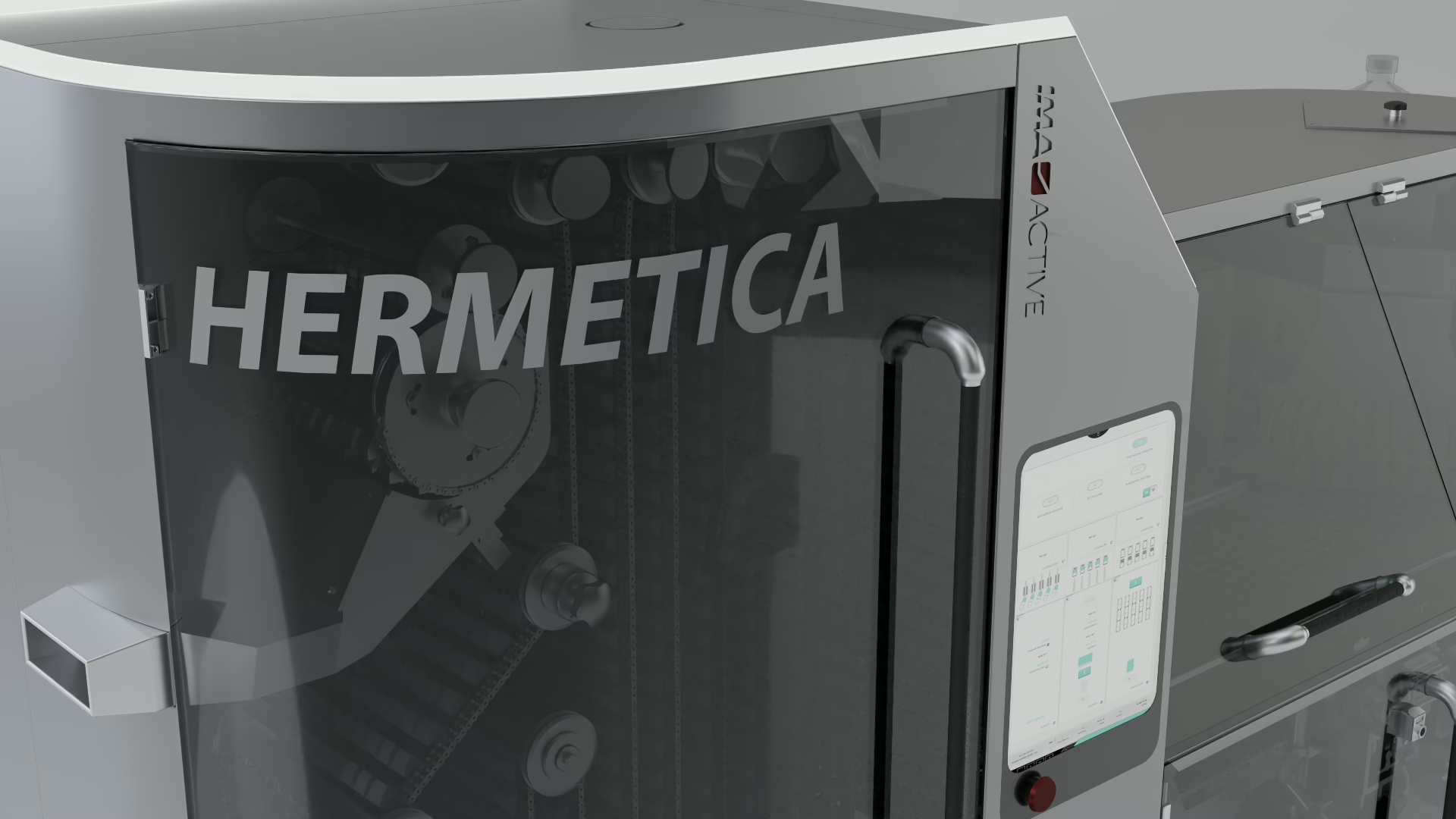
A redesign of Hermetica, the IMA machine that seals filled capsules with a band of gelatine. A university project developed with IMA, built around the operator: the light, the controls, the access.


We started from the machine as it is: where the operator stands, looks and reaches. Studied with a figure at each station, five points slowed the routine down or strained the body.
Where the operator works around the machine during a shift.
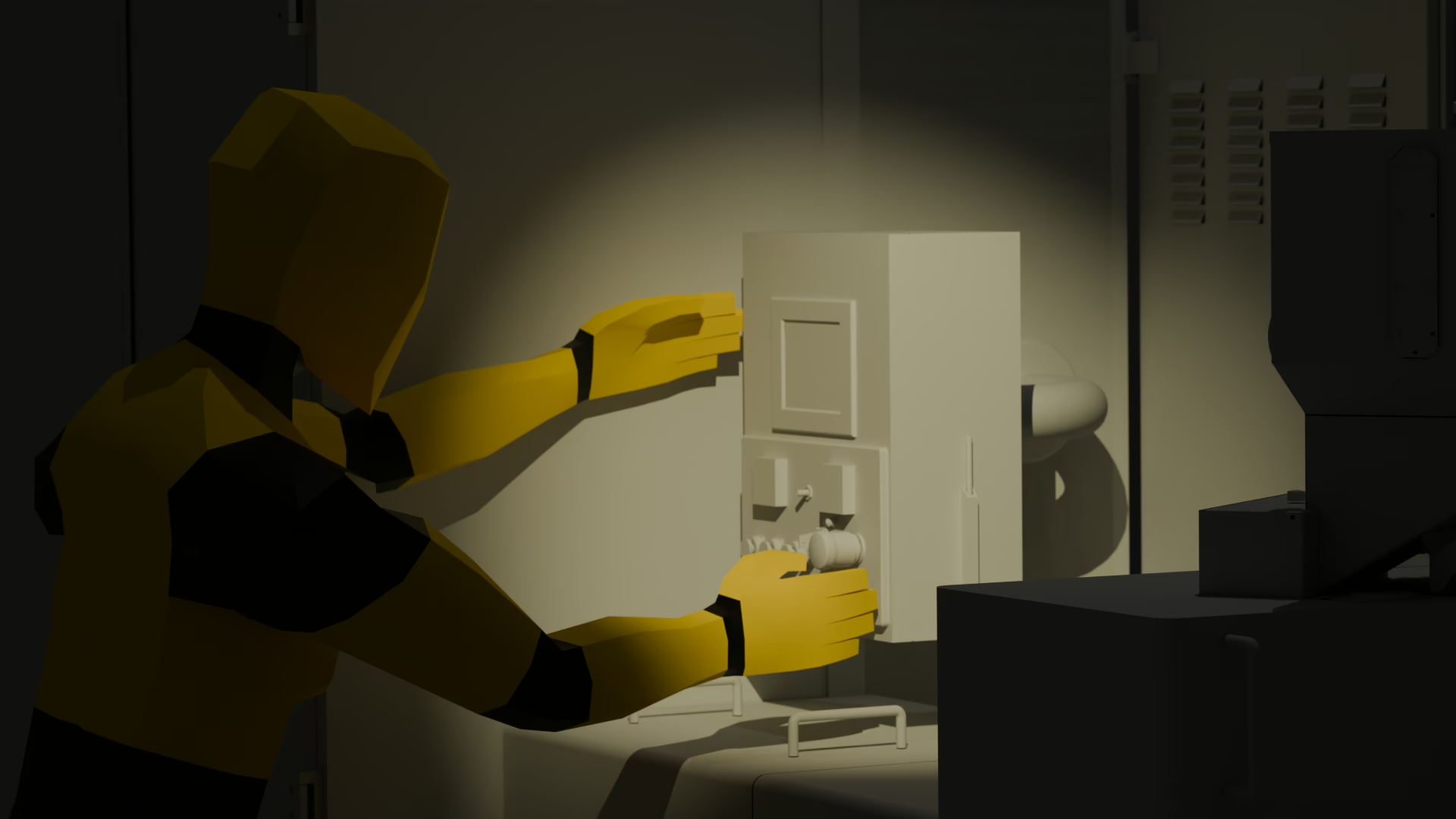
The panel sits on an arm in front of the inspection zone: it blocks the view and forces awkward postures.
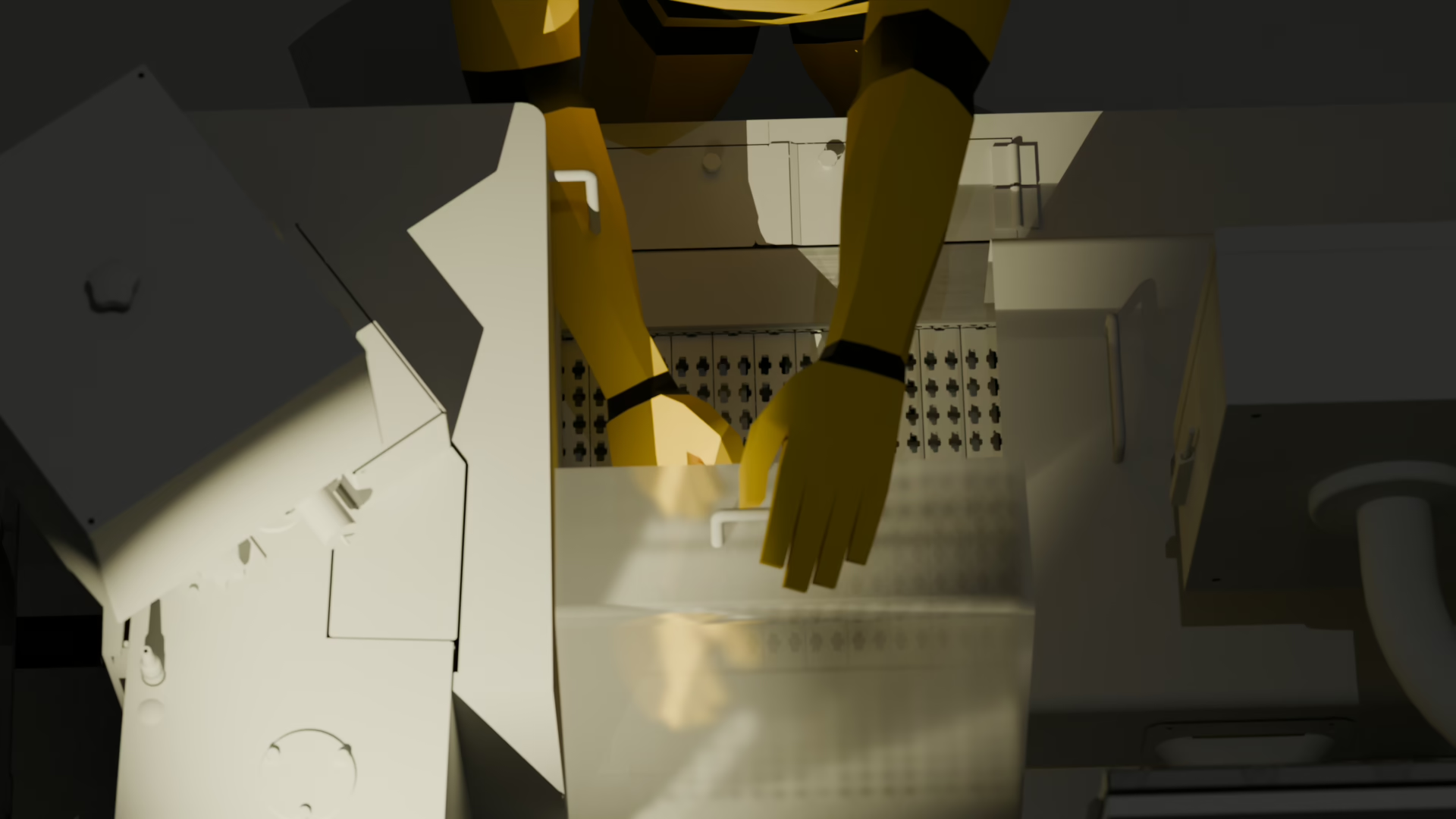
Under flat light from above, small defects on the capsules are hard to see.
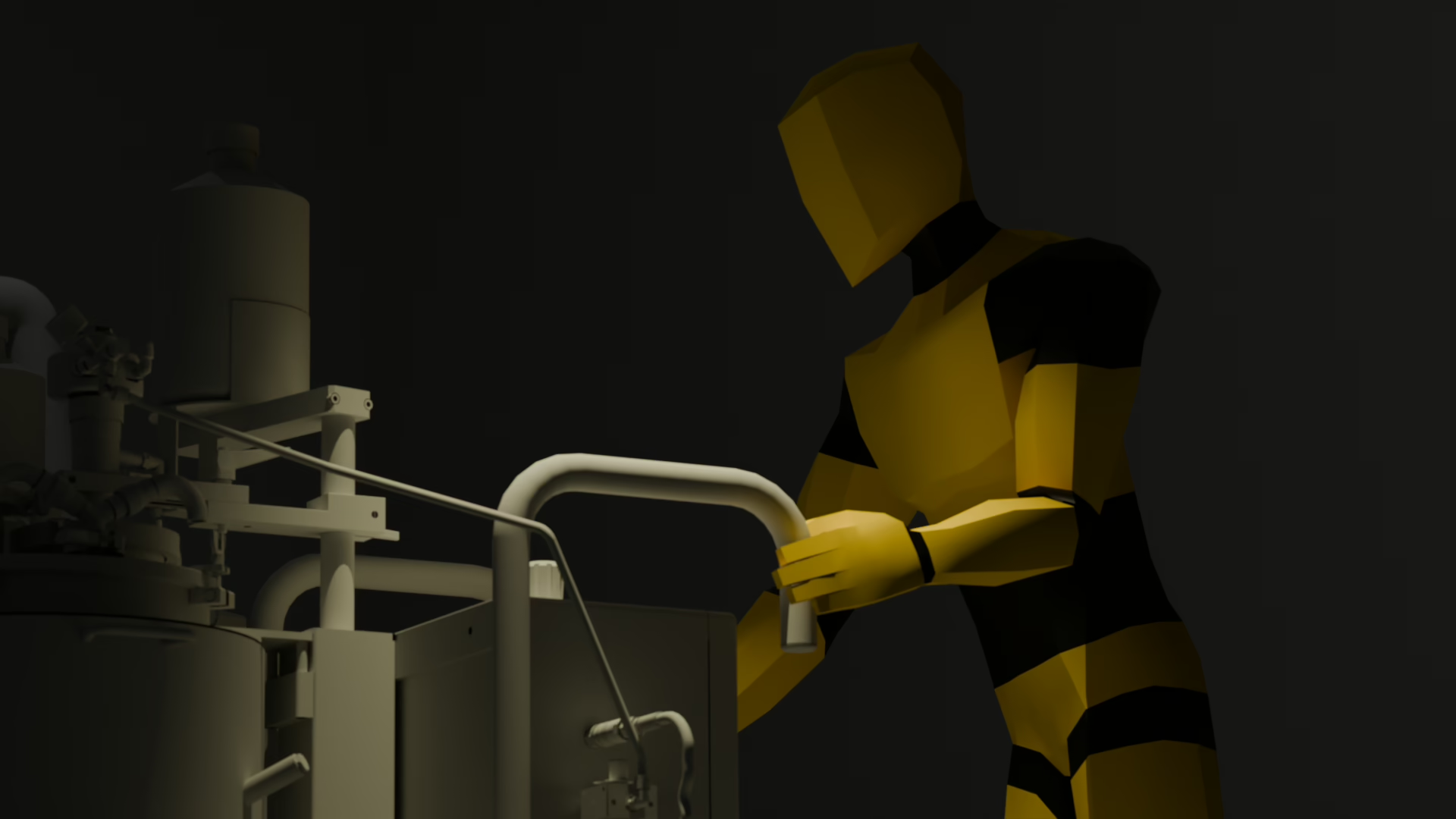
The gelatine tank is a separate unit, awkward to refill and to service.
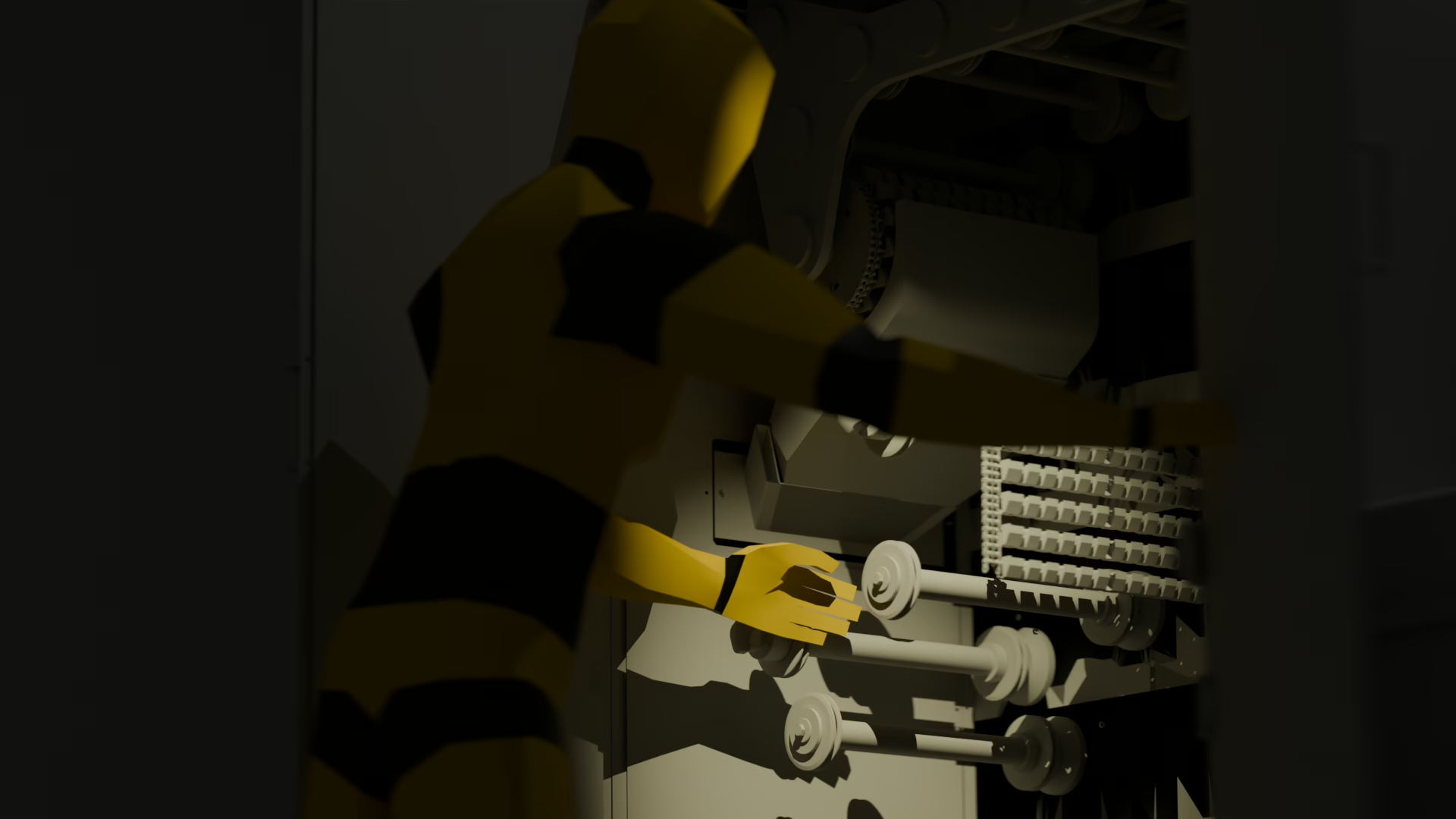
Reaching the capsule transport chains means handling a heavy door.
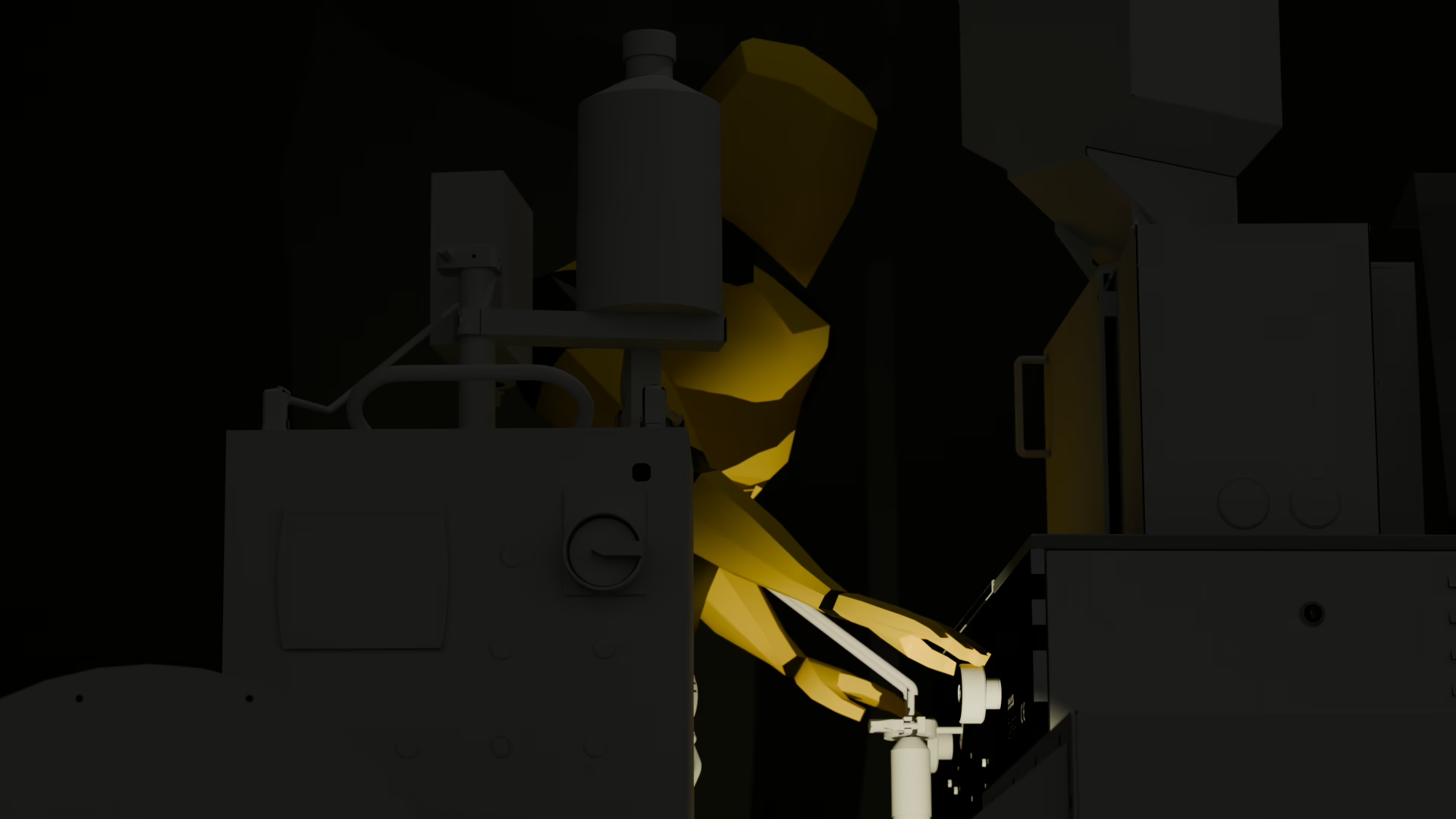
The knobs that set the inspection cover are hard to grip and slow down every change.
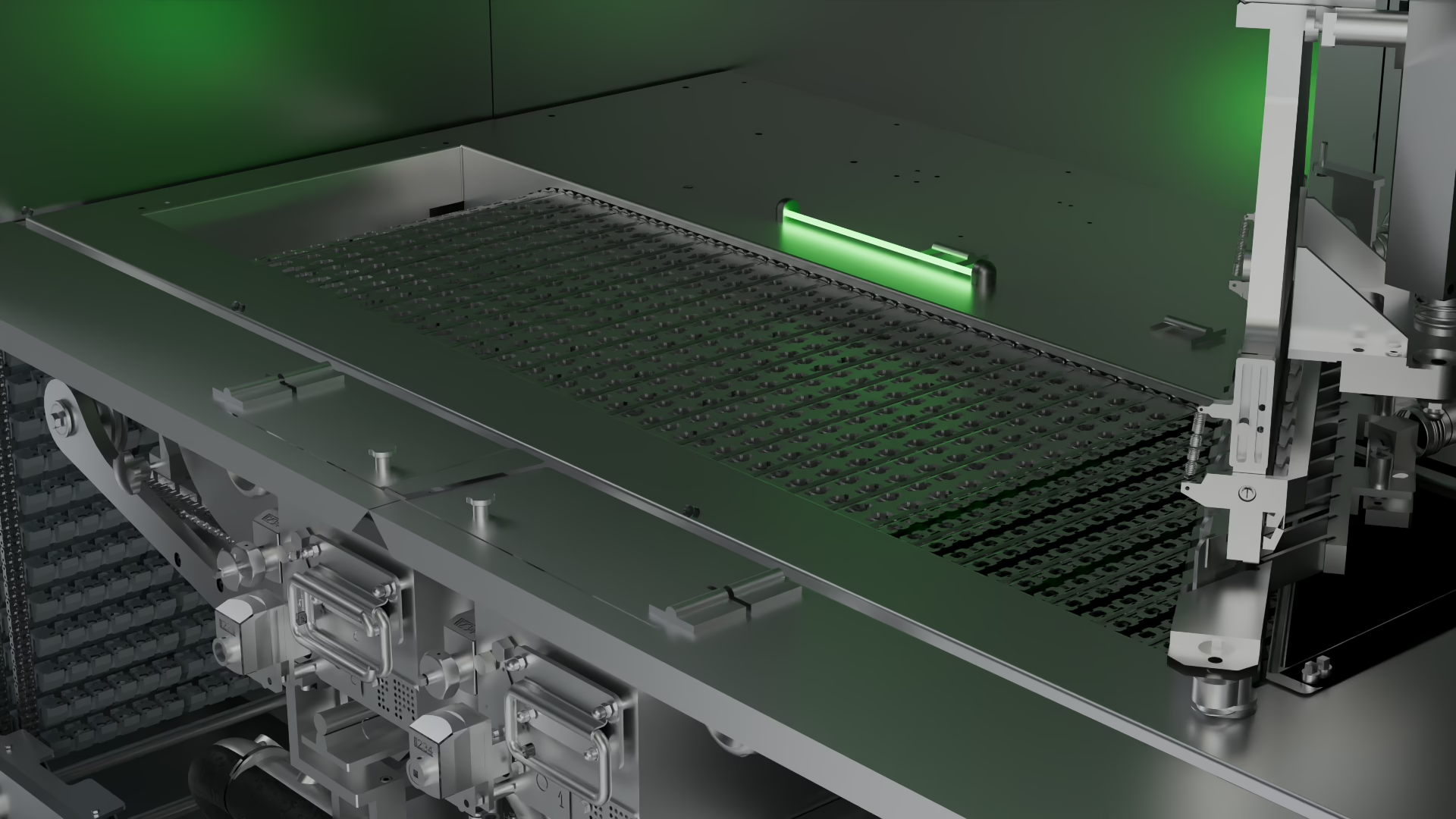
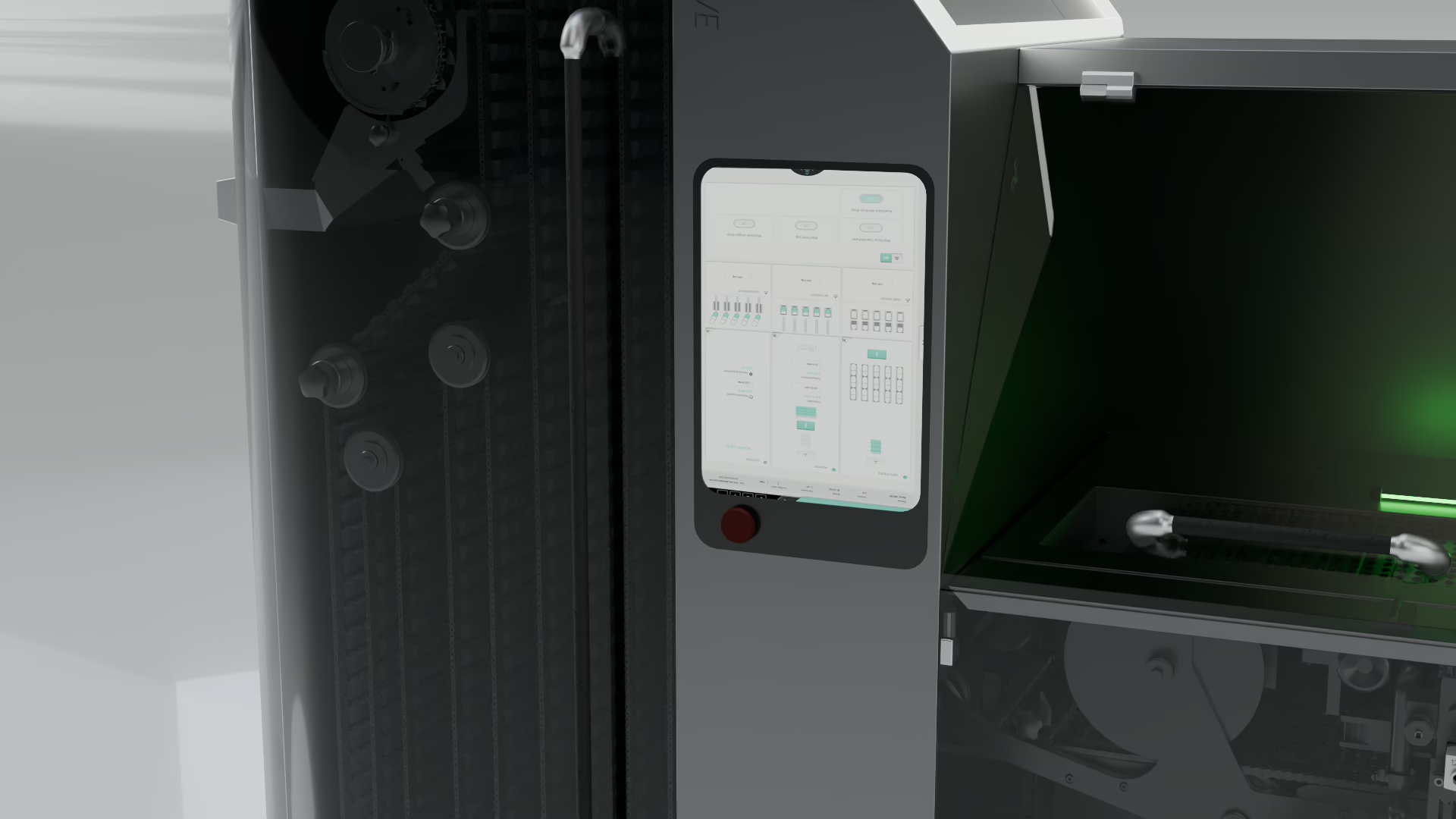
Light from above flattens the surface of a capsule. A low, grazing light makes every dent and bump cast a shadow, so the defect stands out. We ran a green grazing light across the inspection deck and tested it on real capsules with defects.
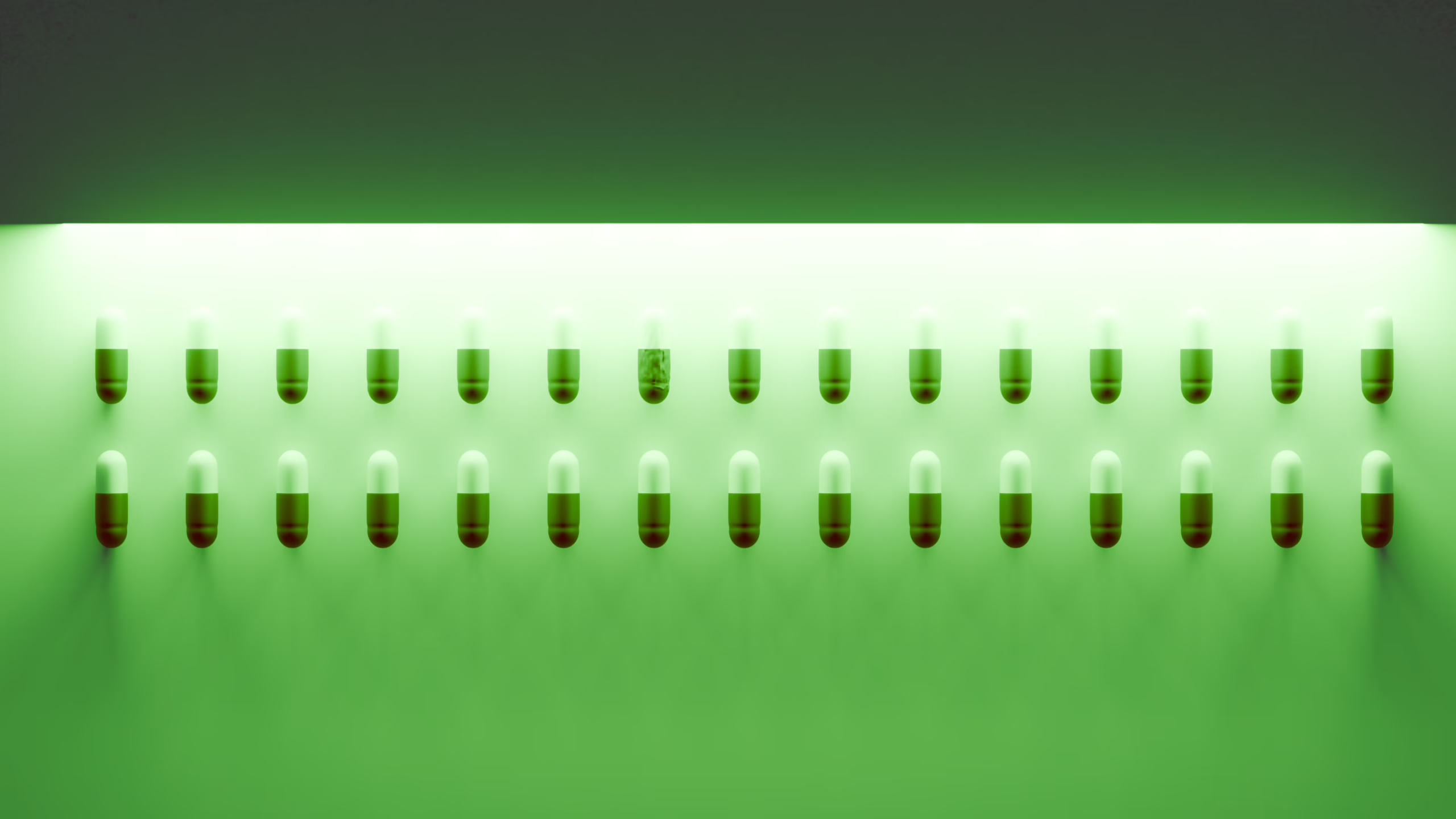
On low-angle lighting in defect inspection: Chen et al., PLOS ONE 19(5), 2024.
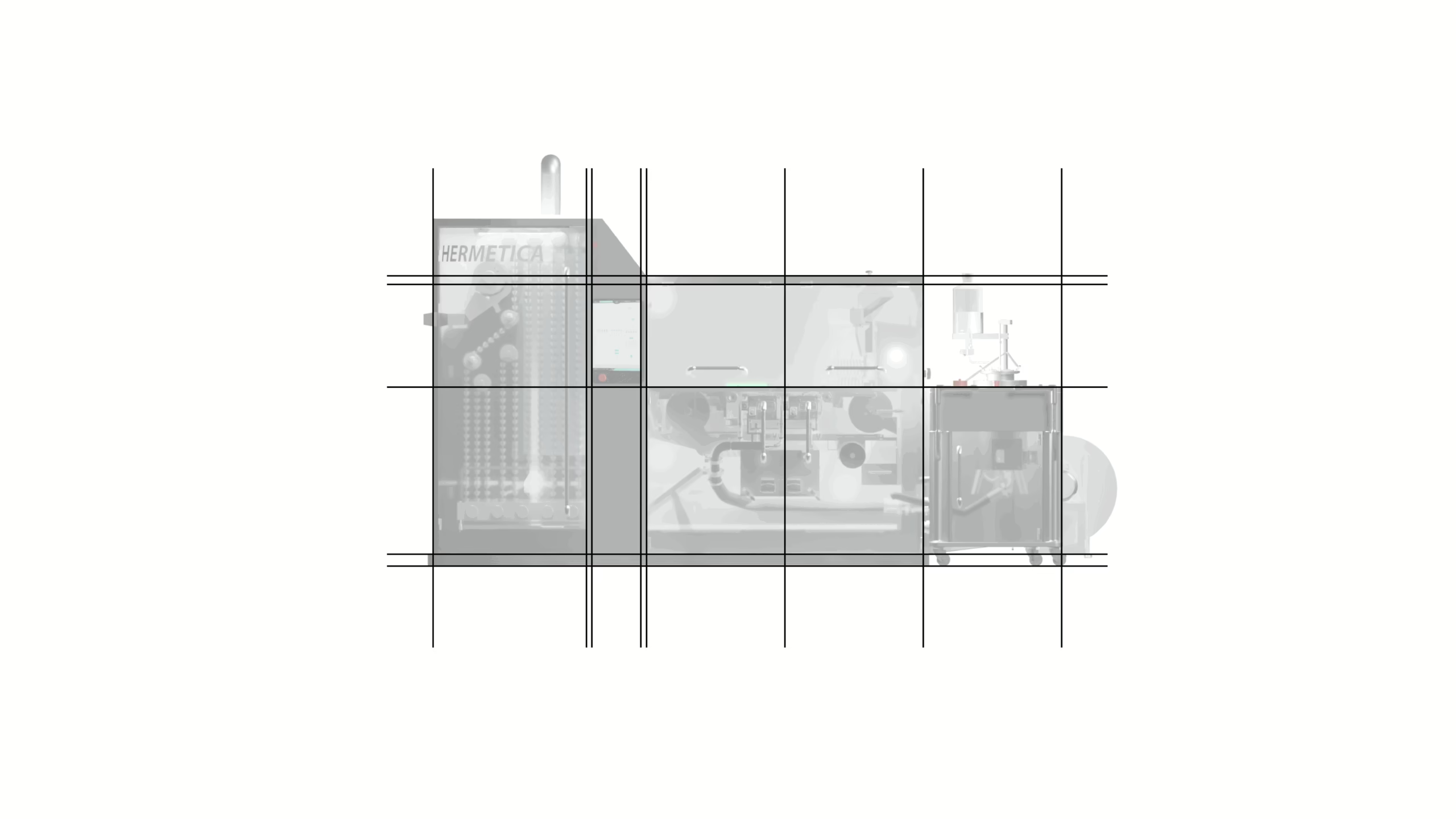
We rebuilt the outer shell on the golden ratio. The main volumes, the doors and the panels follow the same proportion, so the machine reads as one object instead of a set of boxes.
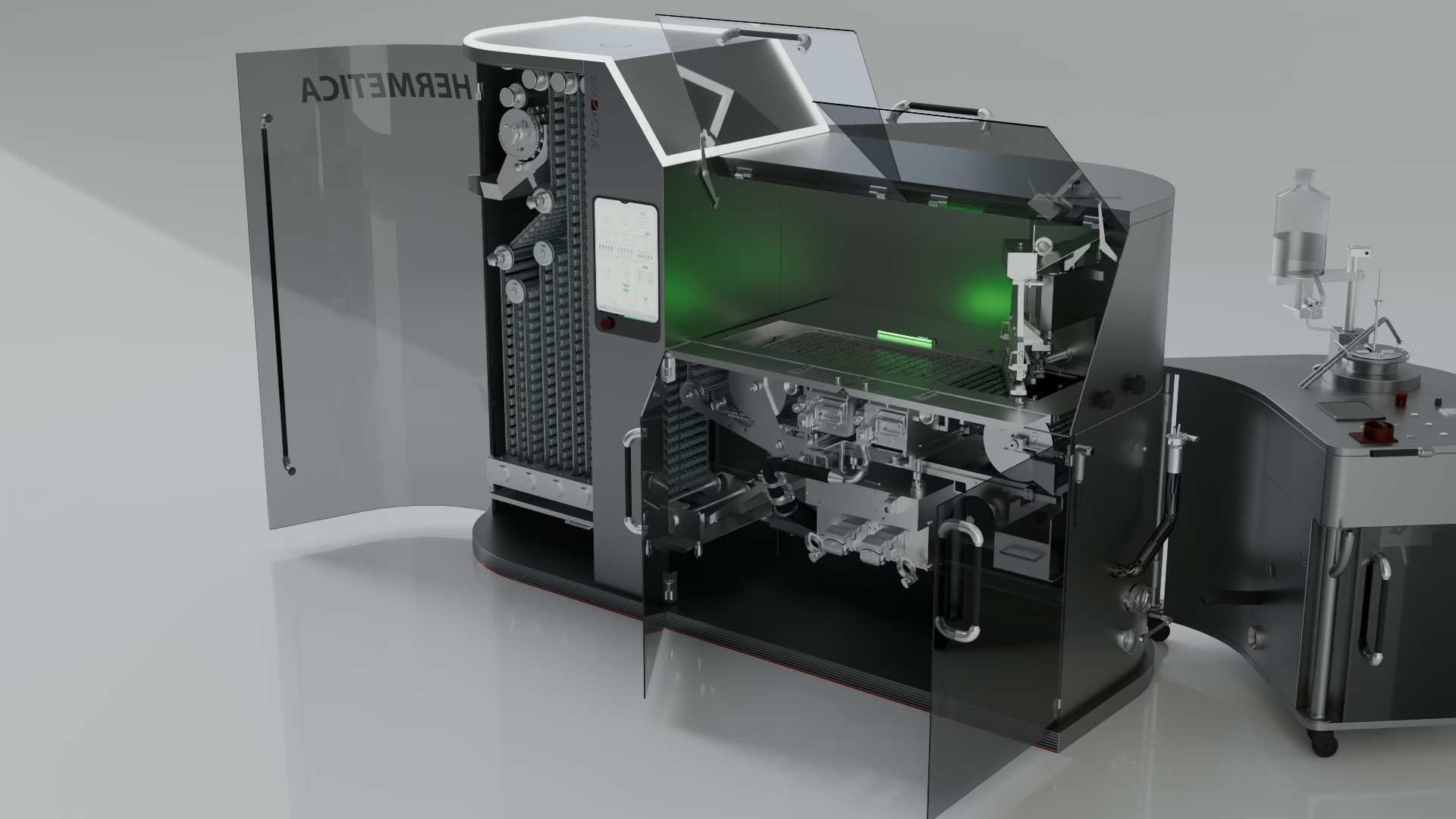
The old doors were heavy and slowed down daily maintenance. We redrew the way the access panels open.
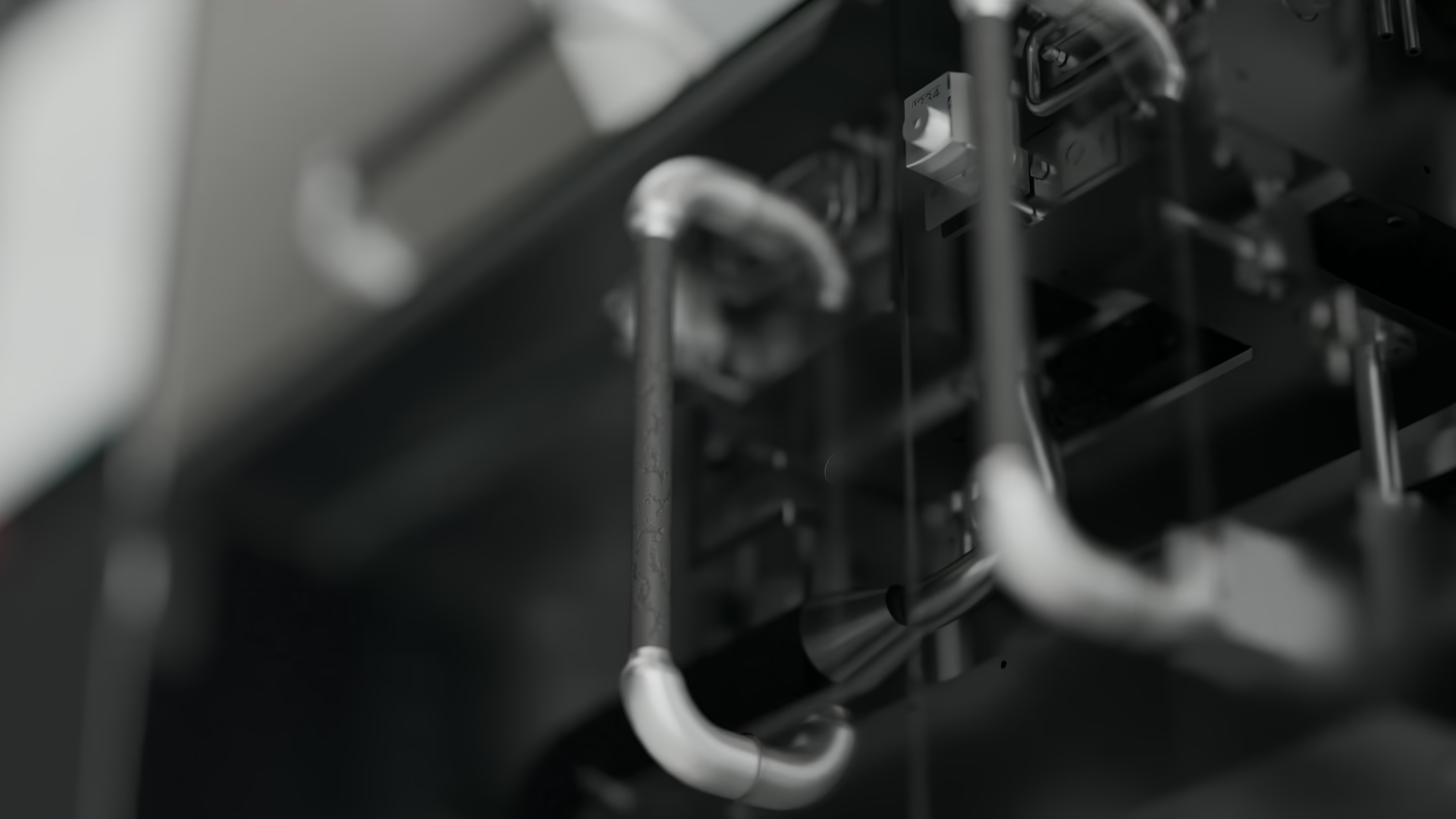
The handles are set into the covers: a firm grip, and nothing sticking out in a room that has to stay clean.
On the original machine the controls stand on an arm, in the way of the inspection zone. We set a large touchscreen flush into the sheet metal, beside the inspection cover: nothing sticks out, and the operator adjusts the process without looking away from the capsules.
The tank was a separate unit that needed tools to refill and service. The new one has a rounded shape that sets it apart from the rest of the machine, and a quick-release docking that we designed and modelled: it locks and releases by hand.
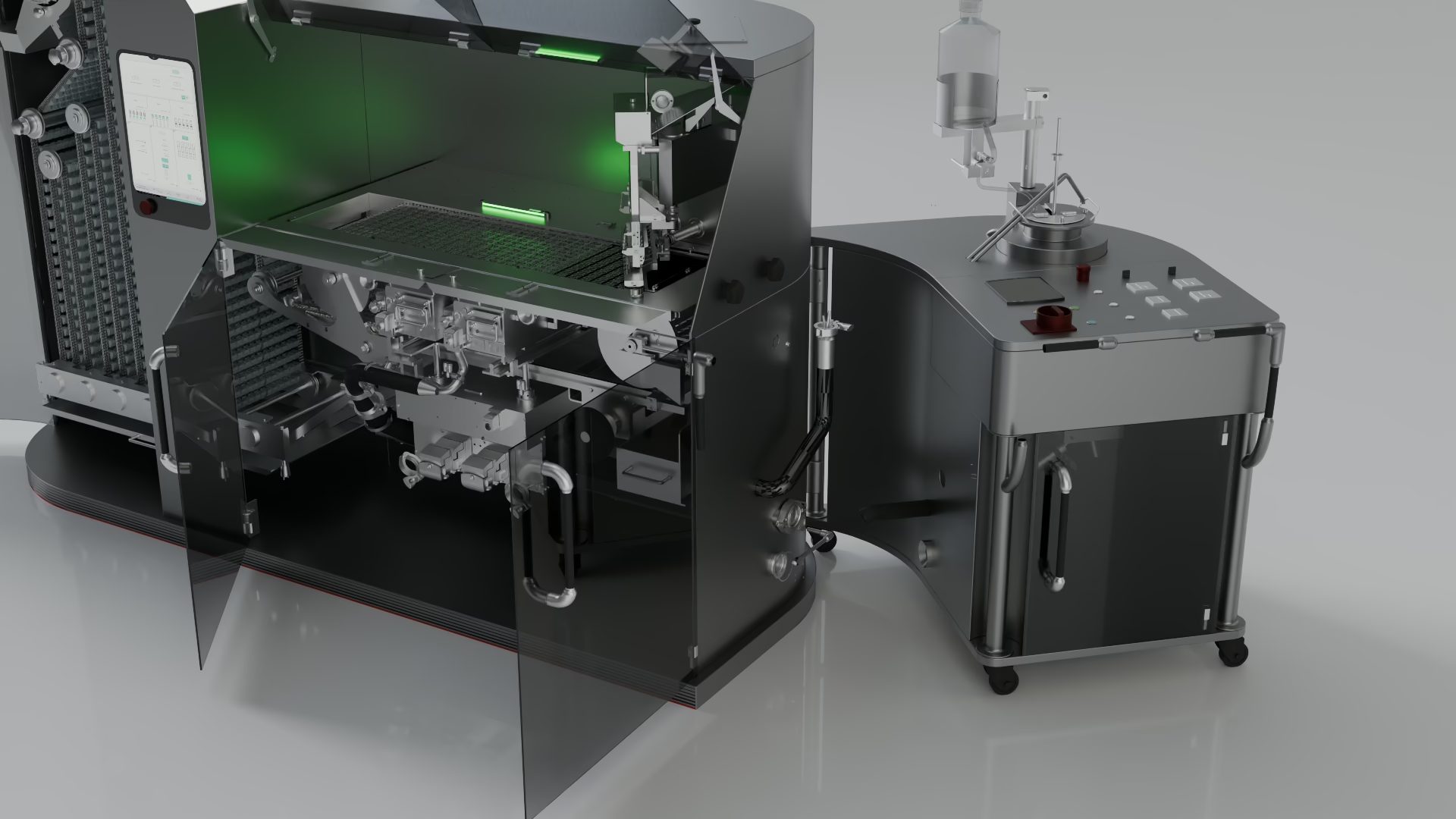
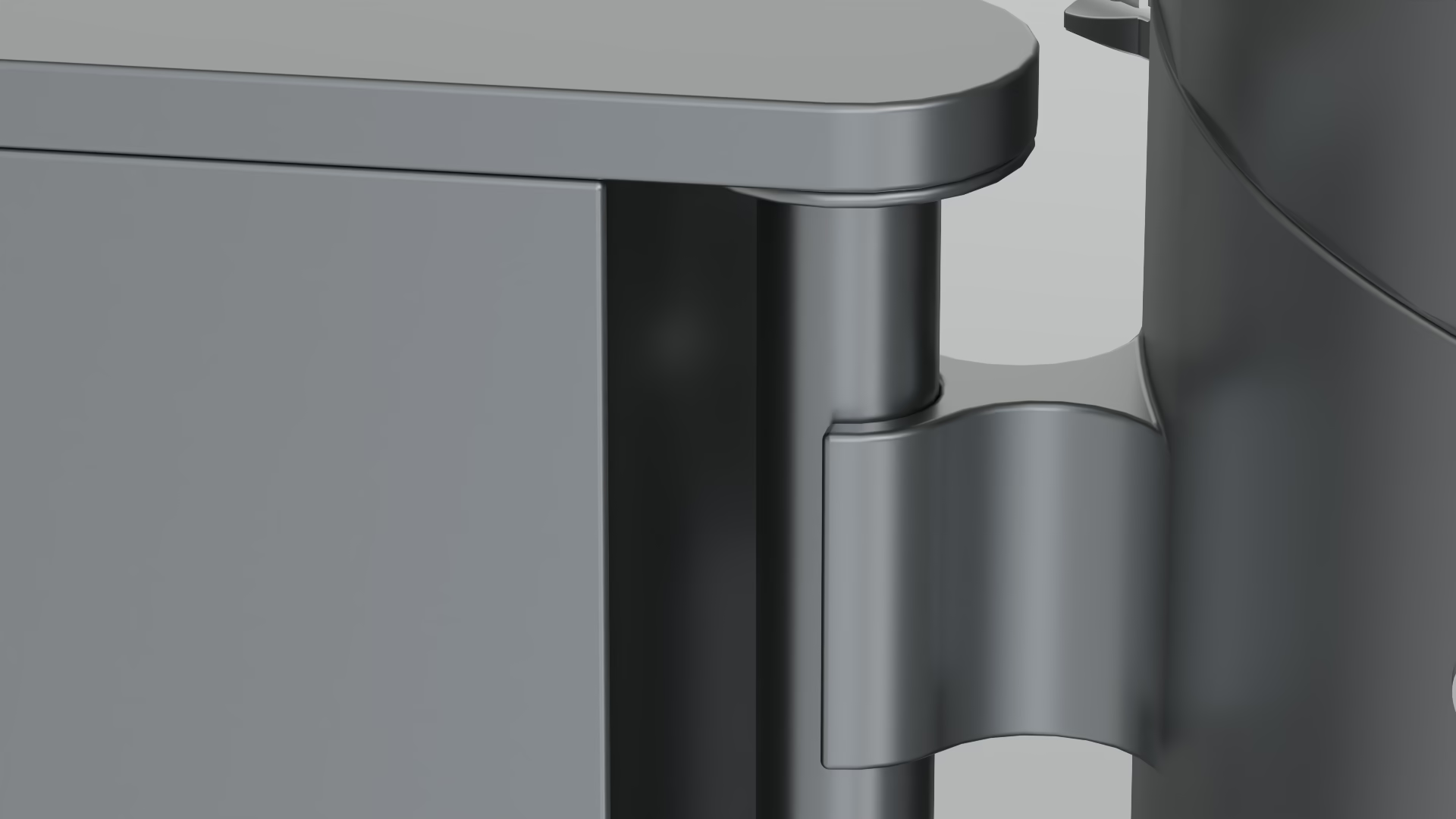
The tank locks onto the machine and comes off by hand, without tools.
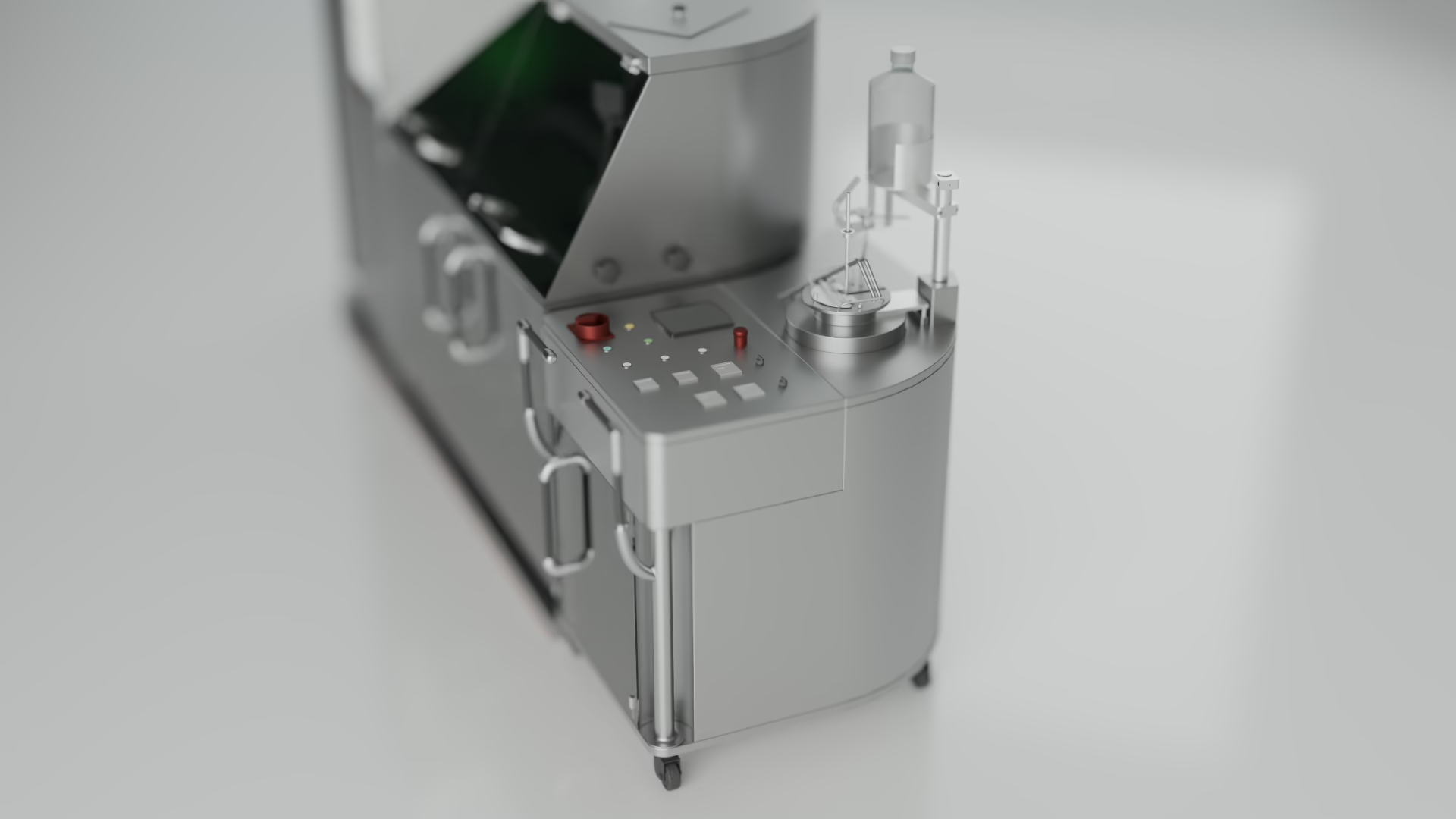
A soft form, so the tank reads as a part of its own next to the straight lines of the machine.